
Occupational Qualification · R33
Remotely Piloted Aircraft Systems (RPAS) Pilot
- NQF Level
- NQF Level 4
- Credits
- 128
- Duration
- —
- SAQA ID
- 121161
Official QCTO Registry Profile
Source: SAQA / QCTO registry- SAQA ID
- 121161
- Min Credits
- 128
- Registered
- 2023-11-14
- Re-registration
- 2028-11-14
- Field
- Field 10 - Physical, Mathematical, Computer and Life Sciences
- Sub-field
- Information Technology and Computer Sciences
Sample Asset Preview
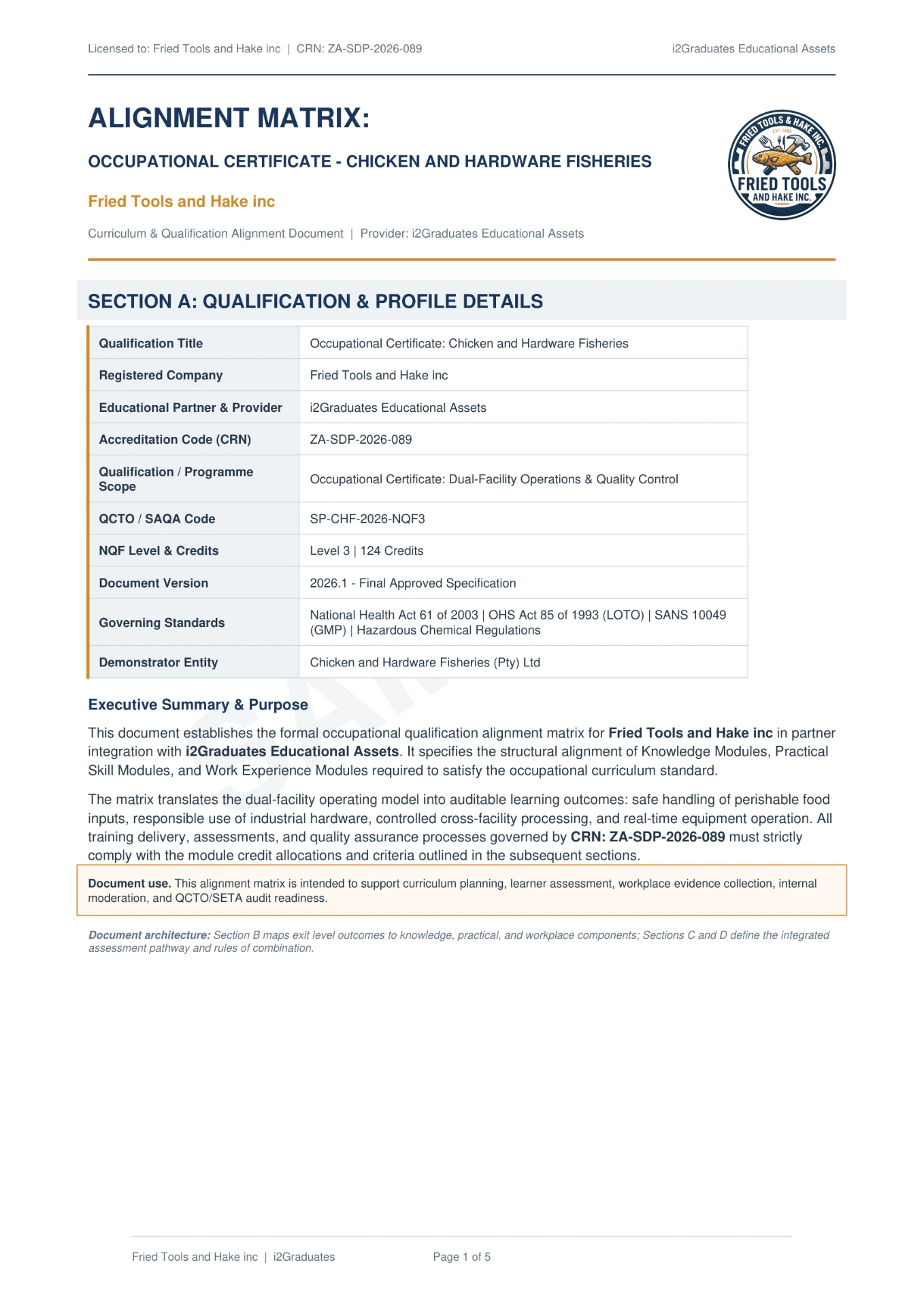
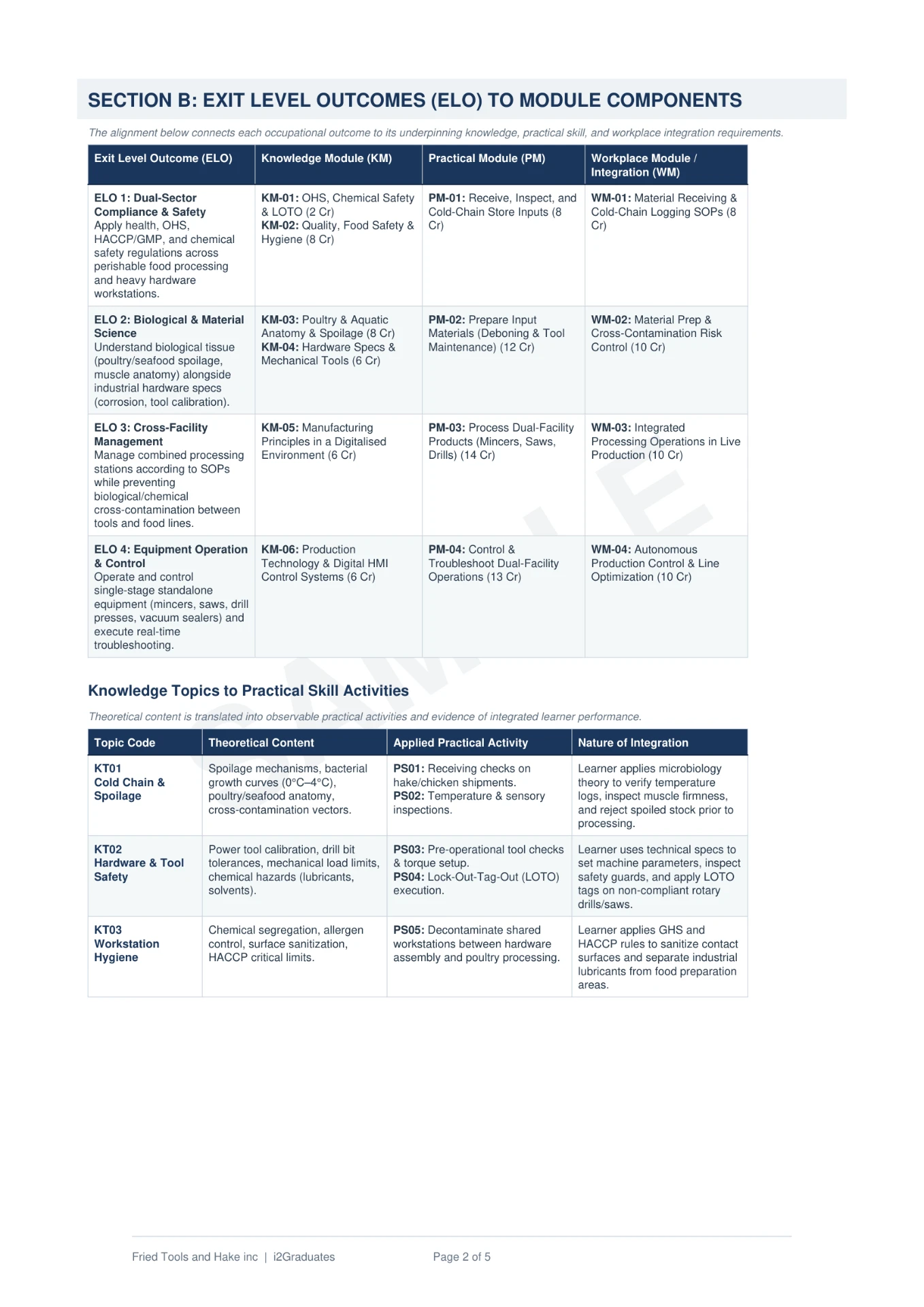
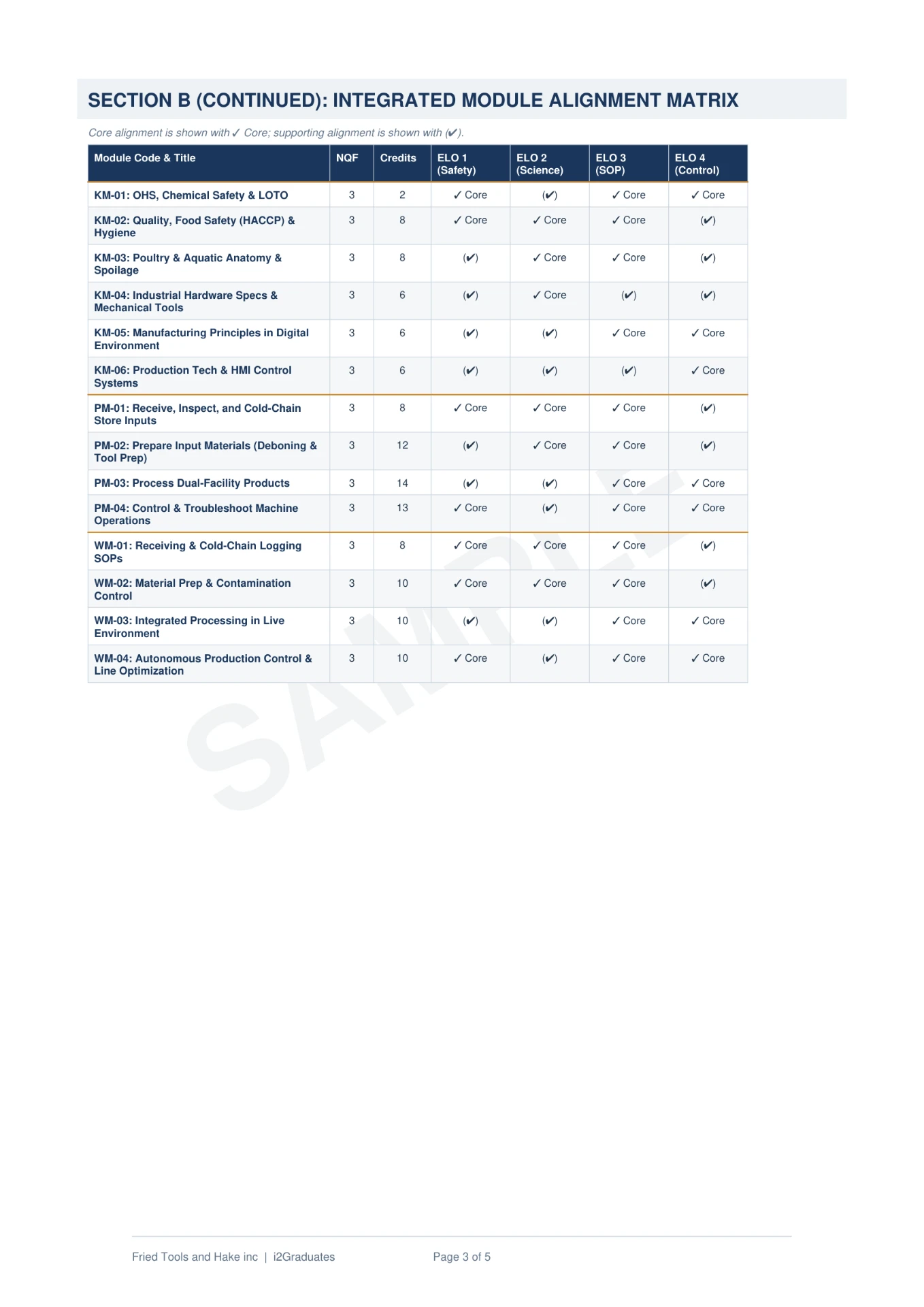
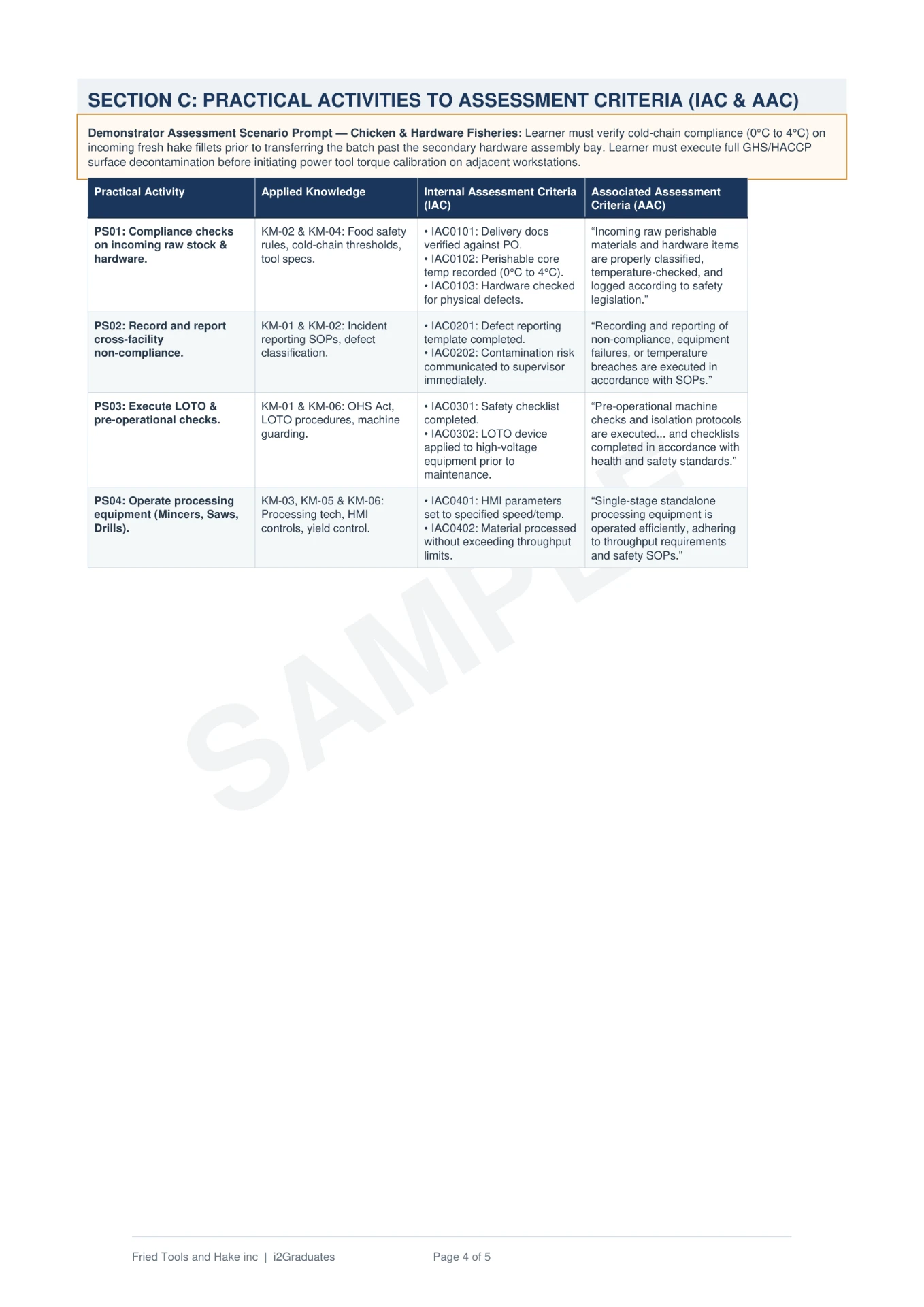
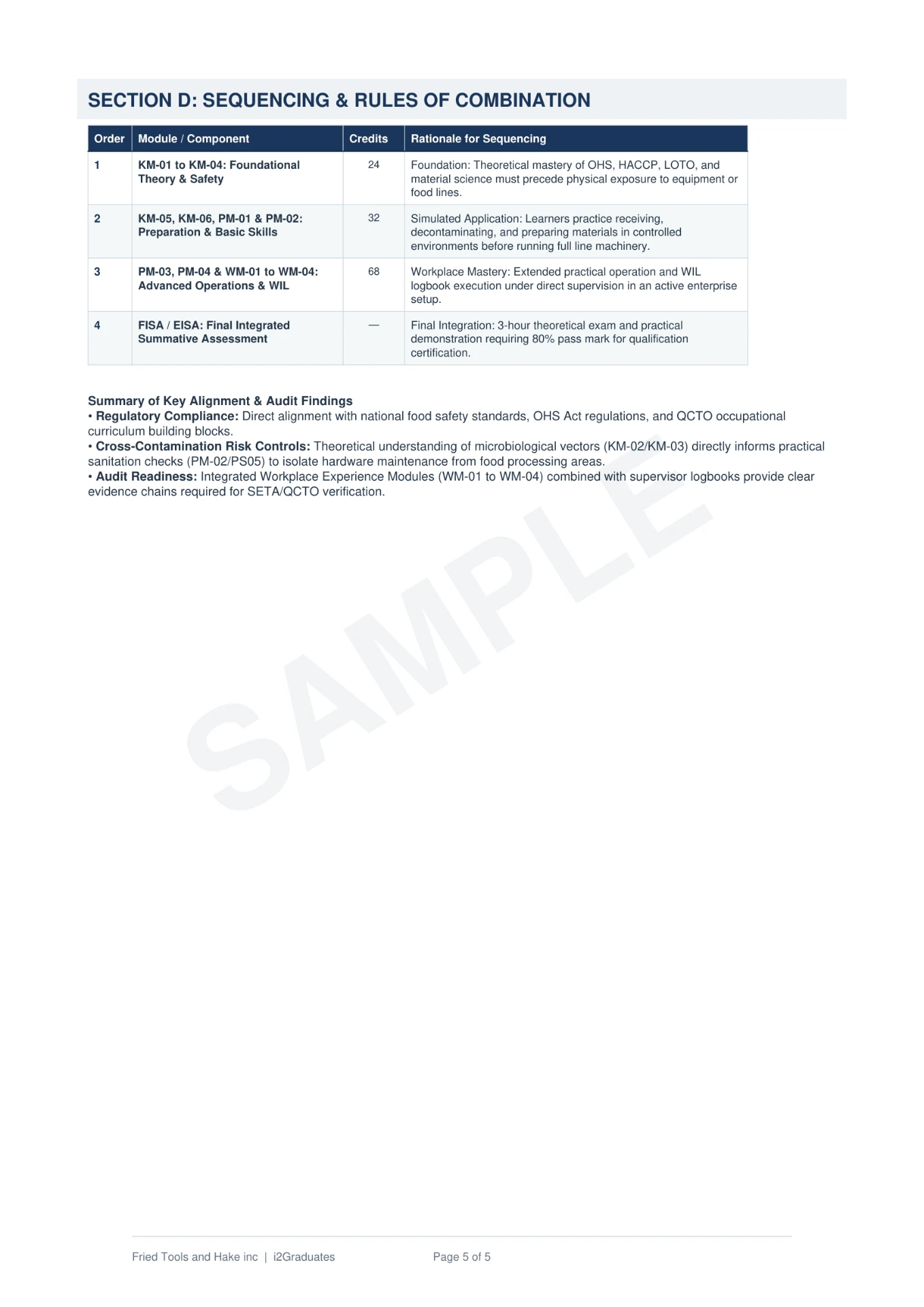
Overview & Scope
Programme Profile
- Target Designation
- Certified Remotely Piloted Aircraft Systems (RPAS) Pilot Practitioner
- Competency Focus
- Master specialised practical applications, safety criteria, and regulatory mandates required of a qualified Remotely Piloted Aircraft Systems (RPAS) Pilot.
- Academic Weight
- Full national recognition at NQF Level 4 yielding 128 credits upon successful PoE verification.
- Work Opportunities
- Deployment across As a qualified remotely piloted aircraft systems (rpas) pilot, you can find employment opportunities in Various sectors (depending on specialisation). Your skills will be in demand across both public and private sectors, and you may also choose to work as an independent contractor or start your own business in this field. operations under MICSETA scope.
- Audit Objective
- Bridges operational skills deficits under the governing MICSETA quality matrix.
- Value Proposition
- Measurable, legally compliant skills that optimise productivity, satisfy Workplace Skills Plans (WSP), and unlock B-BBEE scorecard weight.
Introduction▾
Designed as a Occupational Certificate at NQF Level 4 worth 128 credits, the Remotely Piloted Aircraft Systems (RPAS) Pilot equips you with both theoretical understanding and hands-on capabilities. You will learn to perform complex tasks, solve real-world problems, and adapt to the demands of a dynamic work environment. This qualification is your stepping stone to becoming a confident, capable professional.
Purpose▾
The purpose of this qualification is to prepare a learner to operate as a Remotely Piloted Aircraft Systems (RPAS) Pilot. A Remotely Piloted Aircraft Systems Pilot operate the start-up, lift-off, flight and set down of a remotely piloted aircraft system under 7kg. A qualified learner will be able to: • Operate the lift-off of Remotely Piloted Aircraft Systems. • Fly Remotely Piloted Aircraft Systems. • Land Remotely Piloted Aircraft Systems.
Entry Requirements▾
LEARNING ASSUMED TO BE IN PLACE AND RECOGNITION OF PRIOR LEARNING Recognition of Prior Learning (RPL): • Learners will gain access to the qualification through RPL for Access as provided for in the QCTO RPL Policy. RPL for access is conducted by accredited education institution, skills development provider or workplace accredited to offer that specific qualification/part qualification. • Learners who have acquired competencies of the modules of a qualification or part qualification will be exempted from modules through RPL. • Learners will be awarded credits for or towards the qualification or part qualification through RPL as provided in the QCTO RPL Policy. RPL for credits provides for the formal award of credits for, or towards a qualification or part-qualification registered on the NQF. RPL for access to the external integrated summative assessment: Accredited providers and approved workplaces must apply the internal assessment criteria specified in the related curriculum document to establish and confirm prior learning. Accredited providers and workplaces Entry Requirements: The minimum entry requirement for this qualification is: • An NQF Level 3 with communication.
SAQA Rationale▾
As the Fourth Industrial Revolution reshapes how we live, work, and communicate, it is impacting government, education, healthcare, commerce and almost every aspect of life. Remotely Piloted Aircraft Systems (RPAS) technology is at the heart of these changes and the development of the skills and knowledge to thrive in this environment has a great potential for job creation and poverty alleviation in South African communities. It will increase the potentiality of the Remotely Piloted Aircraft Systems Pilots to be employed, while it will ensure the upward mobility of individuals with the entrepreneurial spirit to move confidently towards self-employment. This qualification is for people working in the RPAS industry. Typical learners are school-leavers as well as existing personnel working in the RPAS industry. The exponential growth for the use of an RPAS, which are also known as drones, for work and commercial purposes in industries such as emergency services, the police service, research, collection and surveying has led to a huge demand in the market for more qualified personnel to attend to various issues that arise with the usage and support for RPAS operations. RPAS are already being used as a business tool to access high, difficult or unsafe places and as a result, many sectors are ramping up their usage, using them for disaster management, infrastructure, agriculture, surveillance and resource purposes. RPAS are being considered to move freight and are even being used in a military sense. This qualification reflects the workplace-based needs of the RPAS environment in the Republic of South Africa (RSA) that are expressed by this growing upward trend in the market. Currently the RPAS repair environment is proliferated with individuals who are trained on the job without adequate formal qualifications, hence the need for a formal qualification on the NQF targeted at people who wish to join the RPAS industry, or those that are currently working in this industry as salespersons and repairers. They will be performing duties related to operating RPAS for disaster management, infrastructure, agriculture, surveillance, commercial, military, etc. This qualification will empower the learners with the required skills that will allow them to enter this market of RPAS with the skills and knowledge to work either in the sales stream or the technical stream. It will permit individuals to increase their employability or become self-employed by starting their own small businesses with a potential of employing others. Furthermore, the qualification will benefit societies by ensuring better quality services including environmental protection, efficient spraying of crops, crime prevention, medical lifesaving efficiency, transportation goods etc. The sector will benefit from Remotely Piloted Aircraft Systems Pilots with a set of competencies aligned to industry regulated standards for services. The economy will benefit from increased revenue due to increased employment opportunities and entrepreneurship due to emerging SMME's that will create employment and pay tax. The availability of suitably qualified Remotely Piloted Aircraft Systems Pilots will improve the safe working environment especially as these devices are in the close proximity of the public. Upon completion, the qualification will provide learners with opportunities for professional development and career advancement within the broader RPAS environment, including, RPAS Technician, Senior Pilots, Team Leaders, Master Pilots, Sales Officers, Sales Representatives, Senior Sales Representatives, RPAS Centre Managers, etc. There are no similar qualifications registered on the National Qualifications Framework (NQF)
Learning Assumed to be in Place & RPL▾
LEARNING ASSUMED TO BE IN PLACE AND RECOGNITION OF PRIOR LEARNING Recognition of Prior Learning (RPL): • Learners will gain access to the qualification through RPL for Access as provided for in the QCTO RPL Policy. RPL for access is conducted by accredited education institution, skills development provider or workplace accredited to offer that specific qualification/part qualification. • Learners who have acquired competencies of the modules of a qualification or part qualification will be exempted from modules through RPL. • Learners will be awarded credits for or towards the qualification or part qualification through RPL as provided in the QCTO RPL Policy. RPL for credits provides for the formal award of credits for, or towards a qualification or part-qualification registered on the NQF. RPL for access to the external integrated summative assessment: Accredited providers and approved workplaces must apply the internal assessment criteria specified in the related curriculum document to establish and confirm prior learning. Accredited providers and workplaces Entry Requirements: The minimum entry requirement for this qualification is: • An NQF Level 3 with communication.
Exit Level Outcomes▾
- Demonstrate the ability to remove, upgrade and install software and firmware used for remotely Piloted aircraft systems according to manufacturer's specifications and procedures.
- Set up, dismantle and operate the lift off and landing of a remotely piloted aircraft system according to standard operating procedures and within legal parameters.
- Fly remotely piloted aircraft systems according to standard operating procedures and within legal parameters.
Learning Material Included
- Learner Guide (Theory and Knowledge Modules)
- Facilitator Guide
- Workplace Logbook
- Formative and Summative Assessment
- Assessor Guide & Marking Memorandum
- SETA / QCTO Alignment Matrix
- Administrative & Onboarding Pack
- Implementation Plan
Moderator-Ready Curriculum Breakdown
11 modules · 56 creditsTheory, regulatory and safety knowledge. Each row carries the registered module code, NQF level and credit weight used for formative assessment rubric mapping.
- 733211-001-00-KM-032 cr
End User Computing
NQF Level 3
- 733211-001-00-KM-072 cr
Information and Communication
NQF Level 4
Qualification 121161 · Curriculum Architecture
Occupational Certificate: Remotely Piloted Aircraft Systems (RPAS) Pilot · NQF Level 4 (128 Credits)
Three Curriculum Pillars
Knowledge Modules
Classroom & E-Learning
- Facilitated lectures & self-study
- Written question banks
- Formative comprehension checks
Practical Skill Modules
Simulated Line Tasks
- Simulated line tasks
- Observation rubrics
- Structured task sheets
Work Experience Modules
On-the-Job Production
- On-the-job rotation
- Mentor logbooks
- Workplace sign-offs
Evidence & Audit Pipeline
Learner Portfolio of Evidence (PoE)Owner · Candidate▾
Admin & Registration
ID, learner contract, induction pack, POPIA consent.
Knowledge Evidence
Written assessments & question banks — KM-01 to KM-07.
Practical Evidence
Task sheets, observation rubrics, assessor photos.
Workplace Evidence
Logbooks, mentor sign-offs, supervisor letters.
Assessor Master FileOwner · Registered Assessor▾
Assessment Reports
Judgements, learner feedback, remediation agreements, appeals log.
Internal Moderation & Quality FileOwner · Moderator / SDP▾
Moderation Evidence
10% sampling matrix, HACCP/LOTO compliance sheets, SDP sign-off.
Final Accreditation Gateway
Issued by the accredited Skills Development Provider once internal moderation is signed off.
Provider submits declaration + PoE to the Assessment Quality Partner (AQP).
QCTO awards the SAQA-registered certificate on successful EISA outcome.
Audit & Compliance
Evidence & Audit Pipeline
From portfolio assembly to external sign-off — the exact route your evidence travels.
- Step 1
PoE Assembly
Learner evidence, formative records and logbook entries filed against the alignment matrix.
- Step 2
Internal Assessment
Registered assessor judges each KM/PM/WM outcome using the supplied instruments.
- Step 3
Internal Moderation
Sampling and verification of assessor decisions, with remediation loop before submission.
- Step 4
External Moderation
SETA/QCTO desktop audit and certification upload against registered credits.
Broken Standard vs i2Graduates Standard
The measurable delta between improvised material and an audit-ready suite.
Broken Standard
i2Graduates Standard
Curriculum Mapping
Photocopied guides with mismatched outcomes
2 KM + 6 PM + 3 WM modules mapped to NQF Level 4
Assessment Bank
Missing formative and summative assessments
Pre-validated assessment bank per module
Alignment Evidence
No alignment matrix — audit fails
MICSETA alignment matrix included
Facilitation
Facilitators improvise Remotely Piloted Aircraft Systems (RPAS) Pilot delivery
Facilitator scripts + learner activities per credit
Portfolio of Evidence
PoE gaps flagged in moderation
PoE templates that survive external moderation
Pricing & Delivery Tiers
Base licence from R56 400
Digital Master Suite
Editable master files, licensed to your SDP
- Learner Guide, Facilitator Guide & Assessment Suite
- Workplace logbook + alignment matrix (editable)
- Instant digital delivery under institutional licence
- Free minor corrections for 12 months
Turnkey Print & Bound Package
Printed, bound and couriered per learner
- Everything in the Digital Master Suite
- Full-colour print, wire-bound learner packs
- Per-learner PoE folders and dividers
- Nationwide courier with tracked delivery
Full Enterprise Accreditation Bundle
Assets plus accreditation support end-to-end
- Everything in the Print & Bound Package
- Bespoke QMS build mapped to your scope
- Moderation dry-run + written remediation report
- Brand & metadata integration across the suite
Complementary Services
Optional add-ons that harden your accreditation scope before an external audit.
Bespoke QMS Build
We author your Quality Management System — policies, procedures, records, matrices — mapped to your accreditation scope. From R18,500.
Request QuoteModeration Consultation
External moderation dry-run on your PoE + delivery pack. Written report with fixes before your real audit. From R4,900.
Book Moderation SessionThe i2Graduates Quality Guarantee
Every page of this bundle is checked for sequence and structural accuracy — no missing pages, no shortcuts. You get pre-validated assessment instruments ready to survive rigorous compliance moderation, wrapped in a curriculum your facilitators will enjoy teaching.