
Occupational Qualification · P50
Discretionary Grant · RollingProfessional Construction Project Manager
- NQF Level
- NQF Level 8
- Credits
- 180
- Duration
- —
- SAQA ID
- 122700
Official QCTO Registry Profile
Source: SAQA / QCTO registry- SAQA ID
- 122700
- Min Credits
- 180
- Registered
- 2024-08-22
- Re-registration
- 2029-08-22
- Field
- Field 12 - Physical Planning and Construction
- Sub-field
- Physical Planning, Design and Management
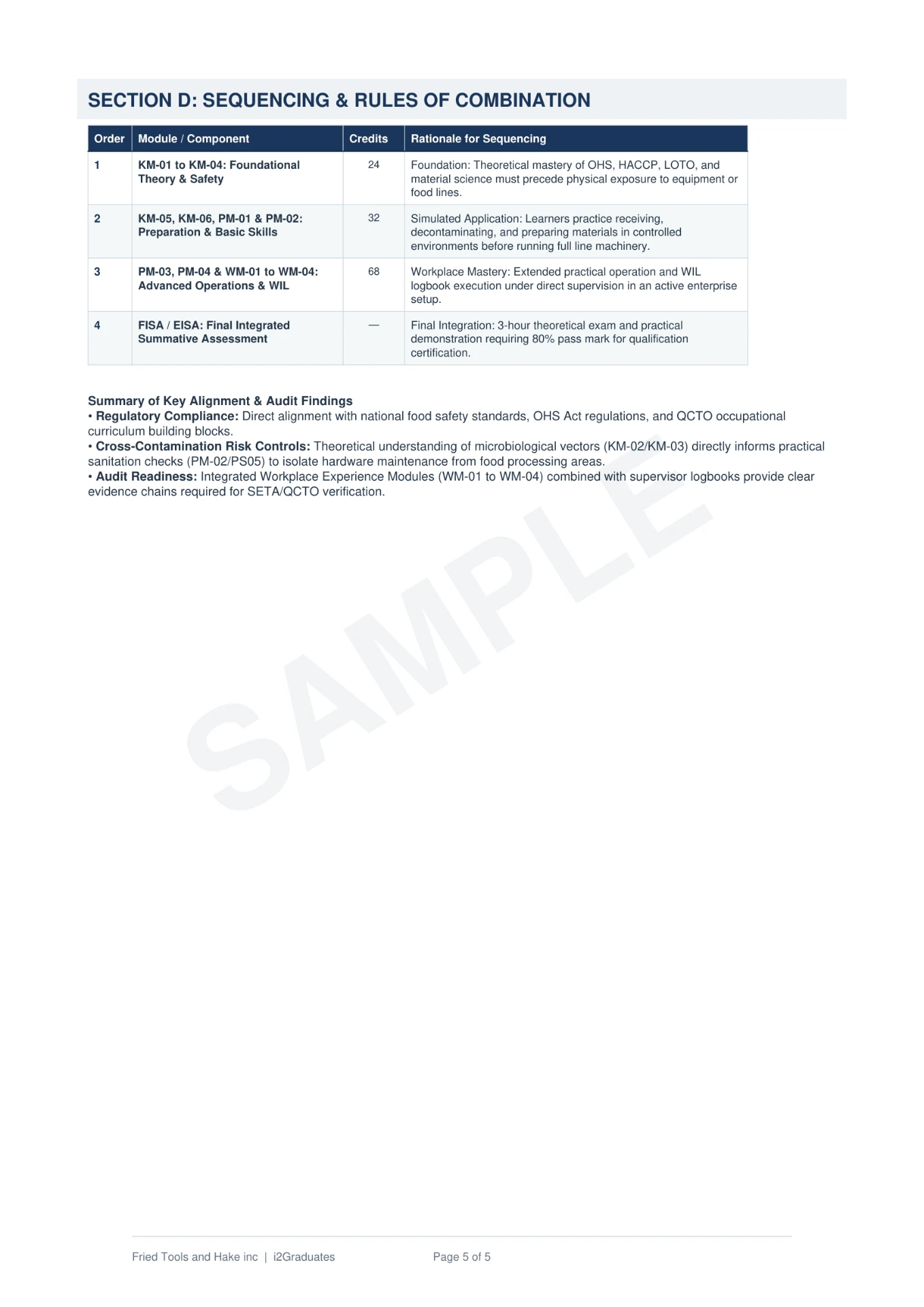
Sample Asset Preview
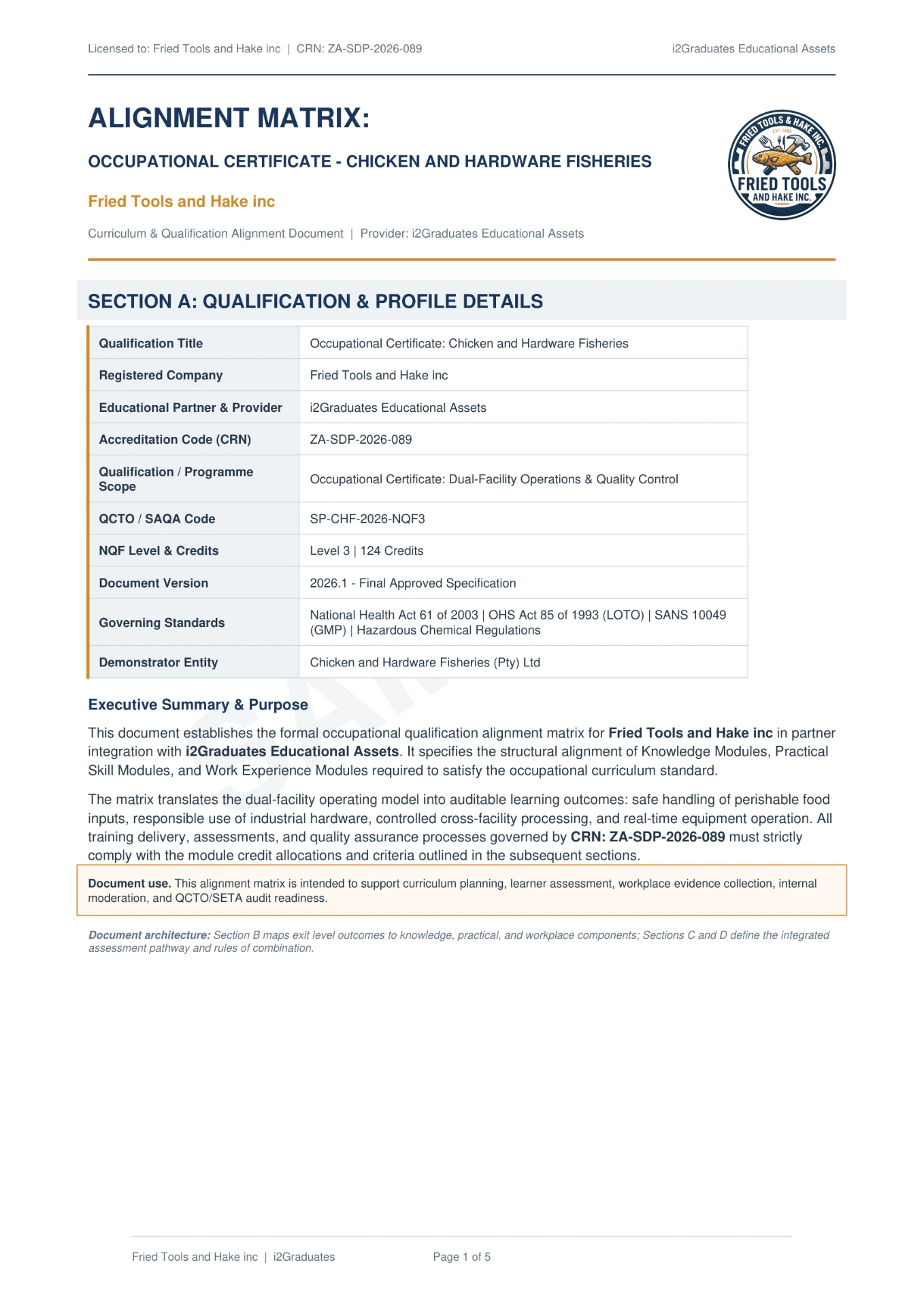
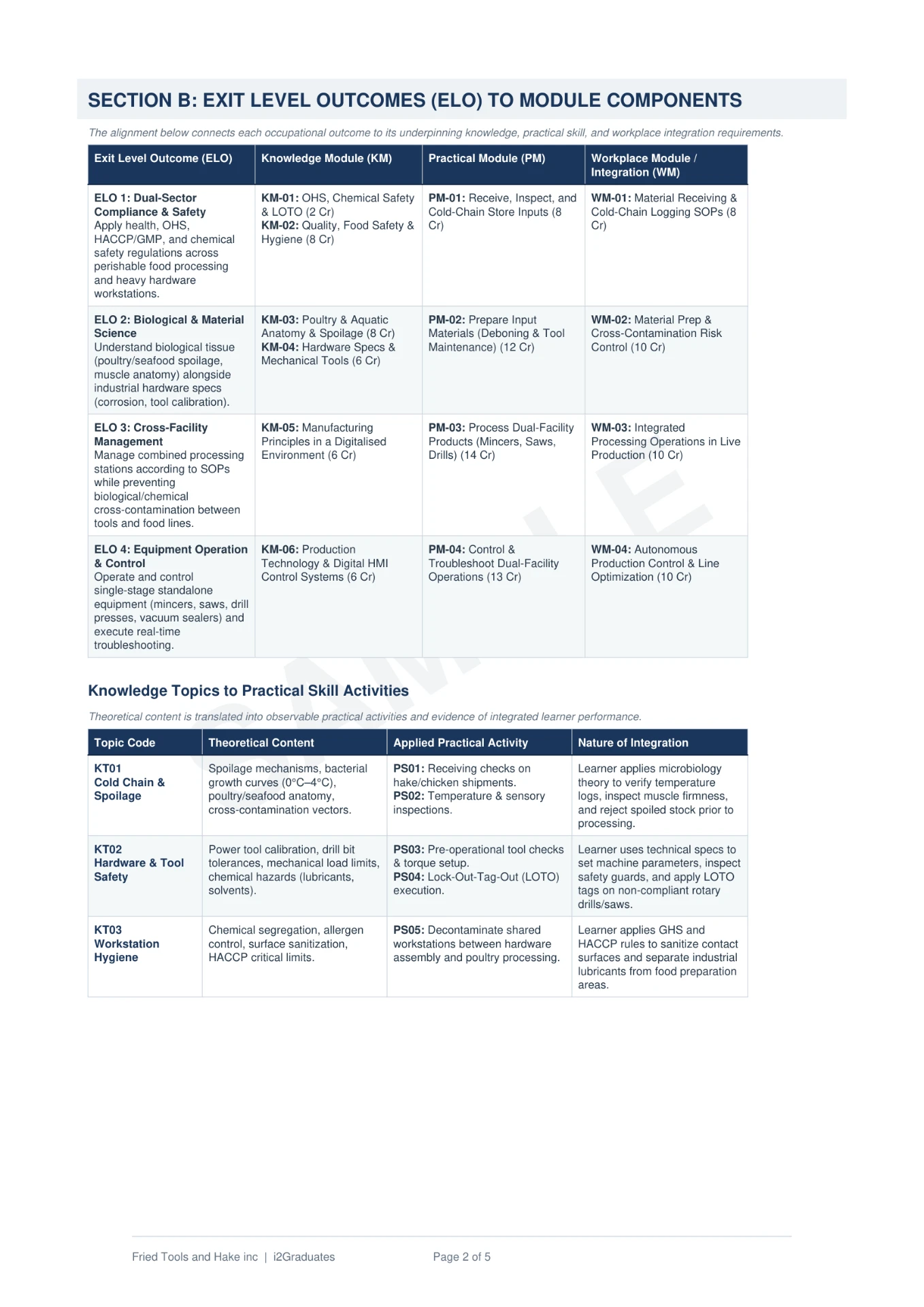
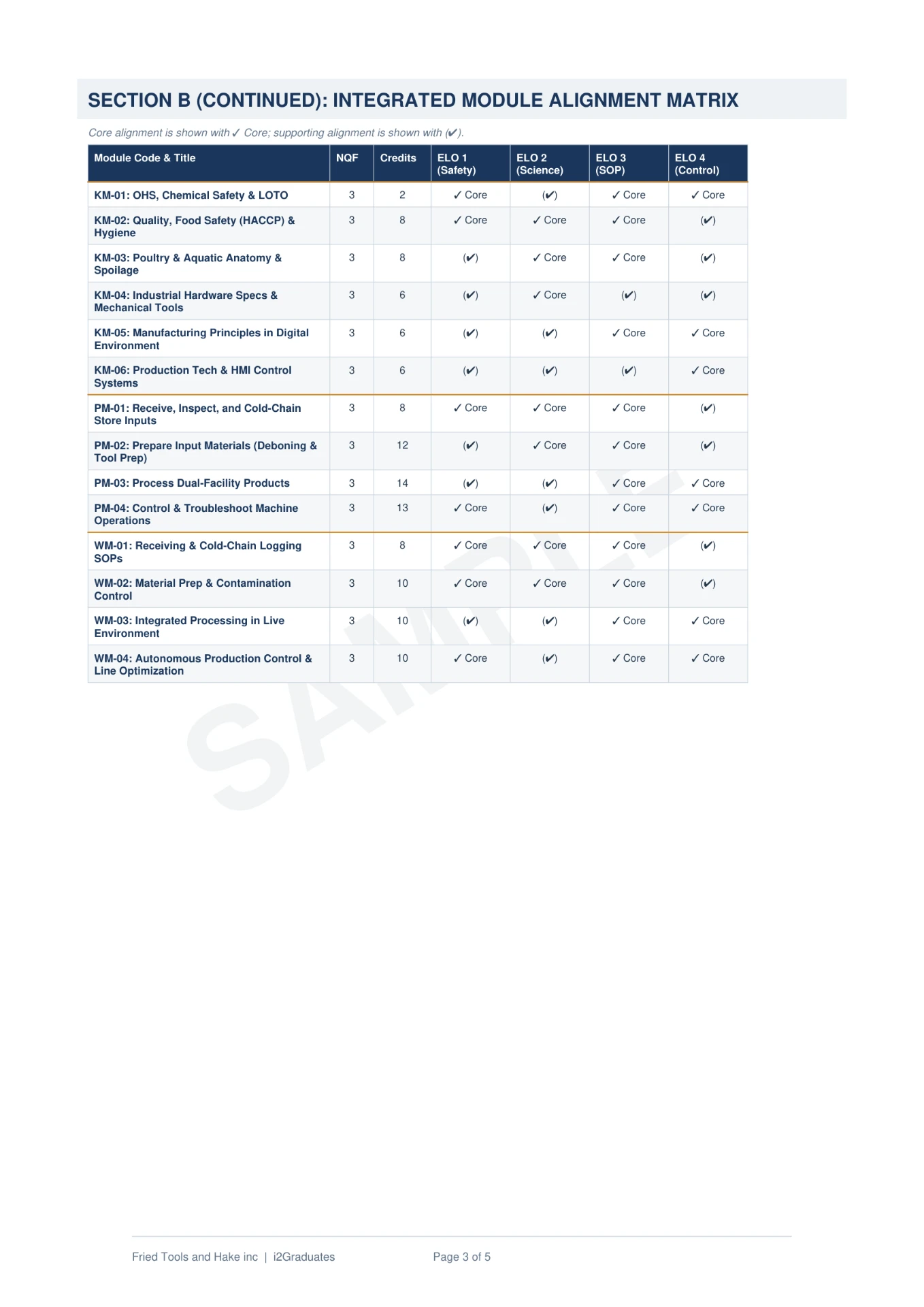
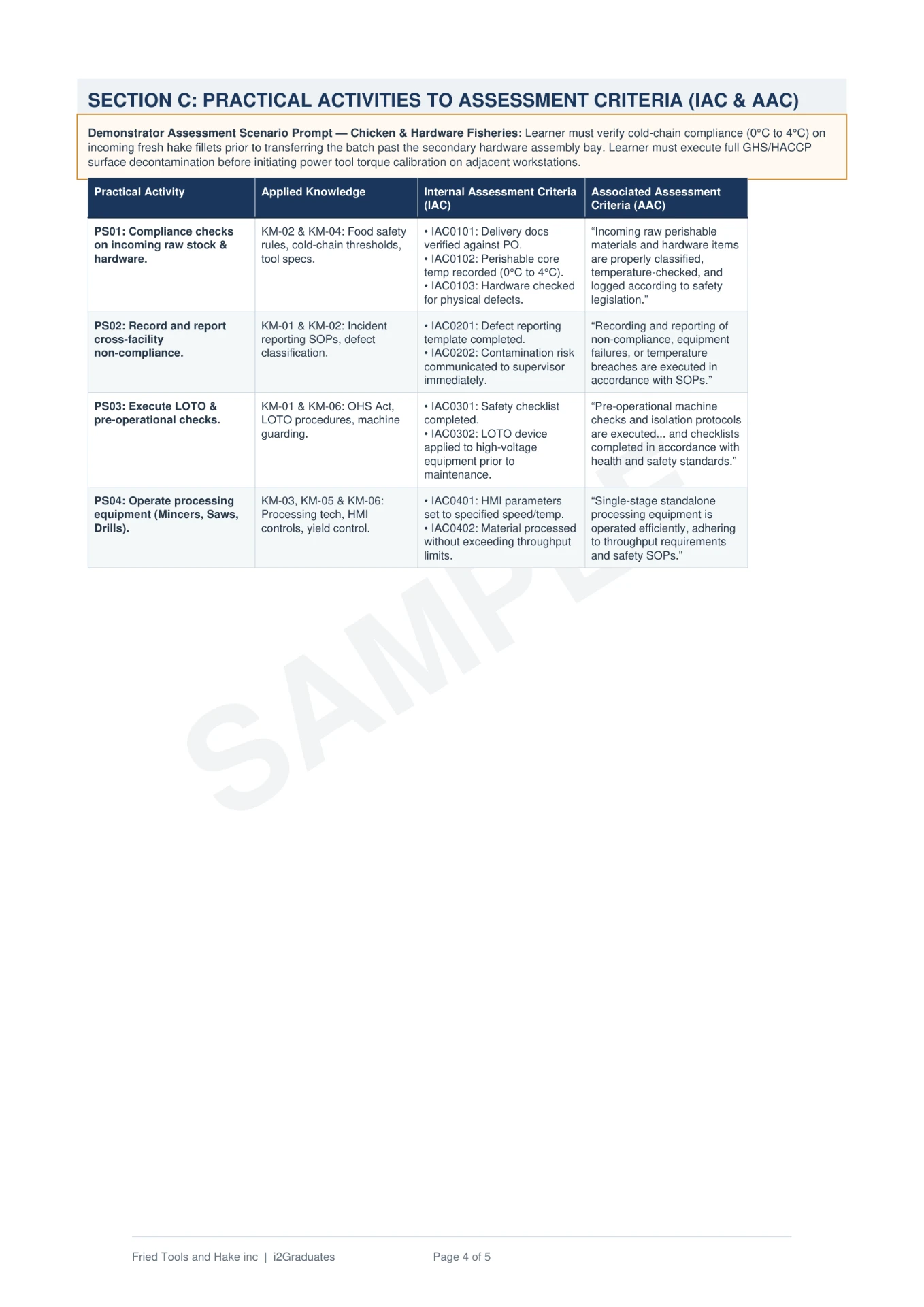
Overview & Scope
Programme Profile
- Target Designation
- Certified Professional Construction Project Manager Practitioner
- Competency Focus
- Master specialised practical applications, safety criteria, and regulatory mandates required of a qualified Professional Construction Project Manager.
- Academic Weight
- Full national recognition at NQF Level 8 yielding 180 credits upon successful PoE verification.
- Work Opportunities
- Deployment across As a qualified professional construction project manager, you can find employment opportunities in Construction, Civil Engineering. Your skills will be in demand across both public and private sectors, and you may also choose to work as an independent contractor or start your own business in this field. operations under CETA scope.
- Audit Objective
- Bridges operational skills deficits under the governing CETA quality matrix.
- Value Proposition
- Measurable, legally compliant skills that optimise productivity, satisfy Workplace Skills Plans (WSP), and unlock B-BBEE scorecard weight.
Introduction▾
Designed as a Specialised Occupational Diploma at NQF Level 8 worth 180 credits, the Professional Construction Project Manager equips you with both theoretical understanding and hands-on capabilities. You will learn to perform complex tasks, solve real-world problems, and adapt to the demands of a dynamic work environment. This qualification is your stepping stone to becoming a confident, capable professional.
Purpose▾
The purpose of this qualification is to capacitate the learner to be able to function as a Professional Construction Project Manager. Professional Construction Project Managers (CPM's) are responsible for overseeing the planning, design, construction, and completion of a building project, ensuring that the construction is delivered on time, within budget, and to the required quality standards. They work closely with architects, engineers, contractors, and other stakeholders to ensure that the project meets the client's requirements and specifications and is built within the legal and regulatory requirements that apply to the type of construction, construction site and related environmental protection requirements. The CPM oversees the management of projects in the built environment from conception through to completion, handover, and commissioning. The work includes the coordination of all professional services. The CPM serves as the central point of responsibility for all project activities and decisions during the life cycle of the project. Successfully completing a qualification in Construction Project Management offers learners a comprehensive set of skills and knowledge that are highly valued in the dynamic construction industry. Qualifying learners gain proficiency in project planning, resource allocation, risk management, and effective communication, enabling them to excel as competent project managers. They acquire the ability to navigate complex construction environments, ensuring projects are delivered on time, within budget, and to the highest quality standards. Furthermore, learners develop a deep understanding of regulatory compliance, safety protocols, and ethical considerations, contributing to a safer and more responsible construction practice. With this qualification, learners unlock diverse career opportunities, from overseeing projects of varying scales to contributing to sustainable infrastructure development, all while playing a vital role in shaping the future of the construction sector. This qualification equips individuals with the skills, knowledge, and expertise to effectively manage and oversee various aspects of construction projects. A qualified learner will be able to: • Lead and coordinate the inception of the construction project to ensure the development of clear project objectives and determine the project viability through the creation and evaluation of a detailed feasibility study. • Facilitate the development of a construction project brief, which outlines the project requirements, budget, and schedule. • Guide and lead the construction project team to create the detailed design of the project, including architectural, structural, and engineering plans. • Guide and coordinate the selection of project service providers and ensure the appropriate contracting with the suppliers and contractors who will provide the necessary materials, equipment, and labour for the project.
Entry Requirements▾
Recognition of Prior Learning (RPL): RPL for Access to Training: Learners may use the RPL process to gain access to training opportunities for a programme of learning, qualification, part-qualification, or skills programme if they do not meet the formal, minimum entry requirements for admission. RPL assessment provides an alternative access route into a programme of learning, qualification, part-qualification, or skills programme. Such an RPL assessment may be developed, moderated, and conducted by the accredited Skills Development Provider which offers that specific qualification/part qualification/skills programme. Such an assessment must ensure that the learner is able to display the equivalent level of competencies required for access, based on the NQF level descriptors. For exemption from modules through RPL Learners who have gained the stipulated competencies of the modules of a programme of learning, qualification, part-qualification, or skills programme through any means of formal, informal, or non-formal learning and/or work experience, may be awarded credits towards relevant modules, and gaps identified for training, which is then concluded. Entry Requirements: An NQF Level 7 qualification in construction and/or Building Sciences.
SAQA Rationale▾
The construction industry is a pivotal driver of economic growth and development in South Africa, contributing significantly to job creation, infrastructure improvement, and overall economic progress. Within this dynamic sector, construction project managers play a vital role in coordinating and overseeing projects, ensuring their successful execution from inception to completion. However, the absence of a standardised occupational qualification for construction project managers in South Africa poses substantial challenges to the industry's efficiency, safety, and sustainable growth. Effective project management is crucial for timely completion, cost control, and quality assurance of construction projects. A standardised occupational qualification for construction project managers will equip professionals with essential skills, knowledge, and competencies needed to streamline project workflows, allocate resources efficiently, and mitigate potential delays. This will lead to increased project completion rates and reduced financial losses due to inefficiencies. Establishing an official occupational qualification for construction project managers will elevate the professionalism and credibility of individuals in this role. Accreditation and recognition by relevant industry bodies will ensure that project managers possess the necessary qualifications to effectively manage projects, promoting trust among stakeholders such as clients, investors, and regulatory authorities. South Africa's construction industry is grappling with a skills shortage, with a mismatch between the demands of projects and the skills possessed by professionals. A standardised qualification will address this gap by providing targeted education and training, empowering construction project managers with up-to-date knowledge and best practices. This will result in a more competent workforce capable of delivering projects that meet international standards. The development of an occupational qualification for construction project managers in South Africa is not just a necessity but a strategic imperative. Such a qualification will bolster project efficiency, ensure safety and compliance, enhance professionalism, bridge the skills gap, and contribute to the country's economic growth. By addressing these critical areas, South Africa's construction industry can flourish and continue to play a pivotal role in the nation's development journey. The following are qualifications currently registered on the NQF that relates to Construction Project Management: • National Diploma: Building, NQF Level 6. The purpose of this qualification is to equip learners with the skills and knowledge required to manage various aspects of building construction projects. Graduates are capable of supervising and coordinating construction processes, managing resources, and ensuring compliance with relevant regulations. • Bachelor of Science in Construction Studies, NQF Level 7. The purpose of this qualification aims to develop individuals into highly skilled construction professionals who can effectively manage construction projects. Graduates are equipped with comprehensive knowledge of project management, construction technology, and related fields. • Advanced Diploma in Construction Management, NQF Level, 7. This qualification is designed for individuals who already possess a relevant degree or diploma in a related field. It aims to enhance their skills and knowledge in construction project management, including areas such as contracts management, construction economics, and project planning. • National Certificate: Construction Contracting, NQF Level 4. This qualification focuses on developing skills for individuals involved in construction contracting. It covers areas such as procurement processes, contract administration, and project documentation. • National Certificate: Construction Health and Safety, NQF Level 5 This qualification is designed to train individuals in managing health and safety aspects within construction projects. Qualifying learners are equipped to ensure compliance with safety regulations, implement risk assessments, and maintain a safe working environment. • National Diploma: Engineering: Civil, NQF Level 6 While not solely focused on project management, this qualification includes elements of construction project management within the broader context of civil engineering. Graduates are prepared to work on civil engineering projects, including project planning and execution. None of these qualifications are targeted at capacitating a professional construction project manager. The "Specialised Occupational Diploma: Professional Construction Project Manager," was specifically designed to serve as a dedicated qualification that will underpin professional registration as a Construction Project Manager. In South Africa, the professional designation for a Construction Project Manager is often associated with the "Pr.CPM" (Professional Construction Project Manager) title. This designation is recognised and conferred by the recognised Professional body. The introduction of a standardised occupational qualification for Construction Project Managers in South Africa holds immense potential for multifaceted benefits. For the construction sector, this qualification promises to elevate project management practices to new levels of efficiency and professionalism. It will empower professionals with comprehensive skills and up-to-date knowledge, resulting in streamlined project workflows, enhanced risk management, and improved project completion rates. Moreover, a more skilled workforce will ensure a safer working environment, reducing accidents and enhancing overall construction site safety. On a broader societal level, this qualification will foster confidence among stakeholders, including clients and investors, leading to better project outcomes and greater public trust. In terms of the South African economy, a proficient construction workforce will attract increased investment, stimulate economic growth, and fortify the nation's capacity to undertake ambitious infrastructure projects, thus contributing significantly to the country's sustainable development and progress. This qualification will typically attract a diverse range of learners who aspire to excel in this field. The following are some of the typical learners who may embark on learning for this qualification: • Recent Graduates: Individuals with degrees or diplomas in fields such as civil engineering, construction management, architecture, or related disciplines often pursue this qualification to enhance their knowledge and skills specifically in construction project management. • Working Professionals: Experienced professionals already working in the construction industry, including engineers, site supervisors, and technicians, may choose to further their careers by obtaining a formal qualification in project management to take on leadership roles. • Site Managers and Supervisors: Individuals who are already working in construction management roles but lack formal education in project management may seek this qualification to enhance their capabilities in overseeing projects and teams effectively. • Construction Planners: Those responsible for project planning and scheduling, such as construction planners and schedulers, might pursue this qualification to strengthen their ability to create and manage project timelines and resources. • Career Changers: Individuals from other fields who aspire to enter the construction industry as project managers may see this qualification as a pathway to transition into a new and promising career. • Entrepreneurs: Individuals starting their own construction businesses or taking on project management roles within their existing businesses may pursue this qualification to ensure the successful execution of their projects. • Suppliers and Contractors: Individuals who work closely with construction projects, such as suppliers, subcontractors, and consultants, may find value in understanding project management principles to better align with the industry's demands. • Government and Regulatory Officials: Professionals in government agencies and regulatory bodies involved in overseeing construction projects may benefit from a construction project management qualification to better understand industry practices and standards. In the design and development of this qualification, a range of key stakeholders would typically be involved to ensure its relevance, quality, and alignment with industry needs. Some of the key stakeholders that collaborated include: Industry Associations, Professional Bodies, Academic Institutions, Employers and Construction Companies, Government Agencies, Trade Unions and Subject Matter Experts. A person who has obtained this qualification can pursue a wide range of occupations within the construction industry. Some of the typical occupations that someone with this qualification can work in include: • Construction Project Manager: As the most direct application, qualifying learners can work as project managers responsible for planning, coordinating, and executing construction projects. They manage resources, budgets, timelines, and teams to ensure successful project completion. • Construction Site Manager: Individuals can take on the role of overseeing construction sites, ensuring that all activities are carried out efficiently, safely, and in compliance with regulations. Site managers also manage subcontractors, labour, and materials. • Construction Contracts Manager: Professionals in this role focus on managing contracts, procurement, and legal aspects of construction projects. They negotiate contracts, handle dispute resolution, and ensure contractual obligations are met. • Construction Planner/Scheduler: Qualifying learners can specialise in project planning and scheduling, creating detailed timelines, and ensuring that project activities are properly sequenced to meet deadlines and milestones. • Cost Estimator: Individuals can work as cost estimators, responsible for accurately estimating the costs of construction projects, including materials, labour, equipment, and overhead. • Construction Consultant: Qualifying learners may choose to work as consultants, providing expert advice to construction companies or clients on project management strategies, cost control, risk assessment, and regulatory compliance. • Site Safety Manager: Safety is paramount in construction. Professionals can focus on construction site safety, ensuring compliance with safety regulations, conducting risk assessments, and implementing safety protocols. • Facilities Manager: Individuals can manage the ongoing maintenance, operation, and improvement of completed construction projects, such as buildings and infrastructure. • Construction Superintendent: This role involves supervising and coordinating daily construction activities on-site, ensuring work progresses as planned and addressing any issues that arise. • Construction Project Coordinator: Qualifying learners can work in a coordinating capacity, assisting project managers in organizing and tracking project activities, resources, and communication. • Construction Quality Control Manager: Professionals in this role are responsible for ensuring that construction projects meet quality standards and specifications, conducting inspections and audits throughout the project lifecycle. • Infrastructure Project Manager: Individuals can specialise in managing large-scale infrastructure projects such as roads, bridges, water treatment plants, and energy facilities. • Real Estate Development Manager: Qualifying learners can work in real estate development, overseeing the planning, design, and execution of construction projects related to residential, commercial, or mixed-use developments. • Construction Entrepreneur: Some individuals with this qualification may choose to start their own construction businesses, applying their project management skills to lead successful ventures. Relevant professional bodies were consulted for this qualification. Holders of this designation are recognized as competent professionals capable of effectively managing construction projects in accordance with industry standards and best practices.
Learning Assumed to be in Place & RPL▾
Recognition of Prior Learning (RPL): RPL for Access to Training: Learners may use the RPL process to gain access to training opportunities for a programme of learning, qualification, part-qualification, or skills programme if they do not meet the formal, minimum entry requirements for admission. RPL assessment provides an alternative access route into a programme of learning, qualification, part-qualification, or skills programme. Such an RPL assessment may be developed, moderated, and conducted by the accredited Skills Development Provider which offers that specific qualification/part qualification/skills programme. Such an assessment must ensure that the learner is able to display the equivalent level of competencies required for access, based on the NQF level descriptors. For exemption from modules through RPL Learners who have gained the stipulated competencies of the modules of a programme of learning, qualification, part-qualification, or skills programme through any means of formal, informal, or non-formal learning and/or work experience, may be awarded credits towards relevant modules, and gaps identified for training, which is then concluded. Entry Requirements: An NQF Level 7 qualification in construction and/or Building Sciences.
Exit Level Outcomes▾
- Apply expert knowledge of conducting construction project feasibility studies to create, analyse, document, and present a detailed construction project feasibility report.
- Interrogate multiple sources of knowledge and information to produce a detailed project brief based on an approved feasibility study and specific customer requirements.
- Demonstrate the ability to take full responsibility for own work, decision-making and use of resources, to guide and lead a professional project team in producing a detailed construction project design including all the required architectural, structural, and engineering plans.
- Apply ethical and professional practice, to guide and lead the selection and appointment of a full range of suppliers to meet the needs of a designed and approved construction project.
- Identify, analyse, evaluate, critically reflect on, and address complex problems, to effectively coordinate and manage all stages of the construction process applying evidence-based solutions and theory-driven arguments in line with the project brief and customer requirements.
- Access, processes and manage information to ensure that independently validated information is available and effectively utilised for guiding and managing the construction project close out phase, ensuring the sign off all required procedural, legal and contractual documents.
Learning Material Included
- Learner Guide (Theory and Knowledge Modules)
- Facilitator Guide
- Workplace Logbook
- Formative and Summative Assessment
- Assessor Guide & Marking Memorandum
- SETA / QCTO Alignment Matrix
- Administrative & Onboarding Pack
- Implementation Plan
Moderator-Ready Curriculum Breakdown
13 modules · 168 creditsTheory, regulatory and safety knowledge. Each row carries the registered module code, NQF level and credit weight used for formative assessment rubric mapping.
- 132301-000-00-KM-018 cr
Construction Project Initiation, Concept, and Feasibility
NQF Level 8
- 132301-000-00-KM-0212 cr
Construction Project Design and Procurement
NQF Level 8
- 132301-000-00-KM-0416 cr
Construction Project Implementation, Delivery and Close-out
NQF Level 8
Qualification 122700 · Curriculum Architecture
Specialised Occupational Diploma: Professional Construction Project Manager · NQF Level 8 (180 Credits)
Three Curriculum Pillars
Knowledge Modules
Classroom & E-Learning
- Facilitated lectures & self-study
- Written question banks
- Formative comprehension checks
Practical Skill Modules
Simulated Line Tasks
- Simulated line tasks
- Observation rubrics
- Structured task sheets
Work Experience Modules
On-the-Job Production
- On-the-job rotation
- Mentor logbooks
- Workplace sign-offs
Evidence & Audit Pipeline
Learner Portfolio of Evidence (PoE)Owner · Candidate▾
Admin & Registration
ID, learner contract, induction pack, POPIA consent.
Knowledge Evidence
Written assessments & question banks — KM-01 to KM-07.
Practical Evidence
Task sheets, observation rubrics, assessor photos.
Workplace Evidence
Logbooks, mentor sign-offs, supervisor letters.
Assessor Master FileOwner · Registered Assessor▾
Assessment Reports
Judgements, learner feedback, remediation agreements, appeals log.
Internal Moderation & Quality FileOwner · Moderator / SDP▾
Moderation Evidence
10% sampling matrix, HACCP/LOTO compliance sheets, SDP sign-off.
Final Accreditation Gateway
Issued by the accredited Skills Development Provider once internal moderation is signed off.
Provider submits declaration + PoE to the Assessment Quality Partner (AQP).
QCTO awards the SAQA-registered certificate on successful EISA outcome.
Audit & Compliance
Evidence & Audit Pipeline
From portfolio assembly to external sign-off — the exact route your evidence travels.
- Step 1
PoE Assembly
Learner evidence, formative records and logbook entries filed against the alignment matrix.
- Step 2
Internal Assessment
Registered assessor judges each KM/PM/WM outcome using the supplied instruments.
- Step 3
Internal Moderation
Sampling and verification of assessor decisions, with remediation loop before submission.
- Step 4
External Moderation
SETA/QCTO desktop audit and certification upload against registered credits.
Broken Standard vs i2Graduates Standard
The measurable delta between improvised material and an audit-ready suite.
Broken Standard
i2Graduates Standard
Curriculum Mapping
Photocopied guides with mismatched outcomes
3 KM + 4 PM + 6 WM modules mapped to NQF Level 8
Assessment Bank
Missing formative and summative assessments
Pre-validated assessment bank per module
Alignment Evidence
No alignment matrix — audit fails
CETA alignment matrix included
Facilitation
Facilitators improvise Professional Construction Project Manager delivery
Facilitator scripts + learner activities per credit
Portfolio of Evidence
PoE gaps flagged in moderation
PoE templates that survive external moderation
Pricing & Delivery Tiers
Base licence from R79 000
Digital Master Suite
Editable master files, licensed to your SDP
- Learner Guide, Facilitator Guide & Assessment Suite
- Workplace logbook + alignment matrix (editable)
- Instant digital delivery under institutional licence
- Free minor corrections for 12 months
Turnkey Print & Bound Package
Printed, bound and couriered per learner
- Everything in the Digital Master Suite
- Full-colour print, wire-bound learner packs
- Per-learner PoE folders and dividers
- Nationwide courier with tracked delivery
Full Enterprise Accreditation Bundle
Assets plus accreditation support end-to-end
- Everything in the Print & Bound Package
- Bespoke QMS build mapped to your scope
- Moderation dry-run + written remediation report
- Brand & metadata integration across the suite
Complementary Services
Optional add-ons that harden your accreditation scope before an external audit.
Bespoke QMS Build
We author your Quality Management System — policies, procedures, records, matrices — mapped to your accreditation scope. From R18,500.
Request QuoteModeration Consultation
External moderation dry-run on your PoE + delivery pack. Written report with fixes before your real audit. From R4,900.
Book Moderation SessionThe i2Graduates Quality Guarantee
Every page of this bundle is checked for sequence and structural accuracy — no missing pages, no shortcuts. You get pre-validated assessment instruments ready to survive rigorous compliance moderation, wrapped in a curriculum your facilitators will enjoy teaching.