
Occupational Qualification · M26
Discretionary Grant · OpenMaster Toolmaker (Purpose Built Machine Master Toolmaker)
- NQF Level
- NQF Level 6
- Credits
- 240
- Duration
- —
- SAQA ID
- 98889
Official QCTO Registry Profile
Source: SAQA / QCTO registry- SAQA ID
- 98889
- Min Credits
- 240
- Registered
- 2018-07-01
- Re-registration
- 2023-06-30
- Field
- Field 06 - Manufacturing, Engineering and Technology
- Sub-field
- Engineering and Related Design
Sample Asset Preview
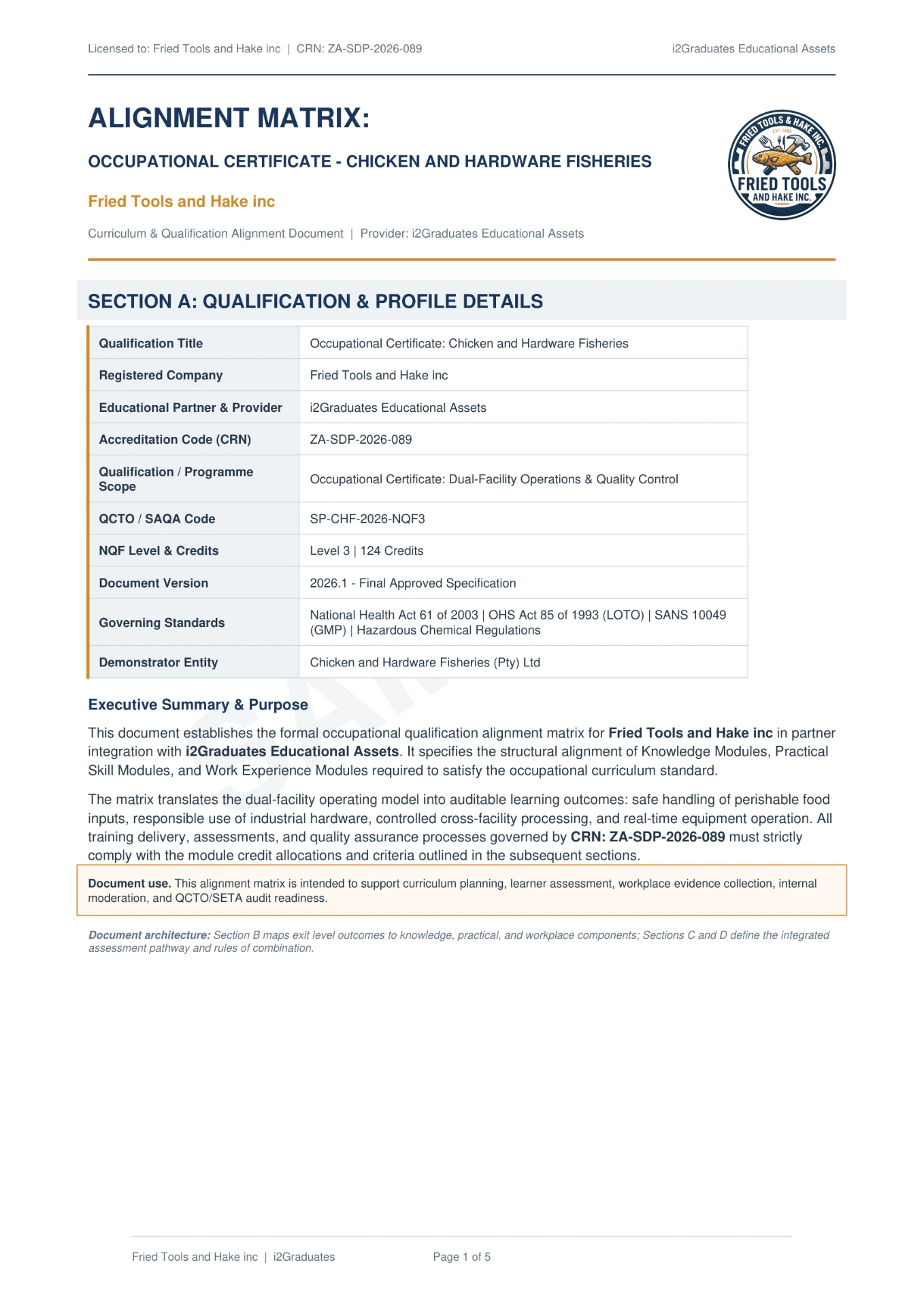
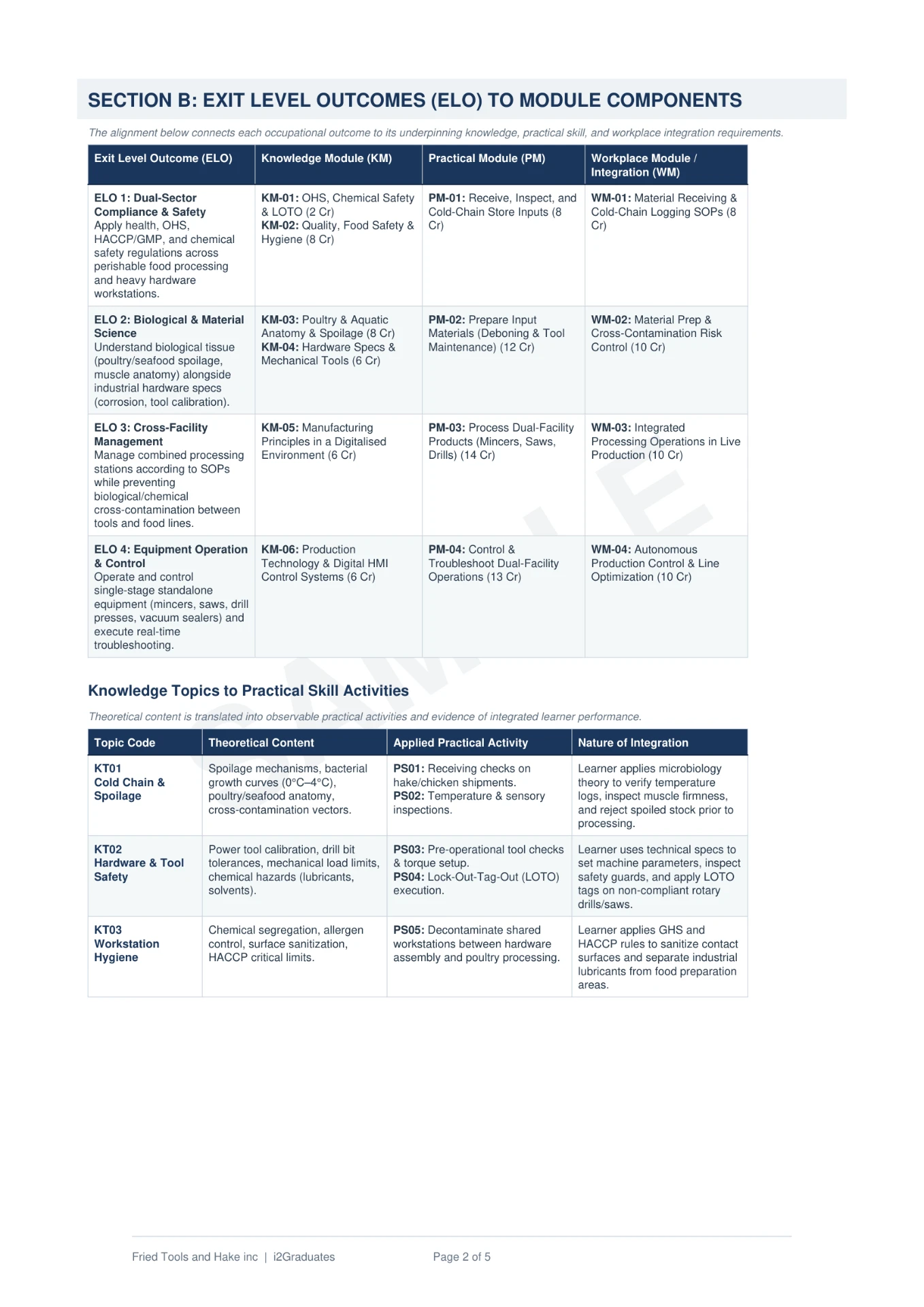
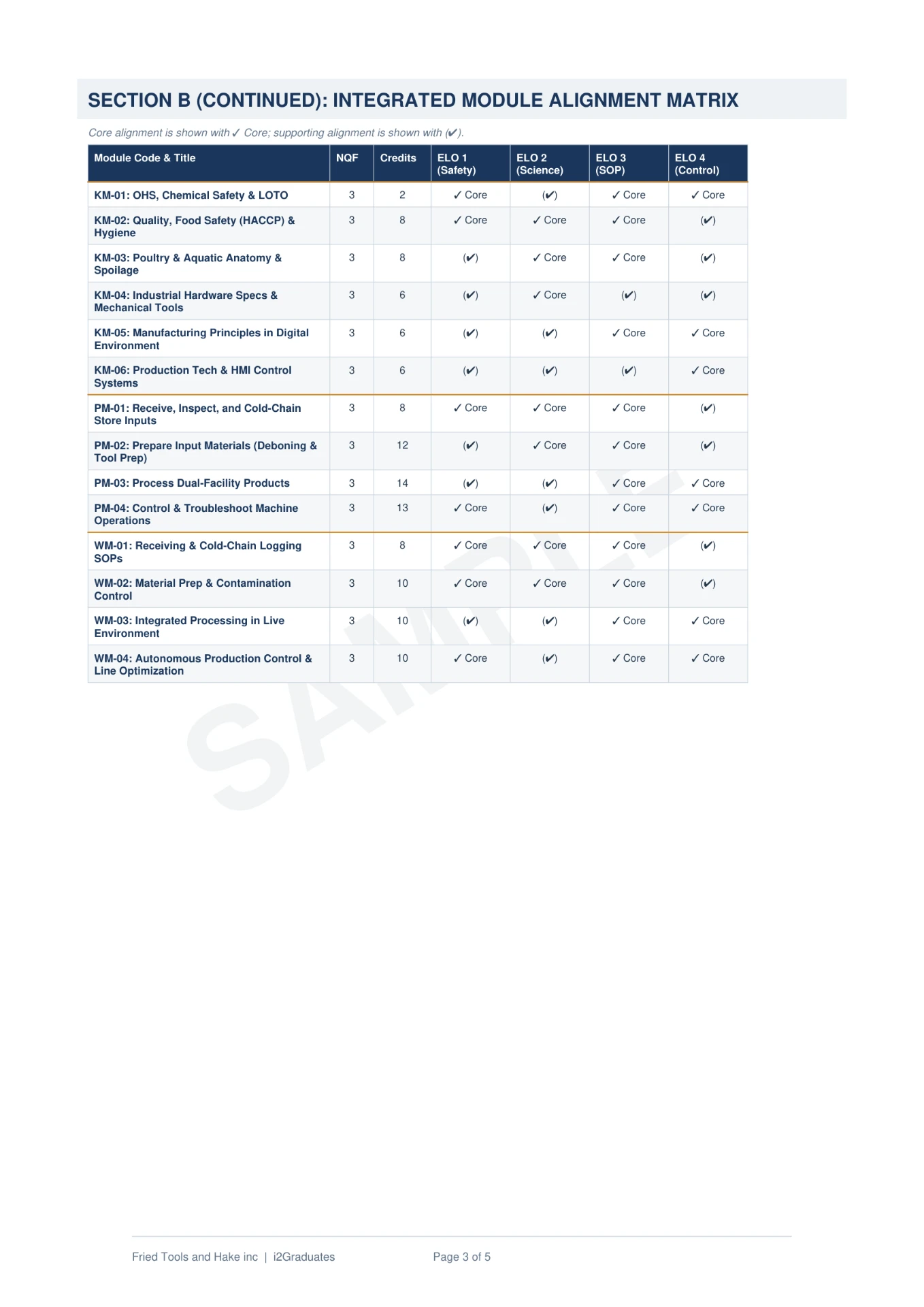
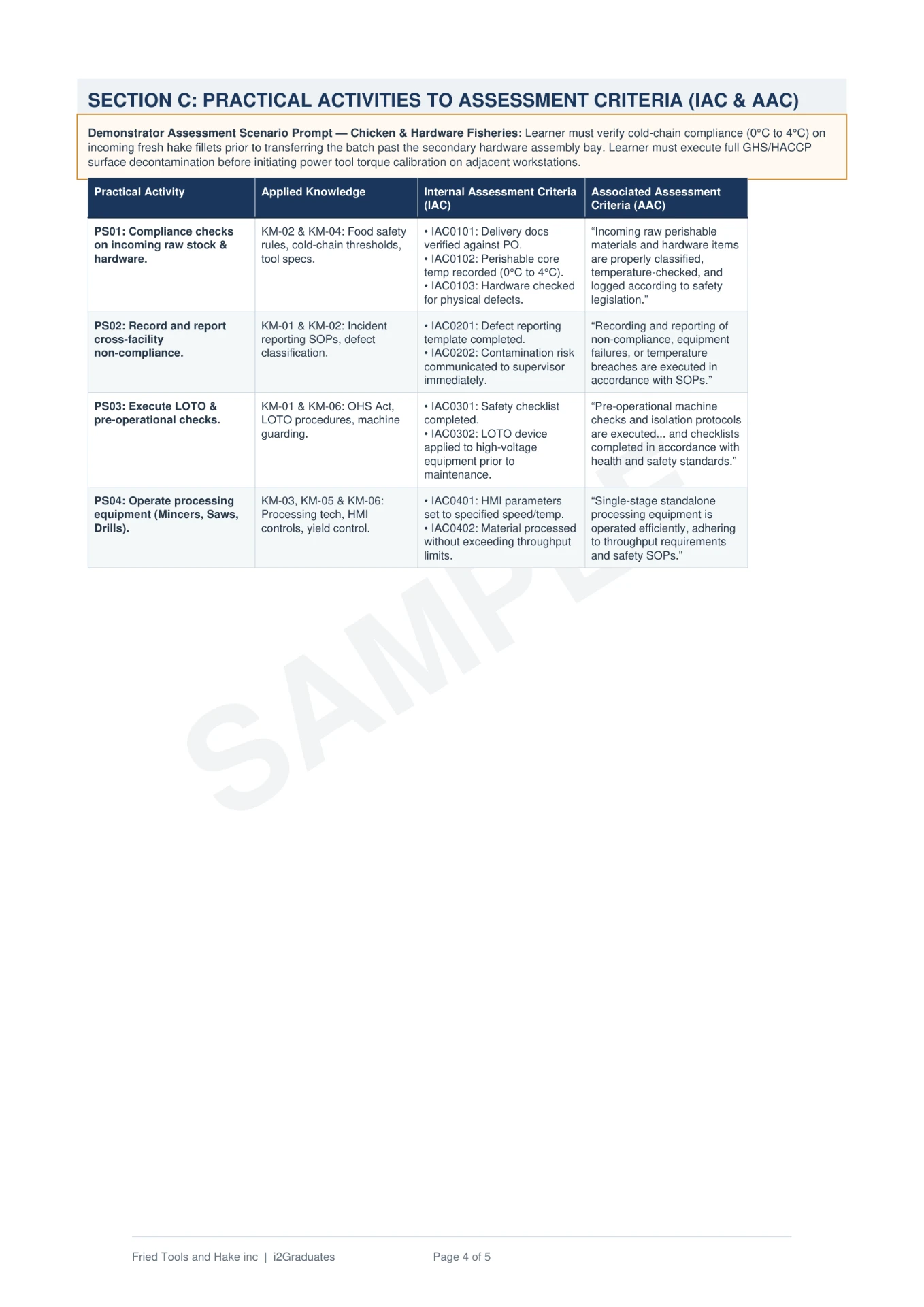
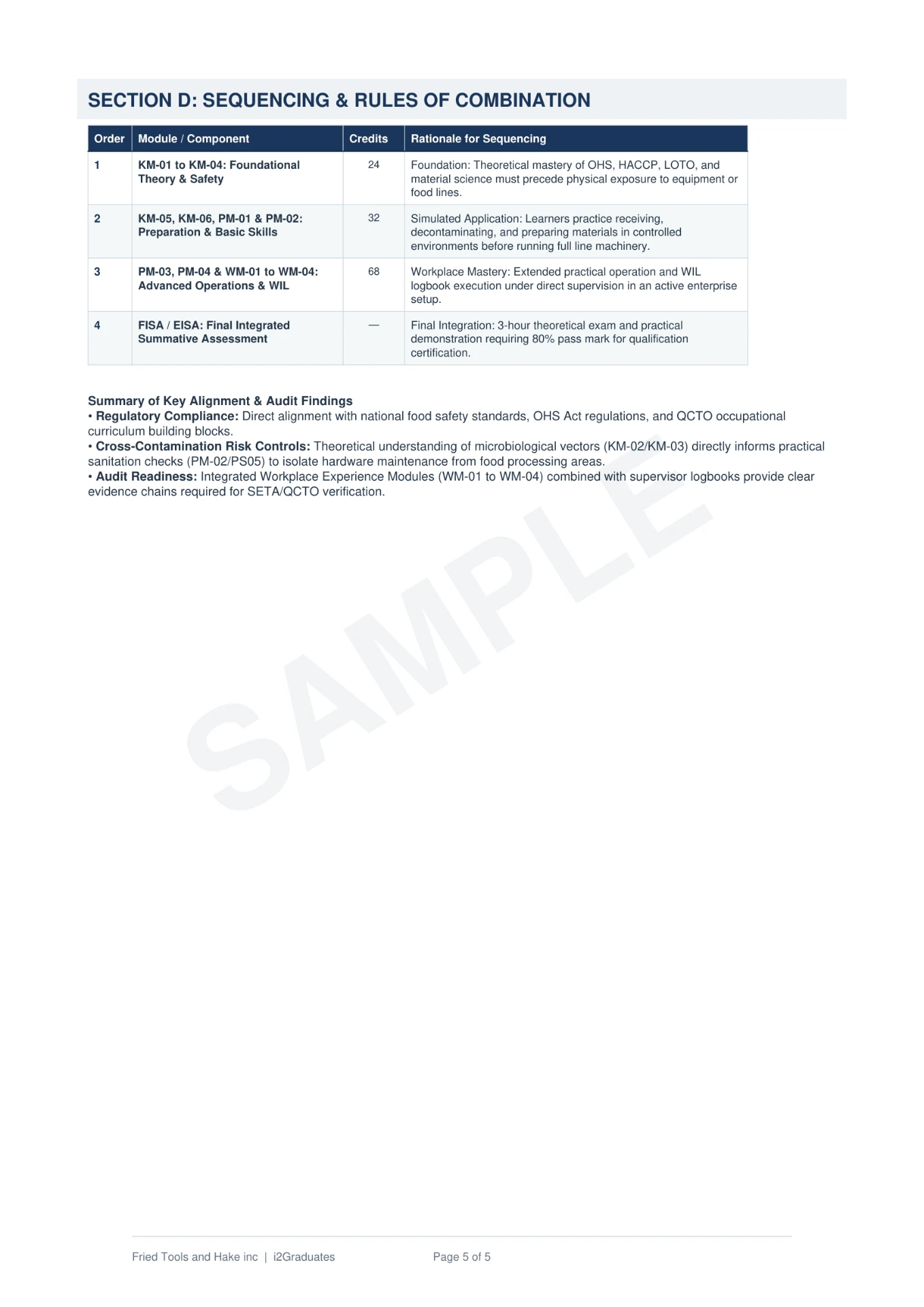
Overview & Scope
Programme Profile
- Target Designation
- Certified Master Toolmaker (Purpose Built Machine Master Toolmaker) Practitioner
- Competency Focus
- Master specialised practical applications, safety criteria, and regulatory mandates required of a qualified Master Toolmaker (Purpose Built Machine Master Toolmaker).
- Academic Weight
- Full national recognition at NQF Level 6 yielding 240 credits upon successful PoE verification.
- Work Opportunities
- Deployment across As a qualified master toolmaker (purpose built machine master toolmaker), you can find employment opportunities in Manufacturing, Engineering, Automotive. Your skills will be in demand across both public and private sectors, and you may also choose to work as an independent contractor or start your own business in this field. operations under MERSETA scope.
- Audit Objective
- Bridges operational skills deficits under the governing MERSETA quality matrix.
- Value Proposition
- Measurable, legally compliant skills that optimise productivity, satisfy Workplace Skills Plans (WSP), and unlock B-BBEE scorecard weight.
Introduction▾
Designed as a Occupational Certificate at NQF Level 6 worth 240 credits, the Master Toolmaker (Purpose Built Machine Master Toolmaker) equips you with both theoretical understanding and hands-on capabilities. You will learn to perform complex tasks, solve real-world problems, and adapt to the demands of a dynamic work environment. This qualification is your stepping stone to becoming a confident, capable professional.
Purpose▾
The purpose of this qualification is to prepare a learner to operate as an/a Purpose Built Machine Master Toolmaker. A Purpose Built Machine Master Toolmaker designs, manufactures, commissions and maintains purpose-built machines; integrates processes and equipment; tests processes and maintains specialised purpose-built machines by integrating these, multiple technologies and business management processes into a cost effective solution. A qualified learner will be able to: • Design, manufacture and maintain specialised purpose-built machines. • Manage and integrate purpose-built machine, jigs and fixtures building processes, equipment, multiple technologies and business management processes into a cost effective purpose-built machines. • Test and maintain production systems in relation to the specific purpose-built machines, jigs and fixtures.
Entry Requirements▾
Recognition of Prior Learning (RPL): RPL for access to the external integrated summative assessment: Accredited providers and approved workplaces must apply the internal assessment criteria specified in the related curriculum document to establish and confirm prior learning. Accredited providers and workplaces must confirm prior learning by issuing a statement of result or certifying a work experience record. RPL for access to the qualification: Accredited providers and approved workplaces may recognise prior learning against the relevant access requirements. Entry Requirements: Toolmaker at NQF Level 5 or fitter and turner NQF Level 4 or machinist trade NQF Level 4 and four years' experience in any field of specialisation i.e. Plastics or Rubber or Glass, Metal Forming, Casting and Die Casting, Specialised Machinist or Fitting and Turning.
SAQA Rationale▾
The need for revamping and updating the training capacity for the Tool, Die and Mould manufacturing (TDM) sector cannot be over-emphasised and the Quality Council for Trades and Occupation (QCTO) model for provision of training received overwhelming support from the industry. In particular, the advent of this system is considered opportune to address existing problems in the industry, such as: • Improved industrial competitiveness by addressing current loss of work to competitor countries resulting from the lack of skills availability, decline in quality standards (out-dated non-competitive technology), decline in South Africa TDM companies' ability to meet delivery capacity and timing requirements. • Improve the BBBEE transformation in TDM industry where as a result of perceived distress in the sector, financial institutions and investors classify this industry sector as high risk, thus empowerment investment to date remains largely insignificant. Capacity building will address start-up SME enterprises in the sector to improve investor perception and improve chances for investment finance. • Improve the Balance of Payments through import substitution resulting from local production and manufacturing competitiveness, i.e. machine setting, tooling adjustment and tool maintenance services. The improved competiveness will further address downstream problems like plant downtime, higher scrap rates, drop in output efficiencies, quality problems, missed supply deadlines, and increased input costs. The master artisan concept exhibits great potential to revive the seeming "dwindling away" of trades and trades uptake, with the capacity to assist trades people to achieve the social recognition and prestige enjoyed by other professionals in the community. The completion of the Purpose Built Machine Master Toolmaker marks a significant moment in South Africa's industrial history, where highly skilled artisans for the first time will be able to access formal recognition, recognition that will also play a leading role in elevating the status of trade's careers and conferring prestige on South African artisans in the twenty-first century. The SA TDM sector views the introduction of the Purpose Built Machine Master Toolmaker qualification, of serious significance for the transformation of the sector. The range of typical learners that will enter this new master artisan qualification are people who are generally qualified Toolmaker artisans, with at least four years practical experience in making Tooling within the industry and who would like to advance their skills, competencies and employment in the Tool and Die Making industry. This qualification resides as one of several in the mechanical engineering and manufacturing environments and makes allowance for any toolmaking sector artisan occupation within this context to gain access to the more specialised aspects of Tool, Die and Mould making. The Master Artisan qualifications in Toolmaking further make provision for artisans to progress within this discipline to more specialised aspects such as technology, management, financial and entrepreneurial skills development. The main benefits of this qualification for the learner are that the learner has an opportunity to be recognised as a qualified master artisan with well-structured, relevant and current competencies and have access to entrepreneurial opportunities within the mechanical engineering and manufacturing environments. Society will be served by artisans qualified at a high level of specialisation in specific aspects of the toolmaking sector, thus contributing to the competitiveness of South Africa's manufacturing sector. The overall benefits for the economy would include efficient and effective high end Toolmaking competencies available to be utilised for economic growth purposes.
Learning Assumed to be in Place & RPL▾
Recognition of Prior Learning (RPL): RPL for access to the external integrated summative assessment: Accredited providers and approved workplaces must apply the internal assessment criteria specified in the related curriculum document to establish and confirm prior learning. Accredited providers and workplaces must confirm prior learning by issuing a statement of result or certifying a work experience record. RPL for access to the qualification: Accredited providers and approved workplaces may recognise prior learning against the relevant access requirements. Entry Requirements: Toolmaker at NQF Level 5 or fitter and turner NQF Level 4 or machinist trade NQF Level 4 and four years' experience in any field of specialisation i.e. Plastics or Rubber or Glass, Metal Forming, Casting and Die Casting, Specialised Machinist or Fitting and Turning.
Exit Level Outcomes▾
- Design, manufacture and maintain specialised purpose-built machines.
- Manage and integrate purpose-built machine, jigs and fixtures building processes, equipment, multiple technologies and business management processes into a cost effective purpose-built machines.
- Test and maintain production systems in relation to the specific purpose-built machines, jigs and fixtures.
Learning Material Included
- Learner Guide (Theory and Knowledge Modules)
- Facilitator Guide
- Workplace Logbook
- Formative and Summative Assessment
- Assessor Guide & Marking Memorandum
- SETA / QCTO Alignment Matrix
- Administrative & Onboarding Pack
- Implementation Plan
Qualification 98889 · Curriculum Architecture
Occupational Certificate: Master Toolmaker (Purpose Built Machine Master Toolmaker) · NQF Level 6 (240 Credits)
Three Curriculum Pillars
Knowledge Modules
Classroom & E-Learning
- Facilitated lectures & self-study
- Written question banks
- Formative comprehension checks
Practical Skill Modules
Simulated Line Tasks
- Simulated line tasks
- Observation rubrics
- Structured task sheets
Work Experience Modules
On-the-Job Production
- On-the-job rotation
- Mentor logbooks
- Workplace sign-offs
Evidence & Audit Pipeline
Learner Portfolio of Evidence (PoE)Owner · Candidate▾
Admin & Registration
ID, learner contract, induction pack, POPIA consent.
Knowledge Evidence
Written assessments & question banks — KM-01 to KM-07.
Practical Evidence
Task sheets, observation rubrics, assessor photos.
Workplace Evidence
Logbooks, mentor sign-offs, supervisor letters.
Assessor Master FileOwner · Registered Assessor▾
Assessment Reports
Judgements, learner feedback, remediation agreements, appeals log.
Internal Moderation & Quality FileOwner · Moderator / SDP▾
Moderation Evidence
10% sampling matrix, HACCP/LOTO compliance sheets, SDP sign-off.
Final Accreditation Gateway
Issued by the accredited Skills Development Provider once internal moderation is signed off.
Provider submits declaration + PoE to the Assessment Quality Partner (AQP).
QCTO awards the SAQA-registered certificate on successful EISA outcome.
Audit & Compliance
Evidence & Audit Pipeline
From portfolio assembly to external sign-off — the exact route your evidence travels.
- Step 1
PoE Assembly
Learner evidence, formative records and logbook entries filed against the alignment matrix.
- Step 2
Internal Assessment
Registered assessor judges each KM/PM/WM outcome using the supplied instruments.
- Step 3
Internal Moderation
Sampling and verification of assessor decisions, with remediation loop before submission.
- Step 4
External Moderation
SETA/QCTO desktop audit and certification upload against registered credits.
Broken Standard vs i2Graduates Standard
The measurable delta between improvised material and an audit-ready suite.
Broken Standard
i2Graduates Standard
Curriculum Mapping
Photocopied guides with mismatched outcomes
3 KM + 3 PM + 2 WM modules mapped to NQF Level 6
Assessment Bank
Missing formative and summative assessments
Pre-validated assessment bank per module
Alignment Evidence
No alignment matrix — audit fails
MERSETA alignment matrix included
Facilitation
Facilitators improvise Master Toolmaker (Purpose Built Machine Master Toolmaker) delivery
Facilitator scripts + learner activities per credit
Portfolio of Evidence
PoE gaps flagged in moderation
PoE templates that survive external moderation
Pricing & Delivery Tiers
Base licence from R72 000
Digital Master Suite
Editable master files, licensed to your SDP
- Learner Guide, Facilitator Guide & Assessment Suite
- Workplace logbook + alignment matrix (editable)
- Instant digital delivery under institutional licence
- Free minor corrections for 12 months
Turnkey Print & Bound Package
Printed, bound and couriered per learner
- Everything in the Digital Master Suite
- Full-colour print, wire-bound learner packs
- Per-learner PoE folders and dividers
- Nationwide courier with tracked delivery
Full Enterprise Accreditation Bundle
Assets plus accreditation support end-to-end
- Everything in the Print & Bound Package
- Bespoke QMS build mapped to your scope
- Moderation dry-run + written remediation report
- Brand & metadata integration across the suite
Complementary Services
Optional add-ons that harden your accreditation scope before an external audit.
Bespoke QMS Build
We author your Quality Management System — policies, procedures, records, matrices — mapped to your accreditation scope. From R18,500.
Request QuoteModeration Consultation
External moderation dry-run on your PoE + delivery pack. Written report with fixes before your real audit. From R4,900.
Book Moderation SessionThe i2Graduates Quality Guarantee
Every page of this bundle is checked for sequence and structural accuracy — no missing pages, no shortcuts. You get pre-validated assessment instruments ready to survive rigorous compliance moderation, wrapped in a curriculum your facilitators will enjoy teaching.