
Occupational Qualification · L5
Discretionary Grant · UpcomingLandscape Designer
- NQF Level
- NQF Level 5
- Credits
- 280
- Duration
- —
- SAQA ID
- 121128
Official QCTO Registry Profile
Source: SAQA / QCTO registry- SAQA ID
- 121128
- Min Credits
- 280
- Registered
- 2023-11-14
- Re-registration
- 2028-11-14
- Field
- Field 01 - Agriculture and Nature Conservation
- Sub-field
- Horticulture
Sample Asset Preview
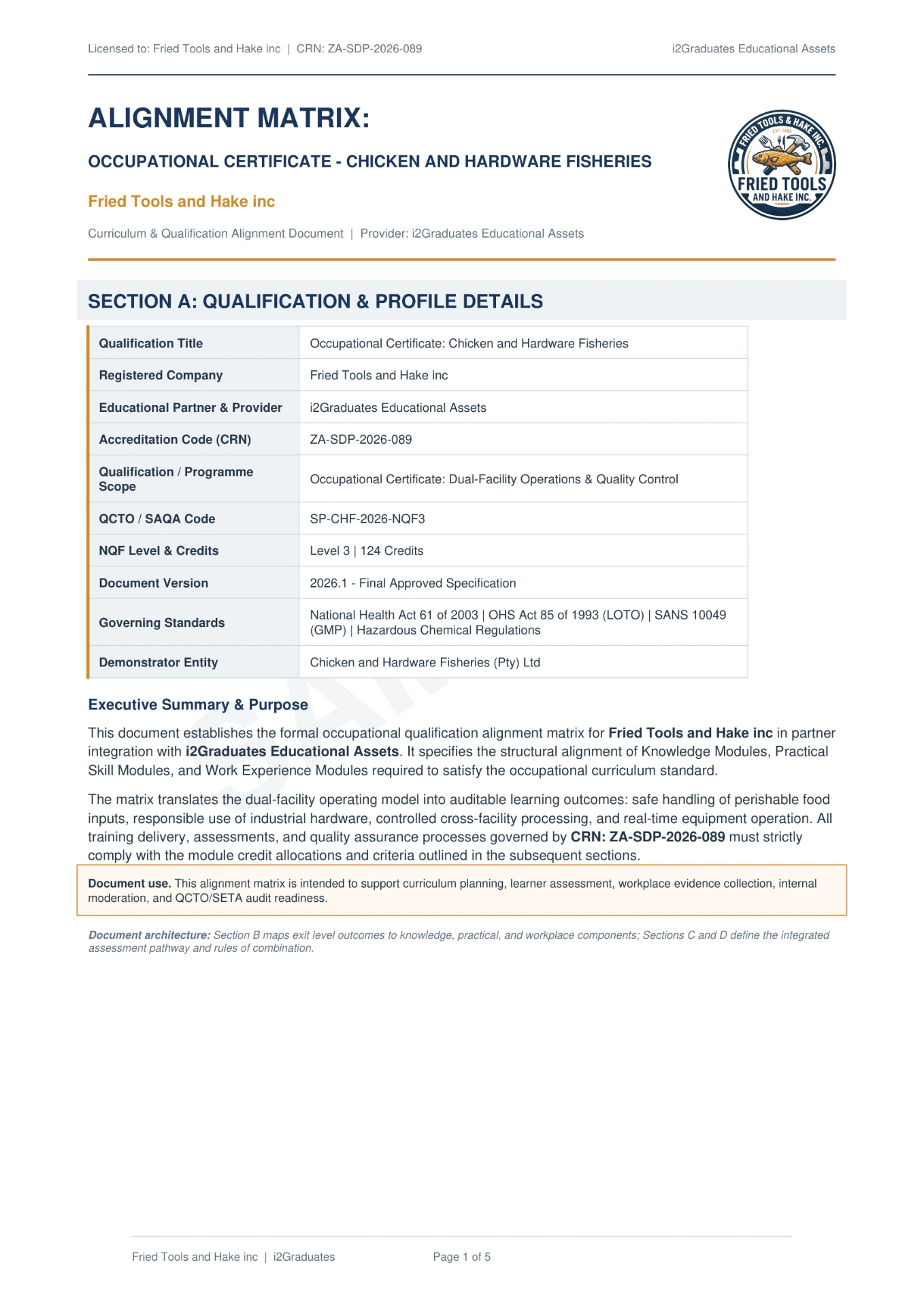
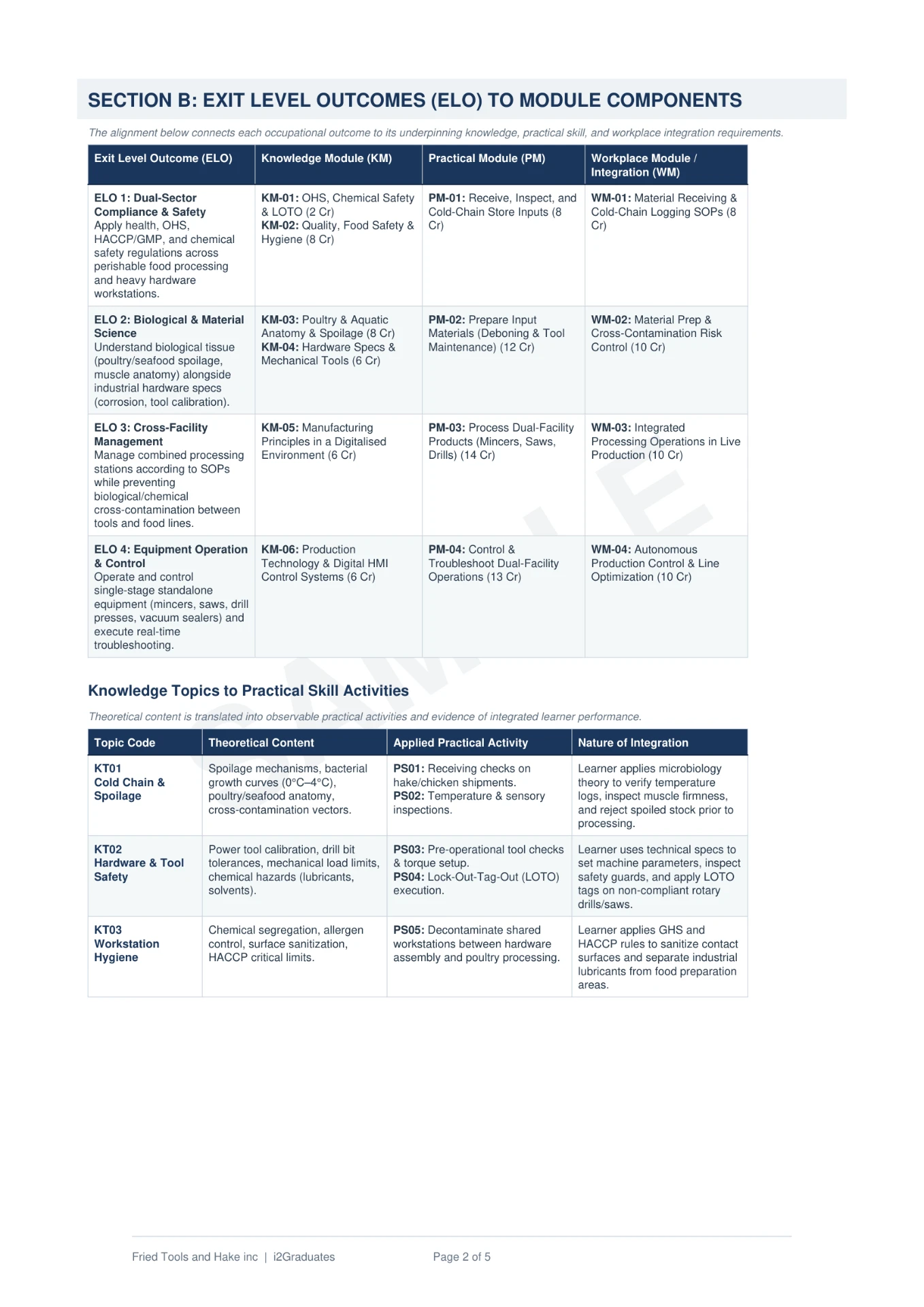
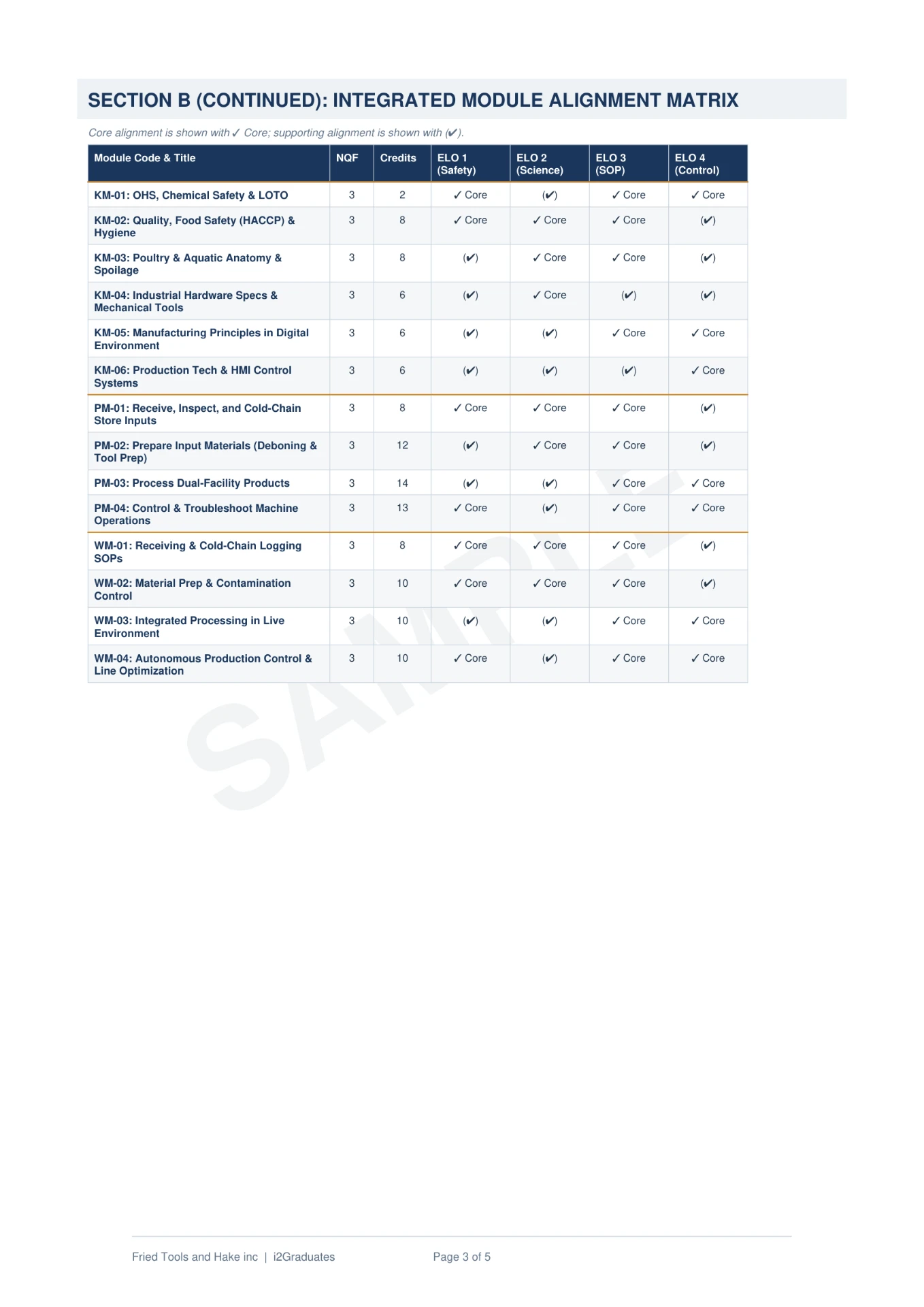
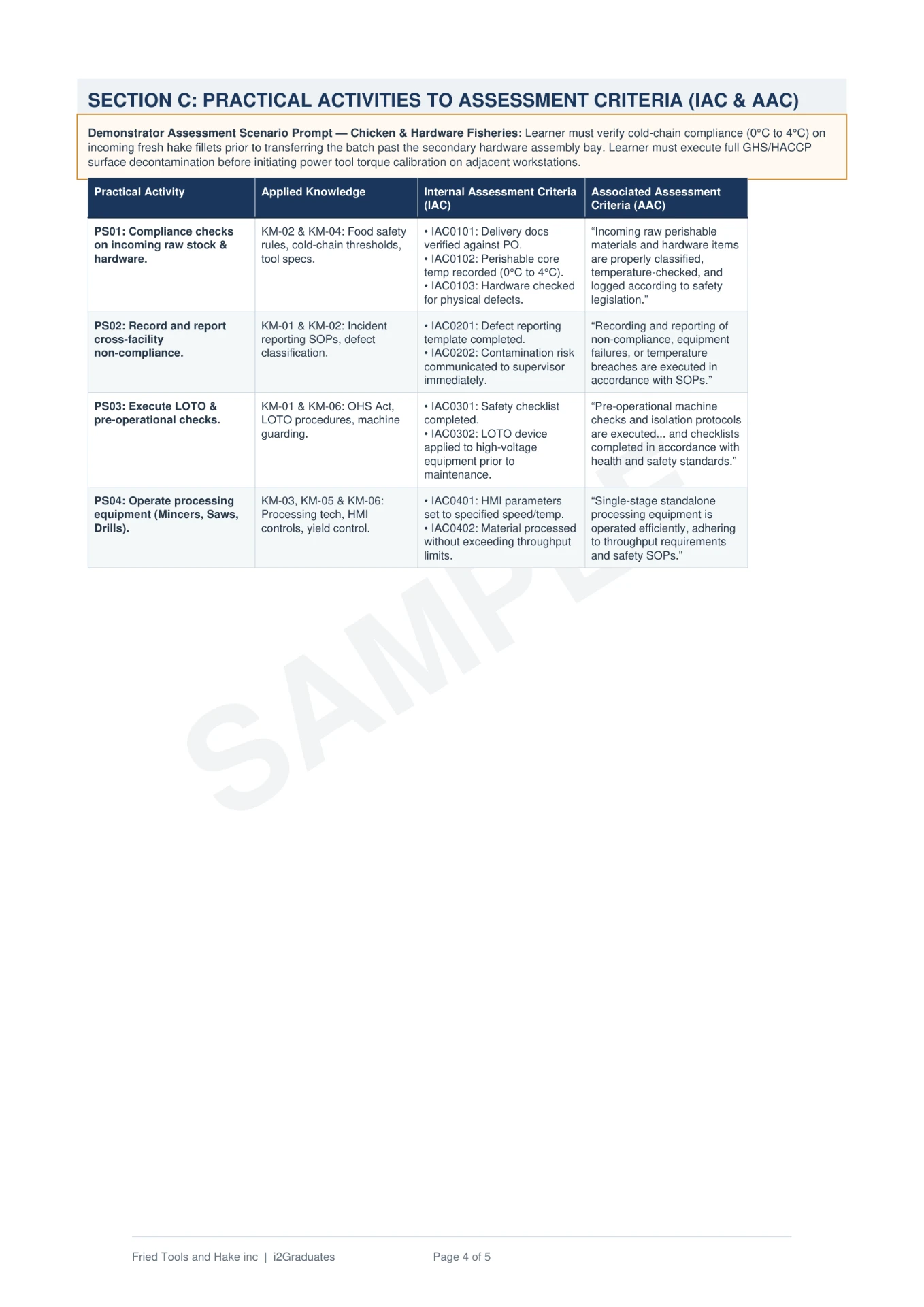
Overview & Scope
Programme Profile
- Target Designation
- Certified Landscape Designer Practitioner
- Competency Focus
- Master specialised practical applications, safety criteria, and regulatory mandates required of a qualified Landscape Designer.
- Academic Weight
- Full national recognition at NQF Level 5 yielding 280 credits upon successful PoE verification.
- Work Opportunities
- Deployment across As a qualified landscape designer, you can find employment opportunities in Agriculture, Farming, Agribusiness. Your skills will be in demand across both public and private sectors, and you may also choose to work as an independent contractor or start your own business in this field. operations under AGRISETA scope.
- Audit Objective
- Bridges operational skills deficits under the governing AGRISETA quality matrix.
- Value Proposition
- Measurable, legally compliant skills that optimise productivity, satisfy Workplace Skills Plans (WSP), and unlock B-BBEE scorecard weight.
Introduction▾
The Landscape Designer is a Occupational Certificate set at NQF Level 5, comprising 280 credits. This qualification has been carefully developed to provide you with the essential knowledge, practical skills, and workplace experience needed to excel in your chosen field. Whether you are starting your career or looking to formalise your existing expertise, this programme offers a structured pathway to competence and recognition.
Purpose▾
The purpose of this qualification is to prepare a learner to function as a Landscape Designer. A Landscape Designer conceptualises sustainable landscape design solutions by combining creative artistic thinking and critical problem-solving skills to establish responsive landscapes. They develop these landscape concepts into final designs with sufficient levels of detail to enable construction on these residential sites. Typical graduate attributes include innovation, problem-solving and artistic flair. A qualified learner will be able to: • Gather and analyse relevant information to inform design concepts to maximise the landscape development of residential sites. • Visualise and draught a feasible landscape concept by combining creative, artistic, innovative, and problem-solving skills for client approval. • Produce a finalised landscape design solution through detailed development of the approved concept.
Entry Requirements▾
This qualification is ideal for individuals with some work experience or prior learning who wish to formalise their skills and advance their careers. It is specifically designed for anyone who aspires to become a landscape designer and wants a structured, nationally recognised learning pathway. Whether you are currently working in the field or just starting out, this programme will meet you where you are and take you to the next level.
SAQA Rationale▾
Landscape design is a critical step in bringing about healthy and sustainable outdoor spaces and places for human use and enjoyment. Landscapes cannot be constructed and maintained without a thoroughly thought-out design solution and presentation. Landscape design is the art of arranging elements (landforms, vegetation, water, paving and structures) in such a manner as to make good outdoor spaces. The need for and benefit to society and the landscaping sector and the importance of good landscape design is understood when one takes cognisance of the following: the world's population is increasing and the need for green, well-designed open spaces at gardens, landscapes, park, and city level is ever increasing; The amount of time that people work, sleep, and rest and participate in social activities affects the type of outdoor spaces that are required for ultimate human well-being and enjoyment. Furthermore, the COVID pandemic resulted in the need for people to engage and interact with the immediate outdoor environment has highlighted the need for well-designed gardens and landscapes where people reside. Legislative changes can and have affected the nature and scope of landscaping. Planning laws in some places require certain landscape interventions to be carried out and approved as part of property developments, and this begins with the approval of the landscape design plans and the knowledge and awareness of health and safety factors increase, the impacts thereof are considered in developing appropriate landscape design solutions that carry through to construction, maintenance, and use of the outdoor space. As plants' physical and psychological importance is understood and acknowledged, the nature and degree of attention given to planting design, an integral part of any landscape design solution, will become more important. Economically, appealing landscaping can increase property and resale values, lower energy costs, improve business and sales and create positive perceptions for areas. This qualification aims to equip learners with the competence and knowledge to design a landscape effectively and efficiently, thereby producing sufficient information in the form of plans and bills of quantities for the landscape design to be constructed. In addition, learners will be able to provide customers with a landscape design that meets the needs and requirements of the client functionally and appealingly. Typical learners include school leavers, graduates from institutions of learning, and persons employed in the landscape industries with experience as supervisors or junior managers undertaking landscape construction and/or maintenance and with a keen interest in wanting to design outdoor spaces. Sectors within the landscaping industry offering possible employment opportunities typically include but are not limited to the following: • Landscape industry i.e., construction and maintenance where designs are required for residential (within the scope limitations of the qualification) properties. • Municipalities where basic design skills are required in urban green space, residential areas, and community gardens. • Self-employed in a niche market. Learners can be employed as Landscape Designers, Community Garden Designers Facilitators and Garden Designers, or can start their own businesses as entrepreneurs. Currently, no professional registration is necessary to operate as a Landscape Designer. Some similar qualifications are registered on the NQF. However, these are at a higher level, are more complex, and require professional registration. There are none at the Higher Occupational Certificate: Landscape Designer level. This qualification forms an integral step in the career and learning path for persons employed or wishing to build a career in the landscaping industry. It is one of several qualifications and may build on the Landscape Worker, Landscape Assistant, Horticulture Team Leader, Landscaping Supervisor, and Garden Designer. This qualification may prepare learners for further studies in landscape architecture and technology. The Higher Occupational Certificate: Landscape Designer has a part qualification: Occupational Certificate: Garden Designer. This will enable learners to exit at an appropriate level with sufficient skills to exit learning and earn an income as a Garden Designer, as well as provide a seamless entry into the Higher Occupational Certificate: Landscape Designer. It, therefore, also reduces the learning timeframe before a learner can become employable. Furthermore, the parameters between the two and appropriate exit skills for the full and part qualifications the following applies: • Landscape design parameters refer to residential landscapes which may pose some design challenges (referring to site conditions, climatic challenges and existing infrastructure), which could include accommodation of multiple functions and site features requiring special consideration. • Garden design parameters refer to home gardens of limited challenges, featuring typical household use and limited to single use and food gardens, excluding earthworks or earth shaping.
Exit Level Outcomes▾
- Gather information from a range of sources, including oral, written, or symbolic texts, regarding client brief, site potential, and parameters to inform the landscape design concept.
- Evaluate information regarding informing the landscape design concept to realise the site potential and possible landscape design solutions and consider the client's needs.
- Visualise and draught a feasible landscape design concept using creative thinking and problem-solving, site and fundamental design knowledge.
- Apply design methods, procedures, and techniques to produce a finalised, quantified landscape design solution in line with the approved concept and budget.
Learning Material Included
- Learner Guide (Theory and Knowledge Modules)
- Facilitator Guide
- Workplace Logbook
- Formative and Summative Assessment
- Assessor Guide & Marking Memorandum
- SETA / QCTO Alignment Matrix
- Administrative & Onboarding Pack
- Implementation Plan
Qualification 121128 · Curriculum Architecture
Occupational Certificate: Landscape Designer · NQF Level 5 (280 Credits)
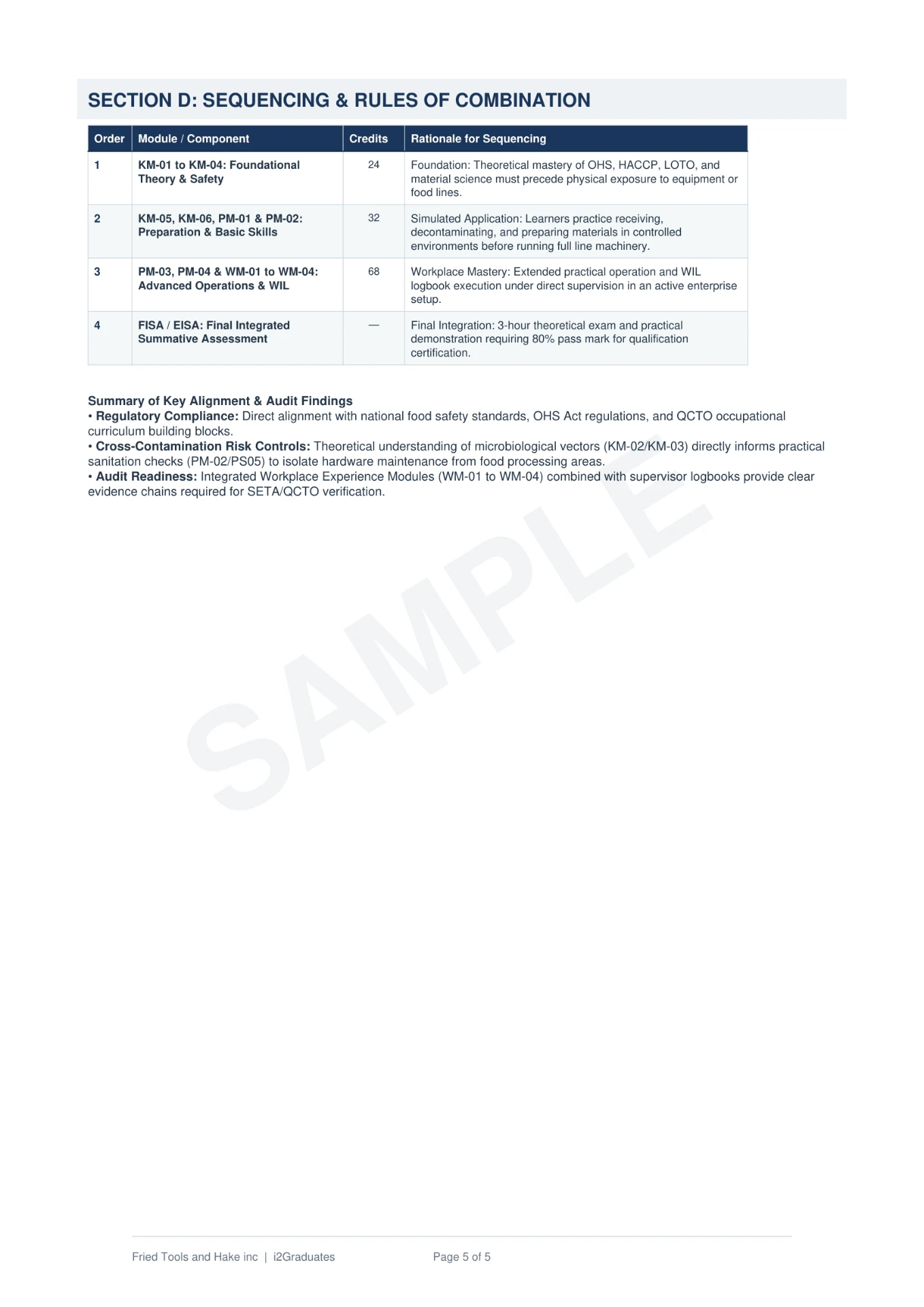
Three Curriculum Pillars
Knowledge Modules
Classroom & E-Learning
- Facilitated lectures & self-study
- Written question banks
- Formative comprehension checks
Practical Skill Modules
Simulated Line Tasks
- Simulated line tasks
- Observation rubrics
- Structured task sheets
Work Experience Modules
On-the-Job Production
- On-the-job rotation
- Mentor logbooks
- Workplace sign-offs
Evidence & Audit Pipeline
Learner Portfolio of Evidence (PoE)Owner · Candidate▾
Admin & Registration
ID, learner contract, induction pack, POPIA consent.
Knowledge Evidence
Written assessments & question banks — KM-01 to KM-07.
Practical Evidence
Task sheets, observation rubrics, assessor photos.
Workplace Evidence
Logbooks, mentor sign-offs, supervisor letters.
Assessor Master FileOwner · Registered Assessor▾
Assessment Reports
Judgements, learner feedback, remediation agreements, appeals log.
Internal Moderation & Quality FileOwner · Moderator / SDP▾
Moderation Evidence
10% sampling matrix, HACCP/LOTO compliance sheets, SDP sign-off.
Final Accreditation Gateway
Issued by the accredited Skills Development Provider once internal moderation is signed off.
Provider submits declaration + PoE to the Assessment Quality Partner (AQP).
QCTO awards the SAQA-registered certificate on successful EISA outcome.
Audit & Compliance
Evidence & Audit Pipeline
From portfolio assembly to external sign-off — the exact route your evidence travels.
- Step 1
PoE Assembly
Learner evidence, formative records and logbook entries filed against the alignment matrix.
- Step 2
Internal Assessment
Registered assessor judges each KM/PM/WM outcome using the supplied instruments.
- Step 3
Internal Moderation
Sampling and verification of assessor decisions, with remediation loop before submission.
- Step 4
External Moderation
SETA/QCTO desktop audit and certification upload against registered credits.
Broken Standard vs i2Graduates Standard
The measurable delta between improvised material and an audit-ready suite.
Broken Standard
i2Graduates Standard
Curriculum Mapping
Photocopied guides with mismatched outcomes
3 KM + 3 PM + 2 WM modules mapped to NQF Level 5
Assessment Bank
Missing formative and summative assessments
Pre-validated assessment bank per module
Alignment Evidence
No alignment matrix — audit fails
AGRISETA alignment matrix included
Facilitation
Facilitators improvise Landscape Designer delivery
Facilitator scripts + learner activities per credit
Portfolio of Evidence
PoE gaps flagged in moderation
PoE templates that survive external moderation
Pricing & Delivery Tiers
Base licence from R69 000
Digital Master Suite
Editable master files, licensed to your SDP
- Learner Guide, Facilitator Guide & Assessment Suite
- Workplace logbook + alignment matrix (editable)
- Instant digital delivery under institutional licence
- Free minor corrections for 12 months
Turnkey Print & Bound Package
Printed, bound and couriered per learner
- Everything in the Digital Master Suite
- Full-colour print, wire-bound learner packs
- Per-learner PoE folders and dividers
- Nationwide courier with tracked delivery
Full Enterprise Accreditation Bundle
Assets plus accreditation support end-to-end
- Everything in the Print & Bound Package
- Bespoke QMS build mapped to your scope
- Moderation dry-run + written remediation report
- Brand & metadata integration across the suite
Complementary Services
Optional add-ons that harden your accreditation scope before an external audit.
Bespoke QMS Build
We author your Quality Management System — policies, procedures, records, matrices — mapped to your accreditation scope. From R18,500.
Request QuoteModeration Consultation
External moderation dry-run on your PoE + delivery pack. Written report with fixes before your real audit. From R4,900.
Book Moderation SessionThe i2Graduates Quality Guarantee
Every page of this bundle is checked for sequence and structural accuracy — no missing pages, no shortcuts. You get pre-validated assessment instruments ready to survive rigorous compliance moderation, wrapped in a curriculum your facilitators will enjoy teaching.