
Occupational Qualification · F48
Discretionary Grant · RollingFootwear Pattern Maker and Grader
- NQF Level
- NQF Level 4
- Credits
- 121
- Duration
- —
- SAQA ID
- 118786
Official QCTO Registry Profile
Source: SAQA / QCTO registry- SAQA ID
- 118786
- Min Credits
- 121
- Registered
- 2022-02-03
- Re-registration
- 2025-12-31
- Field
- Field 06 - Manufacturing, Engineering and Technology
- Sub-field
- Manufacturing and Assembly
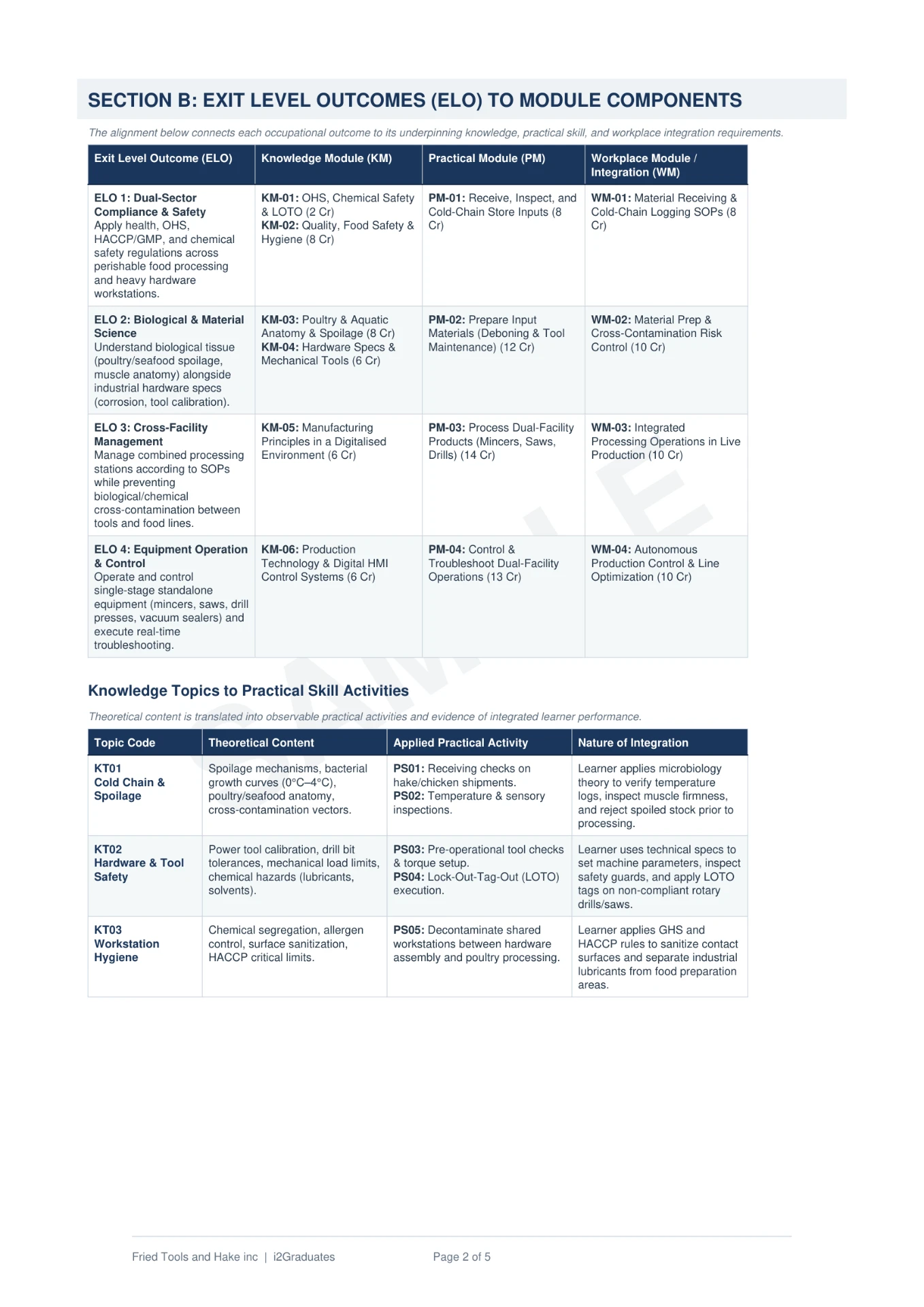
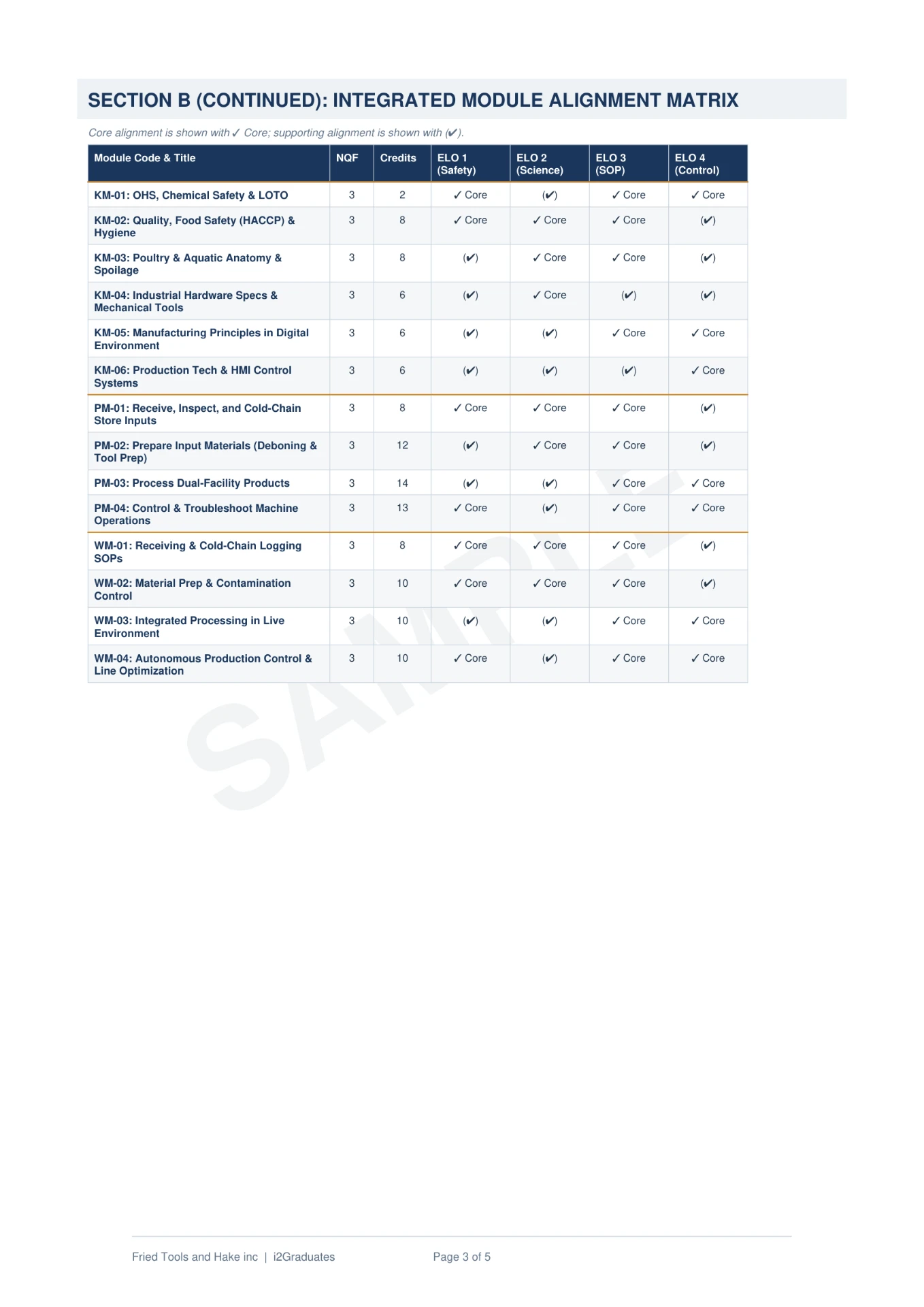
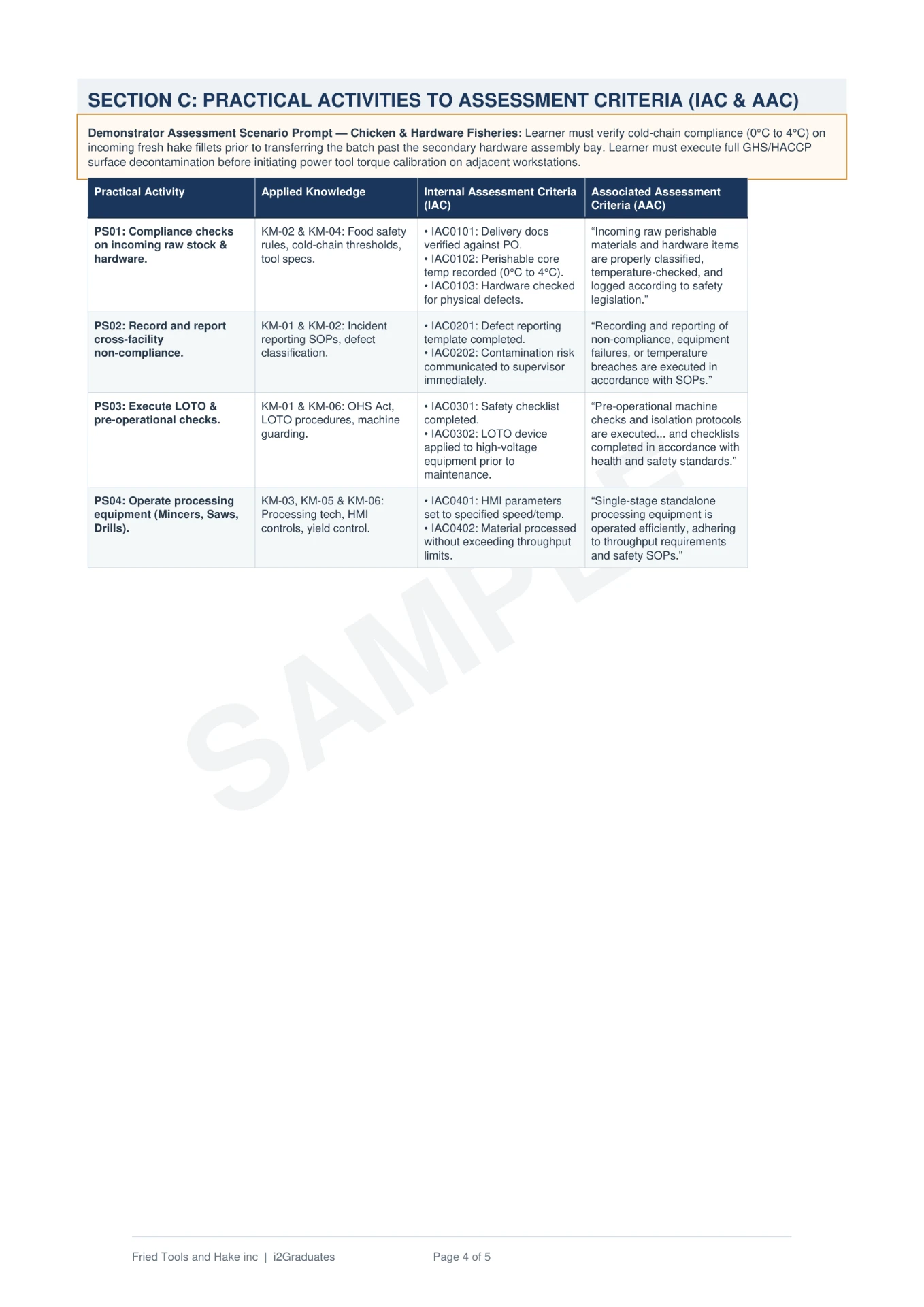
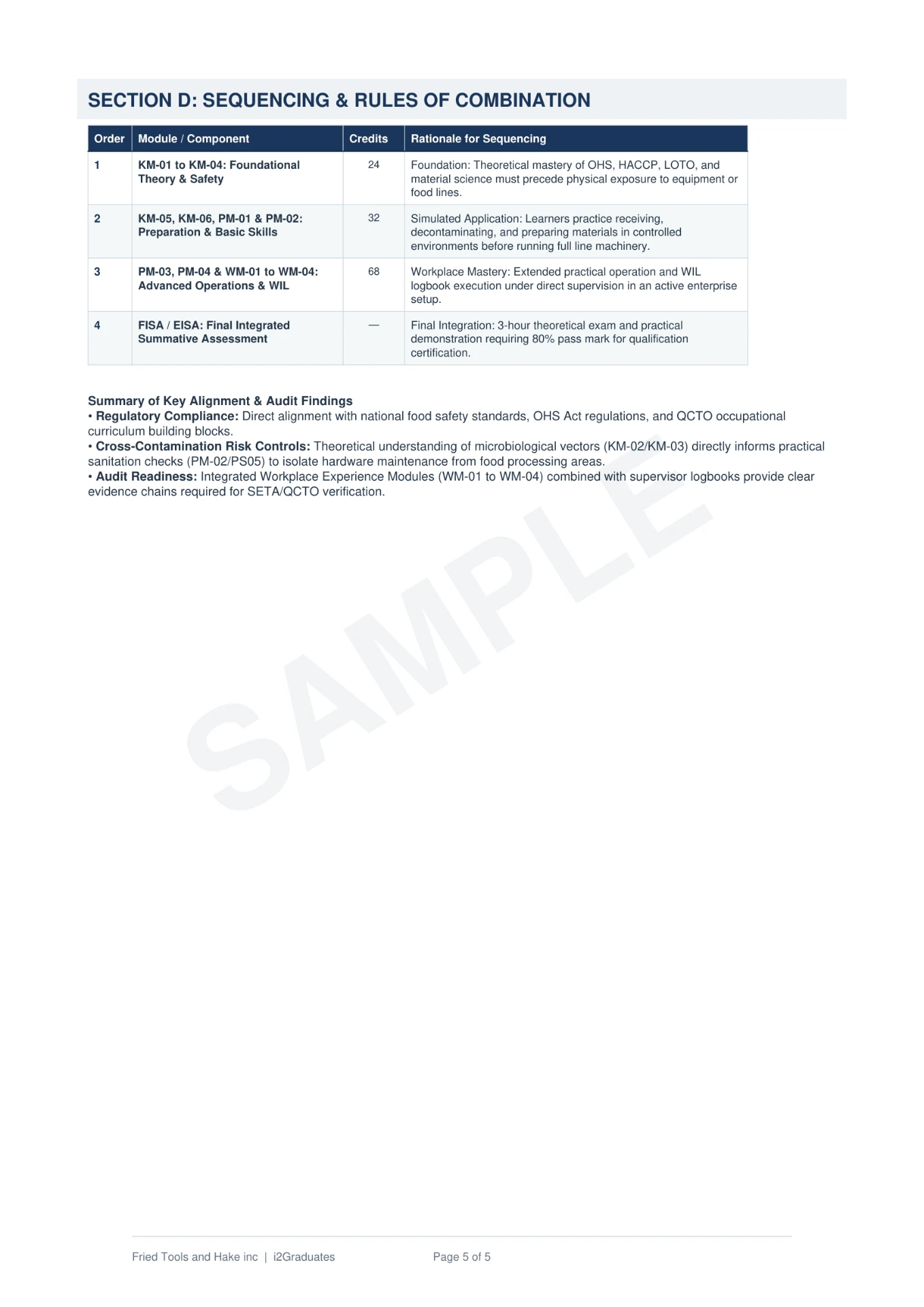
Sample Asset Preview

Overview & Scope
Programme Profile
- Target Designation
- Certified Footwear Pattern Maker and Grader Practitioner
- Competency Focus
- Master specialised practical applications, safety criteria, and regulatory mandates required of a qualified Footwear Pattern Maker and Grader.
- Academic Weight
- Full national recognition at NQF Level 4 yielding 121 credits upon successful PoE verification.
- Work Opportunities
- Deployment across As a qualified footwear pattern maker and grader, you can find employment opportunities in Furniture, Paper, Printing, Packaging, Forestry. Your skills will be in demand across both public and private sectors, and you may also choose to work as an independent contractor or start your own business in this field. operations under FP&M SETA scope.
- Audit Objective
- Bridges operational skills deficits under the governing FP&M SETA quality matrix.
- Value Proposition
- Measurable, legally compliant skills that optimise productivity, satisfy Workplace Skills Plans (WSP), and unlock B-BBEE scorecard weight.
Introduction▾
The Footwear Pattern Maker and Grader (NQF Level 4, 121 credits) is a comprehensive Occupational Certificate that blends foundational theory with intensive practical application. Throughout your learning journey, you will develop the competencies required to operate effectively, safely, and ethically within your industry. Employers value this qualification because it signals that you are job-ready from day one.
Purpose▾
The purpose of this qualification is to prepare a learner to operate as a Footwear Pattern Maker and Grader. A Footwear Pattern Maker and Grader produces patterns, prototypes, master specifications, tests and tooling for footwear based on designs provided by the designer and execute administrative processes, they also grade footwear patterns. A qualified learner will be able to: • Produce and engineer footwear patterns for a range of footwear styles and functionalities. • Produce prototypes and master specifications for a range of footwear styles and functionalities. • Produce graded patterns for a range of footwear styles and functionalities. • Facilitate tooling process for a range of footwear styles and functionalities. • Apply computer-aided design (CAD) footwear pattern making and grading software.
Entry Requirements▾
• Learners will gain access to the qualification through RPL for Access as provided for in the QCTO RPL Policy. RPL for access is conducted by accredited education institution, skills development provider or workplace accredited to offer that specific qualification/part qualification. • Learners who have acquired competencies of the modules of a qualification or part qualification will be exempted from modules through RPL. • Learners will be awarded credits for or towards the qualification or part qualification through RPL as provided in the QCTO RPL Policy. RPL for credits provides for the formal award of credits for, or towards a qualification or part-qualification registered on the NQF. RPL for access to the external integrated summative assessment Accredited providers and approved workplaces must apply the internal assessment criteria specified in the related curriculum document to establish and confirm prior learning. Accredited providers and workplaces must confirm prior learning by issuing a statement of result or certifying a work experience record. Entry Requirements: The minimum entry requirement for this qualification is: • NQF Level 3 qualification.
SAQA Rationale▾
Currently, there are no similar qualifications registered on the NQF. Therefore, this qualification is crucial in the construction of footwear. An absence of well-qualified Pattern Makers and Graders could potentially lead to ill-fitting footwear causing a number of physiological problems and even permanent deformities in humans. A Footwear Pattern Maker and Grader performs a crucial role in the manufacturing of quality footwear and without this role the impact on the quality and financial viability of the footwear product will be detrimental. By applying standardised skills and competencies, they will ensure wearability, comfort and aesthetic appearance and quality fit of footwear. A Footwear Pattern Maker and Grader is the professional that translates the ideas of the designer into a product. The main responsibility is the engineering of the patterns for uppers, bottomstock and linings. Footwear Pattern Makers and Graders study footwear blueprints or designs and prepare master patterns of shoe uppers and bottomstock. They cut footwear patterns into individual component parts and indicate markings, such as cone, back seam, or shank edge onto a sized last. A qualified learner will apply knowledge and understanding of materials, footwear construction and manufacturing capabilities of factories to compile manufacturing specifications for each footwear product, indicating requirements for processes, materials, trims and so forth applying a thorough understanding of the development of the shoe last and of all the bottom components such as insoles, soles and heels and the different materials that can be used in production such as leathers, synthetics and fabrics.. Typical learner target groups are school leavers or unemployed persons wanting to pursue a career in the footwear manufacturing industry or employees currently employed as Footwear Pattern Makers and Graders but without formal qualifications in this field. This qualification will contribute to the economy by creating suitably qualified persons that can fill important roles in the footwear industry. It will create progression in terms of learning, leading to multi-skilled employees. Furthermore, supporting the footwear industry to reduce defects and reworks leading to more profits. Footwear manufacturing companies will benefit from employing qualified Footwear Pattern Makers and Graders since they fulfil an important role in the footwear manufacturing process and as such will contribute to the quality and cost effectiveness of the footwear manufacturing process and product. The pattern making techniques are fundamental to the design process that leads to the creation of a footwear collection or range. Without a proper pattern, the manufacturer will not be able to produce good quality footwear. Qualified learners could find employment in any footwear manufacturing company and/or footwear design institutions as: • Sample chasers. • Pattern graders. • Footwear Pattern Makers and Graders. This qualification has been developed with the support, contribution and sign off from the following footwear stakeholders: • Footwear & Leather Industries Cluster (FLIC). • National Union of Leather and Allied Workers (NULAW). • SA Clothing & Textile Workers Union (SACTWU). • National Bargaining Council of the Leather Industry of South Africa • Department of Trade and Industry (DTI). • Fibre Processing and Manufacturing SETA Quality Assurance (FP&M SETA QA) • South African Footwear & Leather Industries Association (SAFLIA). Professional registration is not required for the Footwear Pattern Maker and Grader since no professional body exists.
Learning Assumed to be in Place & RPL▾
• Learners will gain access to the qualification through RPL for Access as provided for in the QCTO RPL Policy. RPL for access is conducted by accredited education institution, skills development provider or workplace accredited to offer that specific qualification/part qualification. • Learners who have acquired competencies of the modules of a qualification or part qualification will be exempted from modules through RPL. • Learners will be awarded credits for or towards the qualification or part qualification through RPL as provided in the QCTO RPL Policy. RPL for credits provides for the formal award of credits for, or towards a qualification or part-qualification registered on the NQF. RPL for access to the external integrated summative assessment Accredited providers and approved workplaces must apply the internal assessment criteria specified in the related curriculum document to establish and confirm prior learning. Accredited providers and workplaces must confirm prior learning by issuing a statement of result or certifying a work experience record. Entry Requirements: The minimum entry requirement for this qualification is: • NQF Level 3 qualification.
Exit Level Outcomes▾
- Read, understand, and interpret footwear design and manufacturing specifications, styles and construction and select correct last and other raw material based on a design specification.
- Create an accurate and neat master standard with relevant lasting allowances applicable to the specific last and footwear construction.
- Grade footwear standard with lines (one size up and one size down) and produce a neat, accurate and well labelled set of patterns.
- Understand the construction of and produce bottom stock (insole and sole) patterns and drop-in patterns.
- Compile a technical specification including a drawing for the manufacturing of the specific footwear using an understanding of the construction and assembly of footwear.
- Apply sizing systems and accurately apply during the grading of footwear standards.
- Apply tooling and footwear pattern making and grading principles to produce specifications for the ordering of dies and knives to specifications and achieve optimum efficiency.
Learning Material Included
- Learner Guide (Theory and Knowledge Modules)
- Facilitator Guide
- Workplace Logbook
- Formative and Summative Assessment
- Assessor Guide & Marking Memorandum
- SETA / QCTO Alignment Matrix
- Administrative & Onboarding Pack
- Implementation Plan
Moderator-Ready Curriculum Breakdown
13 modules · 113 creditsTheory, regulatory and safety knowledge. Each row carries the registered module code, NQF level and credit weight used for formative assessment rubric mapping.
- 683202-002-00-KM-014 cr
Introduction to Footwear Pattern Making and Grading
NQF Level 4
- 683202-002-00-KM-025 cr
Footwear Styles, Types and Construction
NQF Level 4
- 683202-002-00-KM-0310 cr
Footwear Pattern Making and Grading Principles
NQF Level 4
- 683202-002-00-KM-049 cr
Footwear Manufacturing Processes, Machines and Materials
NQF Level 4
- 683202-002-00-KM-052 cr
Introduction to Advanced Technology in Footwear Pattern Making and Grading
NQF Level 4
- 683202-002-00-KM-063 cr
Footwear Pattern Grading
NQF Level 4
Qualification 118786 · Curriculum Architecture
Occupational Certificate: Footwear Pattern Maker and Grader · NQF Level 4 (121 Credits)
Three Curriculum Pillars
Knowledge Modules
Classroom & E-Learning
- Facilitated lectures & self-study
- Written question banks
- Formative comprehension checks
Practical Skill Modules
Simulated Line Tasks
- Simulated line tasks
- Observation rubrics
- Structured task sheets
Work Experience Modules
On-the-Job Production
- On-the-job rotation
- Mentor logbooks
- Workplace sign-offs
Evidence & Audit Pipeline
Learner Portfolio of Evidence (PoE)Owner · Candidate▾
Admin & Registration
ID, learner contract, induction pack, POPIA consent.
Knowledge Evidence
Written assessments & question banks — KM-01 to KM-07.
Practical Evidence
Task sheets, observation rubrics, assessor photos.
Workplace Evidence
Logbooks, mentor sign-offs, supervisor letters.
Assessor Master FileOwner · Registered Assessor▾
Assessment Reports
Judgements, learner feedback, remediation agreements, appeals log.
Internal Moderation & Quality FileOwner · Moderator / SDP▾
Moderation Evidence
10% sampling matrix, HACCP/LOTO compliance sheets, SDP sign-off.
Final Accreditation Gateway
Issued by the accredited Skills Development Provider once internal moderation is signed off.
Provider submits declaration + PoE to the Assessment Quality Partner (AQP).
QCTO awards the SAQA-registered certificate on successful EISA outcome.
Audit & Compliance
Evidence & Audit Pipeline
From portfolio assembly to external sign-off — the exact route your evidence travels.
- Step 1
PoE Assembly
Learner evidence, formative records and logbook entries filed against the alignment matrix.
- Step 2
Internal Assessment
Registered assessor judges each KM/PM/WM outcome using the supplied instruments.
- Step 3
Internal Moderation
Sampling and verification of assessor decisions, with remediation loop before submission.
- Step 4
External Moderation
SETA/QCTO desktop audit and certification upload against registered credits.
Broken Standard vs i2Graduates Standard
The measurable delta between improvised material and an audit-ready suite.
Broken Standard
i2Graduates Standard
Curriculum Mapping
Photocopied guides with mismatched outcomes
6 KM + 3 PM + 4 WM modules mapped to NQF Level 4
Assessment Bank
Missing formative and summative assessments
Pre-validated assessment bank per module
Alignment Evidence
No alignment matrix — audit fails
FP&M SETA alignment matrix included
Facilitation
Facilitators improvise Footwear Pattern Maker and Grader delivery
Facilitator scripts + learner activities per credit
Portfolio of Evidence
PoE gaps flagged in moderation
PoE templates that survive external moderation
Pricing & Delivery Tiers
Base licence from R56 050
Digital Master Suite
Editable master files, licensed to your SDP
- Learner Guide, Facilitator Guide & Assessment Suite
- Workplace logbook + alignment matrix (editable)
- Instant digital delivery under institutional licence
- Free minor corrections for 12 months
Turnkey Print & Bound Package
Printed, bound and couriered per learner
- Everything in the Digital Master Suite
- Full-colour print, wire-bound learner packs
- Per-learner PoE folders and dividers
- Nationwide courier with tracked delivery
Full Enterprise Accreditation Bundle
Assets plus accreditation support end-to-end
- Everything in the Print & Bound Package
- Bespoke QMS build mapped to your scope
- Moderation dry-run + written remediation report
- Brand & metadata integration across the suite
Complementary Services
Optional add-ons that harden your accreditation scope before an external audit.
Bespoke QMS Build
We author your Quality Management System — policies, procedures, records, matrices — mapped to your accreditation scope. From R18,500.
Request QuoteModeration Consultation
External moderation dry-run on your PoE + delivery pack. Written report with fixes before your real audit. From R4,900.
Book Moderation SessionThe i2Graduates Quality Guarantee
Every page of this bundle is checked for sequence and structural accuracy — no missing pages, no shortcuts. You get pre-validated assessment instruments ready to survive rigorous compliance moderation, wrapped in a curriculum your facilitators will enjoy teaching.