
Occupational Qualification · E33
Discretionary Grant · OpenEngine Able Seafarer
- NQF Level
- NQF Level 3
- Credits
- 138
- Duration
- —
- SAQA ID
- 101729
Official QCTO Registry Profile
Source: SAQA / QCTO registry- SAQA ID
- 101729
- Min Credits
- 138
- Registered
- 2018-07-01
- Re-registration
- 2025-12-30
- Field
- Field 11 - Services
- Sub-field
- Transport, Operations and Logistics
Sample Asset Preview
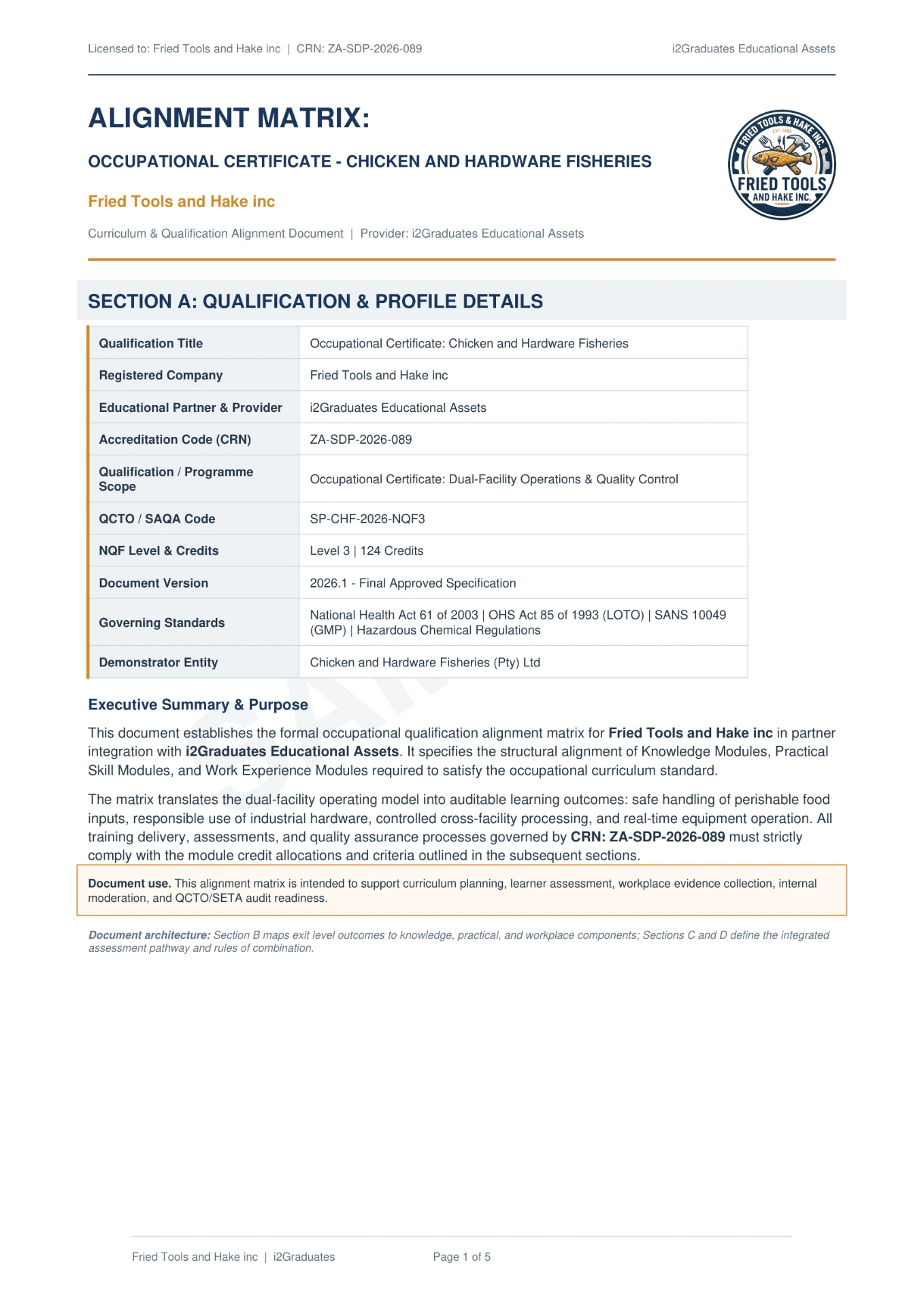
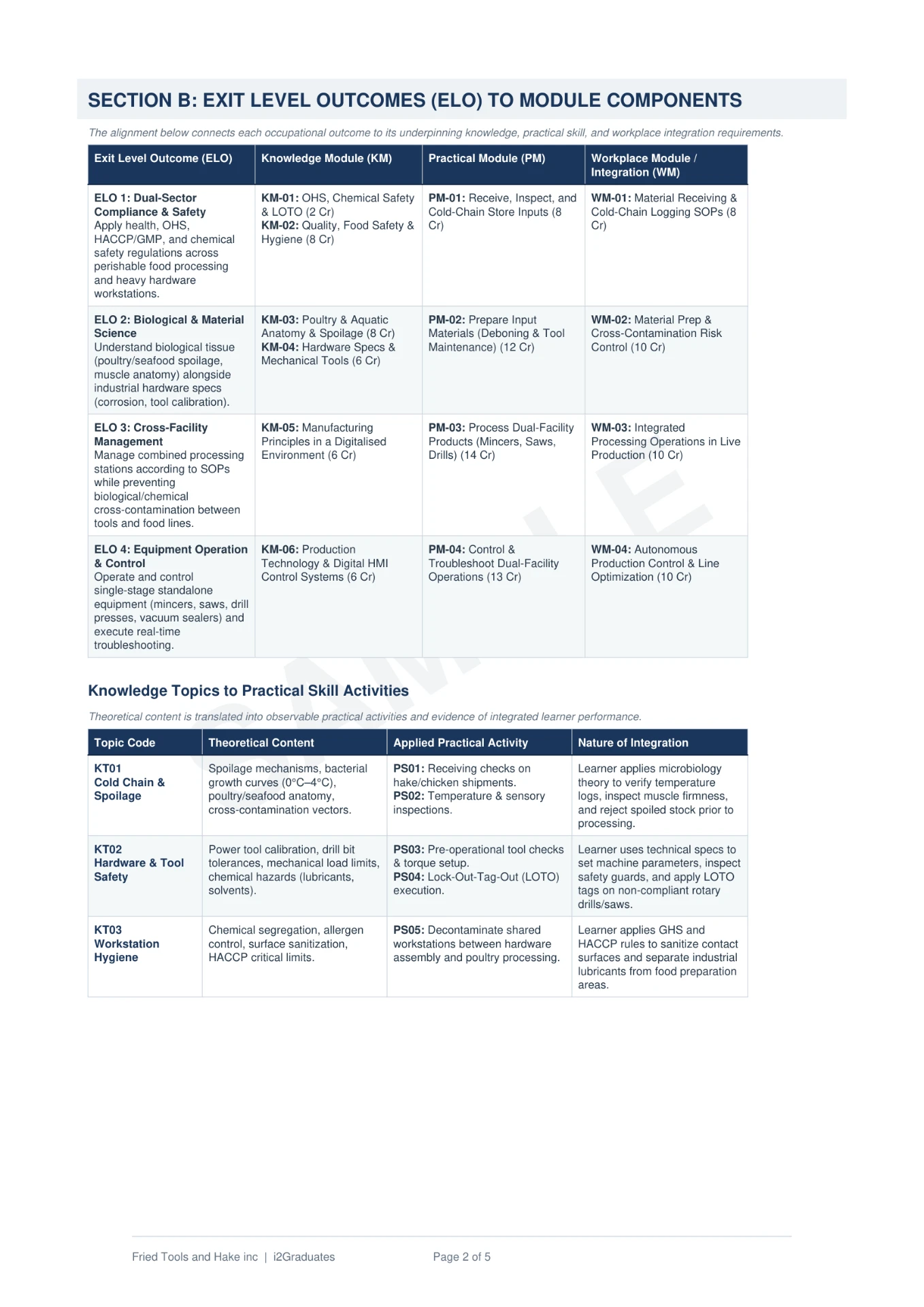
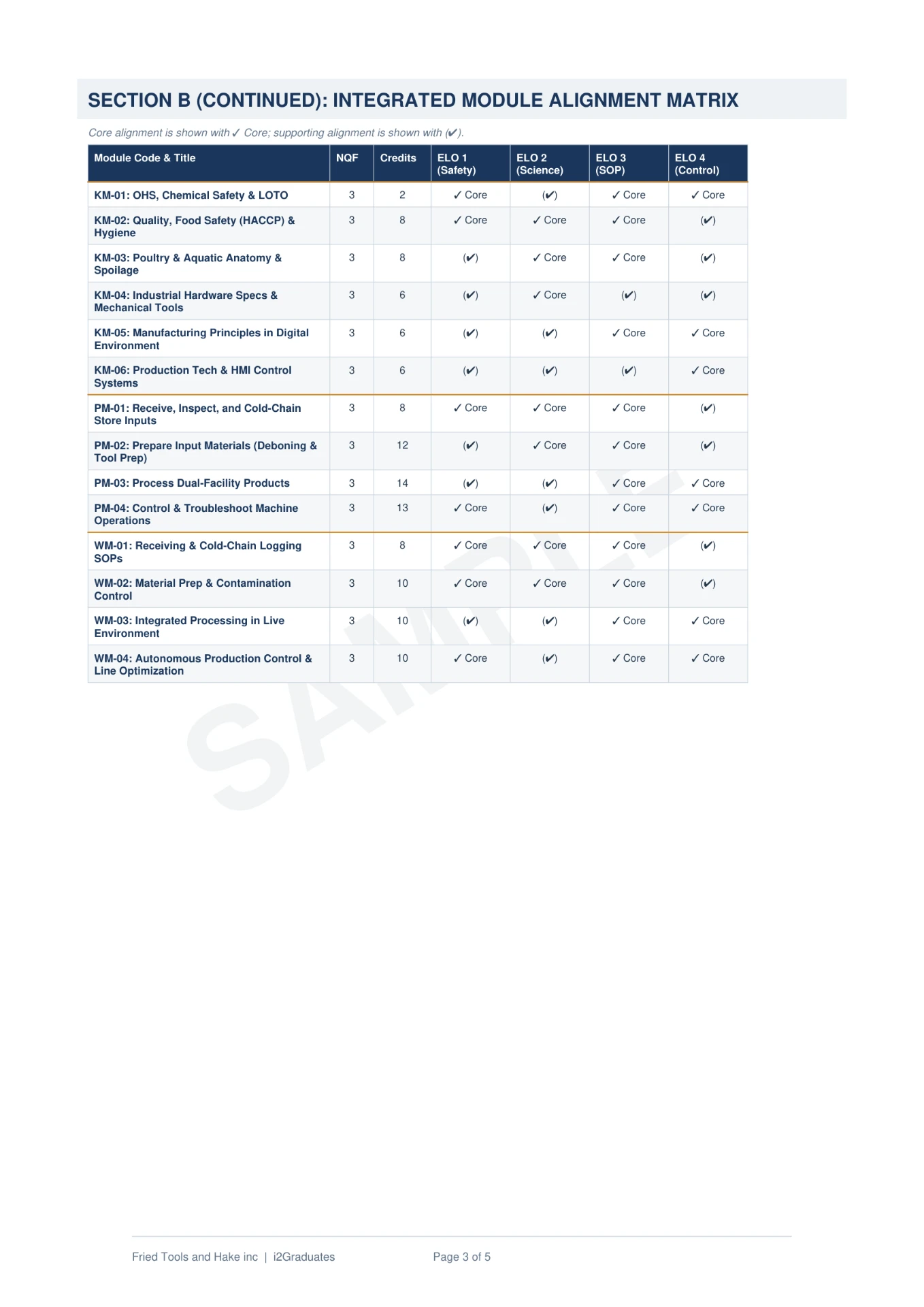
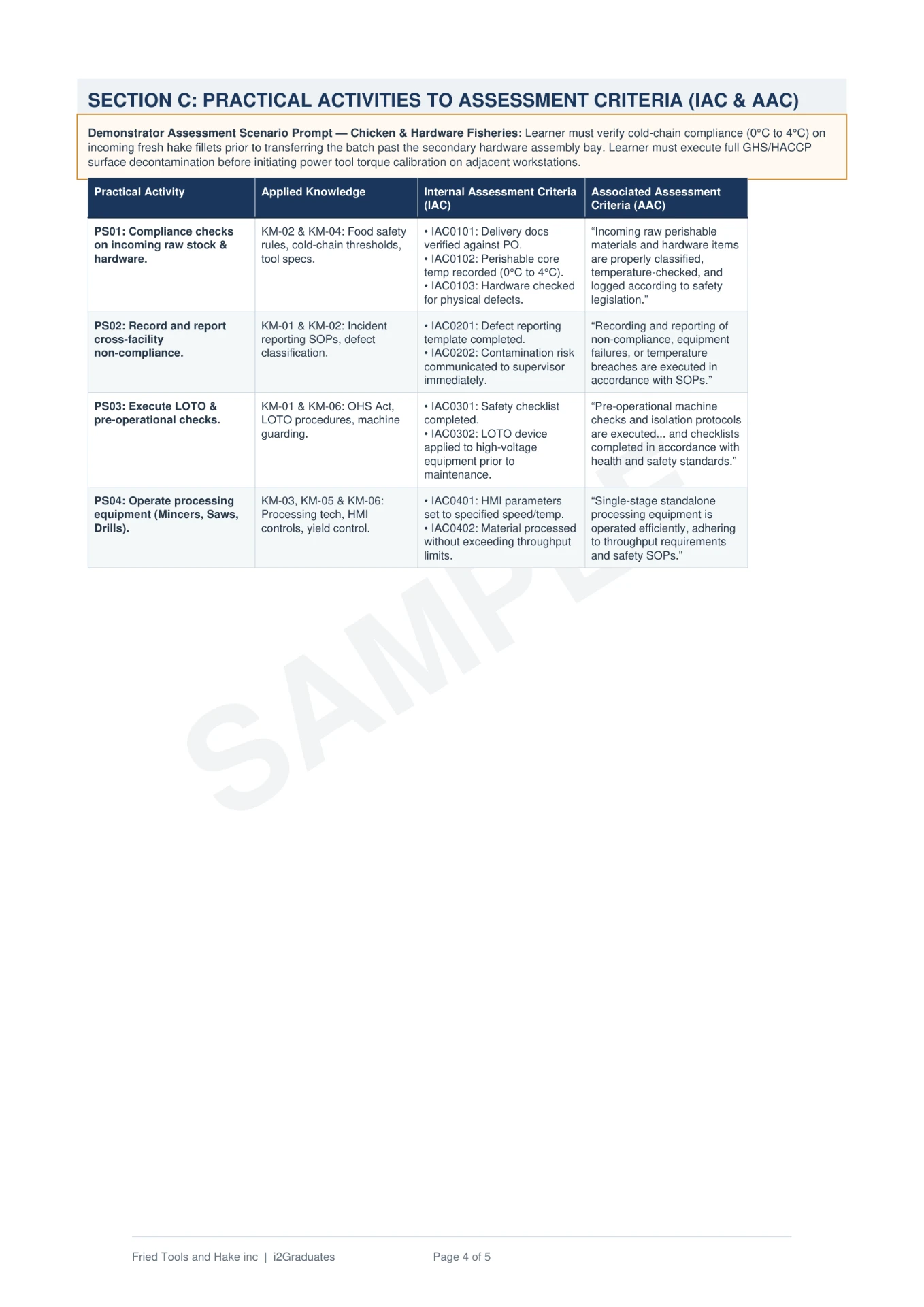
Overview & Scope
Programme Profile
- Target Designation
- Certified Engine Able Seafarer Practitioner
- Competency Focus
- Master specialised practical applications, safety criteria, and regulatory mandates required of a qualified Engine Able Seafarer.
- Academic Weight
- Full national recognition at NQF Level 3 yielding 138 credits upon successful PoE verification.
- Work Opportunities
- Deployment across As a qualified engine able seafarer, you can find employment opportunities in Transport, Logistics, Maritime, Aviation. Your skills will be in demand across both public and private sectors, and you may also choose to work as an independent contractor or start your own business in this field. operations under TETA scope.
- Audit Objective
- Bridges operational skills deficits under the governing TETA quality matrix.
- Value Proposition
- Measurable, legally compliant skills that optimise productivity, satisfy Workplace Skills Plans (WSP), and unlock B-BBEE scorecard weight.
Introduction▾
Designed as a Occupational Certificate at NQF Level 3 worth 138 credits, the Engine Able Seafarer equips you with both theoretical understanding and hands-on capabilities. You will learn to perform complex tasks, solve real-world problems, and adapt to the demands of a dynamic work environment. This qualification is your stepping stone to becoming a confident, capable professional.
Purpose▾
The purpose of this qualification is to prepare a learner to operate as an Engine Able Seafarer. The Engine Able Seafarer performs engineering, operational and maintenance tasks at a support level on board a vessel. A qualified learner will be able to: • Provide marine engineering watchkeeping assistance at the support level. • Handle bunkering and internal liquid transfers at the support level. • Provide shipboard operations assistance and care for persons on board at the support level. • Perform safe electrical, electronic and control engineering processes at the support level. • Provide maintenance and repairs at the support level. • Carry out security duties and contingency plans at the support level.
Entry Requirements▾
Recognition of Prior Learning (RPL): RPL for access to the external integrated summative assessment: Accredited providers and approved workplaces must apply the internal assessment criteria specified in the related curriculum document to establish and confirm prior learning. Accredited providers and workplaces must confirm prior learning by issuing a statement of result or certifying a work experience record. RPL for access to the qualification: Accredited providers and approved workplaces may recognise prior learning against the relevant access requirements. Entry Requirements: • Level 2 with Mathematics and Communication.
SAQA Rationale▾
The maritime transport industry, and shipping in particular, is subject to international political, economic and social pressures, typically conventions and protocols emerging from organizations like the International Maritime Organisation (IMO), the International Labour Organisation (ILO) and the United Nations Environmental Programme (UNEP). This characteristic requires the governance of the industry to be as sensitive to international considerations as it is to domestic considerations. South African Maritime Safety Authority's (SAMSA's) responsibility regarding the qualification of seafarers (as the authority that certificates South African seafarers and accredits training institutions) requires it to retain the IMO accreditation (South African seafarers' employment opportunities are dependent on recognition of South African certificates of competence). SAMSA must also ensure the availability and advancement of South Africa's various maritime skills. This qualification will address the need for education and training of Engine Able Seafarers in South Africa as there is no recognized National qualification currently which satisfies the SAMSA requirements and therefore the international requirements. It will ensure compliance with international standard practice and Harbour regulations. In the past, the nature of the profession did not allow, nor promote, access to this area of economic activity. This qualification will entrench open-access to a career as a Second Mate. South African training institutions providing training are accredited by SAMSA, which is in turn accredited by the IMO. The continued accreditation of SAMSA is vital. The standards set by the Quality Council for Trades and Occupations (QCTO) system are aligned with STCW95 and thus ensure that South Africa's education, training and eventual certification standards continue to be internationally recognised. It was agreed that even the Occupations falling in the first group (via the Professional Body application), need to be allocated 'OFO Codes'. South Africa's geographic location relative to its main trading partners makes it imperative that maritime transport is efficient, innovative and reliable. Transportation makes up a significant element in the pricing of South African traded goods. Efficient transport services, ensuring the safe and timely arrival of freight, are a prerequisite to competitive and successful trading. Trade is the economic life-blood of nations, with maritime transport carrying over 90% of all international trade. The successful implementation of this qualification will support the above-mentioned strategies objectives. Although exact numbers are difficult to come by, the employees within the Maritime sectors sector have already indicated a critical need for these advanced level occupational qualifications. Therefore a big uptake is expected should these occupational qualifications and part qualifications be associated to the regulatory environment within the Maritime industry. It is anticipated that these occupational qualifications will be provided by various post-school institutions and private providers.
Learning Assumed to be in Place & RPL▾
Recognition of Prior Learning (RPL): RPL for access to the external integrated summative assessment: Accredited providers and approved workplaces must apply the internal assessment criteria specified in the related curriculum document to establish and confirm prior learning. Accredited providers and workplaces must confirm prior learning by issuing a statement of result or certifying a work experience record. RPL for access to the qualification: Accredited providers and approved workplaces may recognise prior learning against the relevant access requirements. Entry Requirements: • Level 2 with Mathematics and Communication.
Exit Level Outcomes▾
- Keep an engineering watch.
- Apply engine room skills and techniques during the transfer between a ship and a barge or other ship; or between the shore and a barge or ship, including all activities preparatory and incidental to the transfer.
- Operate on-board equipment to support the operation of the vessel and communicate effectively with crew and passengers using a variety of methods for routine shipboard duties and for emergencies.
- Plan and carry out safe electrical, electronic and control engineering operations in accordance with established rules and procedures to ensure safety of operations at the support level.
- Maintain and repair a range of machinery and equipment specific to the requirements of the vessel at the support level.
- Enhance maritime security and contingency plans through heightened awareness and vigilance at the support level.
Learning Material Included
- Learner Guide (Theory and Knowledge Modules)
- Facilitator Guide
- Workplace Logbook
- Formative and Summative Assessment
- Assessor Guide & Marking Memorandum
- SETA / QCTO Alignment Matrix
- Administrative & Onboarding Pack
- Implementation Plan
Moderator-Ready Curriculum Breakdown
16 modules · 66 creditsTheory, regulatory and safety knowledge. Each row carries the registered module code, NQF level and credit weight used for formative assessment rubric mapping.
- 735101002-KM-0116 cr
Marine Engineering Operations Theory
NQF Level 3
- 735101002-KM-024 cr
Proficiency in Survival Craft and Rescue Boats
NQF Level 4
- 735101002-KM-032 cr
Personal Survival Techniques
NQF Level 4
- 735101002-KM-042 cr
Personal Safety and Social Responsibilities
NQF Level 4
- 735101002-KM-052 cr
Medical First Aid
NQF Level 3
- 735101002-KM-062 cr
Fire Prevention and Firefighting
NQF Level 3
- 735101002-KM-072 cr
Safety Familiarisation
NQF Level 3
- 735101002-KM-082 cr
Security Awareness
NQF Level 3
- 735101002-KM-092 cr
Fundamentals of Communications
NQF Level 3
- 735101002-KM-102 cr
Introduction to Applied Marine Science and Mathematics
NQF Level 3
Qualification 101729 · Curriculum Architecture
Occupational Certificate: Engine Able Seafarer · NQF Level 3 (138 Credits)
Three Curriculum Pillars
Knowledge Modules
Classroom & E-Learning
- Facilitated lectures & self-study
- Written question banks
- Formative comprehension checks
Practical Skill Modules
Simulated Line Tasks
- Simulated line tasks
- Observation rubrics
- Structured task sheets
Work Experience Modules
On-the-Job Production
- On-the-job rotation
- Mentor logbooks
- Workplace sign-offs
Evidence & Audit Pipeline
Learner Portfolio of Evidence (PoE)Owner · Candidate▾
Admin & Registration
ID, learner contract, induction pack, POPIA consent.
Knowledge Evidence
Written assessments & question banks — KM-01 to KM-07.
Practical Evidence
Task sheets, observation rubrics, assessor photos.
Workplace Evidence
Logbooks, mentor sign-offs, supervisor letters.
Assessor Master FileOwner · Registered Assessor▾
Assessment Reports
Judgements, learner feedback, remediation agreements, appeals log.
Internal Moderation & Quality FileOwner · Moderator / SDP▾
Moderation Evidence
10% sampling matrix, HACCP/LOTO compliance sheets, SDP sign-off.
Final Accreditation Gateway
Issued by the accredited Skills Development Provider once internal moderation is signed off.
Provider submits declaration + PoE to the Assessment Quality Partner (AQP).
QCTO awards the SAQA-registered certificate on successful EISA outcome.
Audit & Compliance
Evidence & Audit Pipeline
From portfolio assembly to external sign-off — the exact route your evidence travels.
- Step 1
PoE Assembly
Learner evidence, formative records and logbook entries filed against the alignment matrix.
- Step 2
Internal Assessment
Registered assessor judges each KM/PM/WM outcome using the supplied instruments.
- Step 3
Internal Moderation
Sampling and verification of assessor decisions, with remediation loop before submission.
- Step 4
External Moderation
SETA/QCTO desktop audit and certification upload against registered credits.
Broken Standard vs i2Graduates Standard
The measurable delta between improvised material and an audit-ready suite.
Broken Standard
i2Graduates Standard
Curriculum Mapping
Photocopied guides with mismatched outcomes
10 KM + 6 PM + 0 WM modules mapped to NQF Level 3
Assessment Bank
Missing formative and summative assessments
Pre-validated assessment bank per module
Alignment Evidence
No alignment matrix — audit fails
TETA alignment matrix included
Facilitation
Facilitators improvise Engine Able Seafarer delivery
Facilitator scripts + learner activities per credit
Portfolio of Evidence
PoE gaps flagged in moderation
PoE templates that survive external moderation
Pricing & Delivery Tiers
Base licence from R51 900
Digital Master Suite
Editable master files, licensed to your SDP
- Learner Guide, Facilitator Guide & Assessment Suite
- Workplace logbook + alignment matrix (editable)
- Instant digital delivery under institutional licence
- Free minor corrections for 12 months
Turnkey Print & Bound Package
Printed, bound and couriered per learner
- Everything in the Digital Master Suite
- Full-colour print, wire-bound learner packs
- Per-learner PoE folders and dividers
- Nationwide courier with tracked delivery
Full Enterprise Accreditation Bundle
Assets plus accreditation support end-to-end
- Everything in the Print & Bound Package
- Bespoke QMS build mapped to your scope
- Moderation dry-run + written remediation report
- Brand & metadata integration across the suite
Complementary Services
Optional add-ons that harden your accreditation scope before an external audit.
Bespoke QMS Build
We author your Quality Management System — policies, procedures, records, matrices — mapped to your accreditation scope. From R18,500.
Request QuoteModeration Consultation
External moderation dry-run on your PoE + delivery pack. Written report with fixes before your real audit. From R4,900.
Book Moderation SessionThe i2Graduates Quality Guarantee
Every page of this bundle is checked for sequence and structural accuracy — no missing pages, no shortcuts. You get pre-validated assessment instruments ready to survive rigorous compliance moderation, wrapped in a curriculum your facilitators will enjoy teaching.