
Occupational Qualification · E27
Discretionary Grant · UpcomingEnergy Advisor (Fan System Optimisation)
- NQF Level
- NQF Level 1
- Credits
- 169
- Duration
- —
- SAQA ID
- 124325
Official QCTO Registry Profile
Source: SAQA / QCTO registry- SAQA ID
- 124325
- Min Credits
- 169
- Registered
- 2025-06-03
- Re-registration
- 2030-06-03
- Field
- Field 06 - Manufacturing, Engineering and Technology
- Sub-field
- Engineering and Related Design
Sample Asset Preview
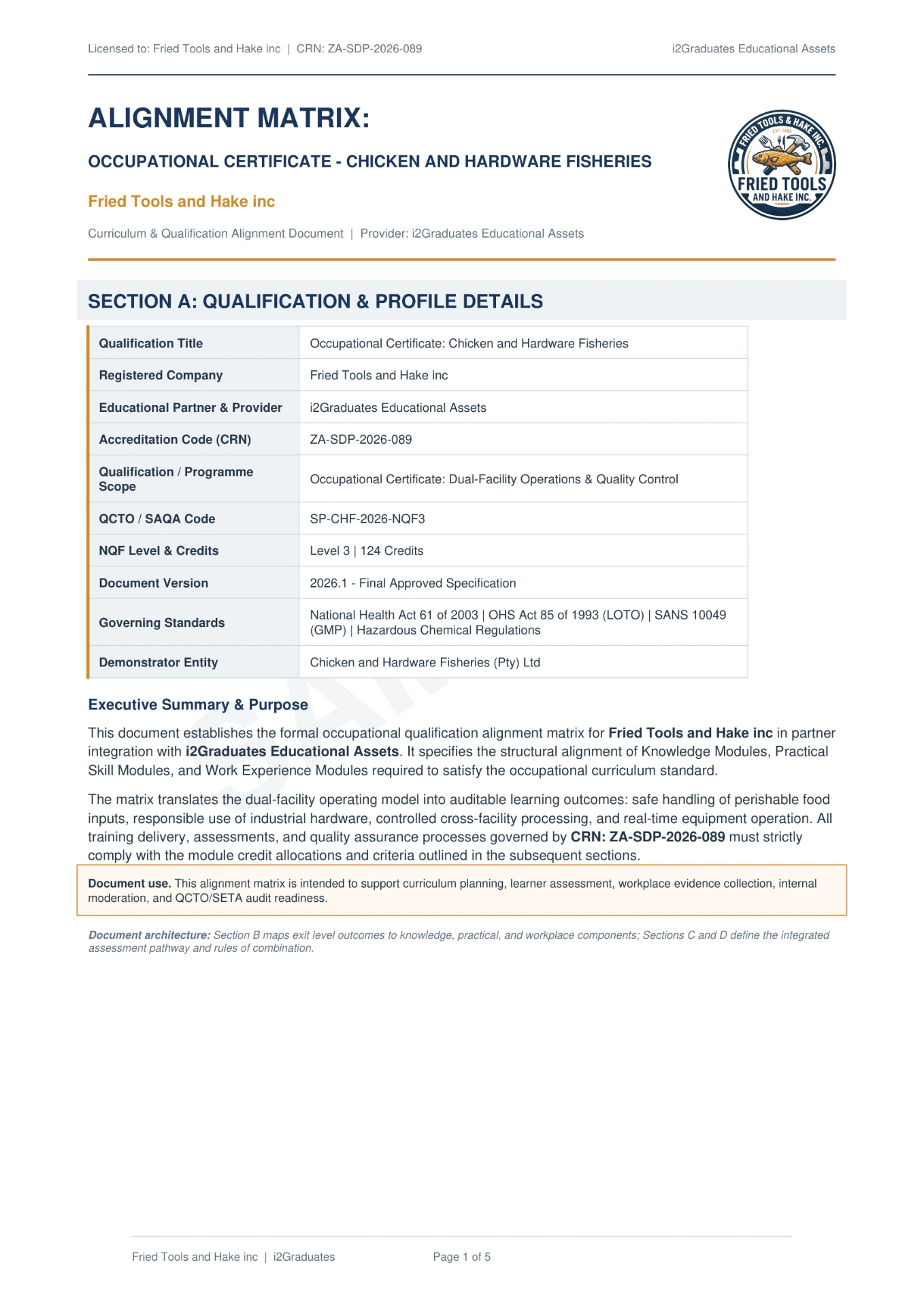
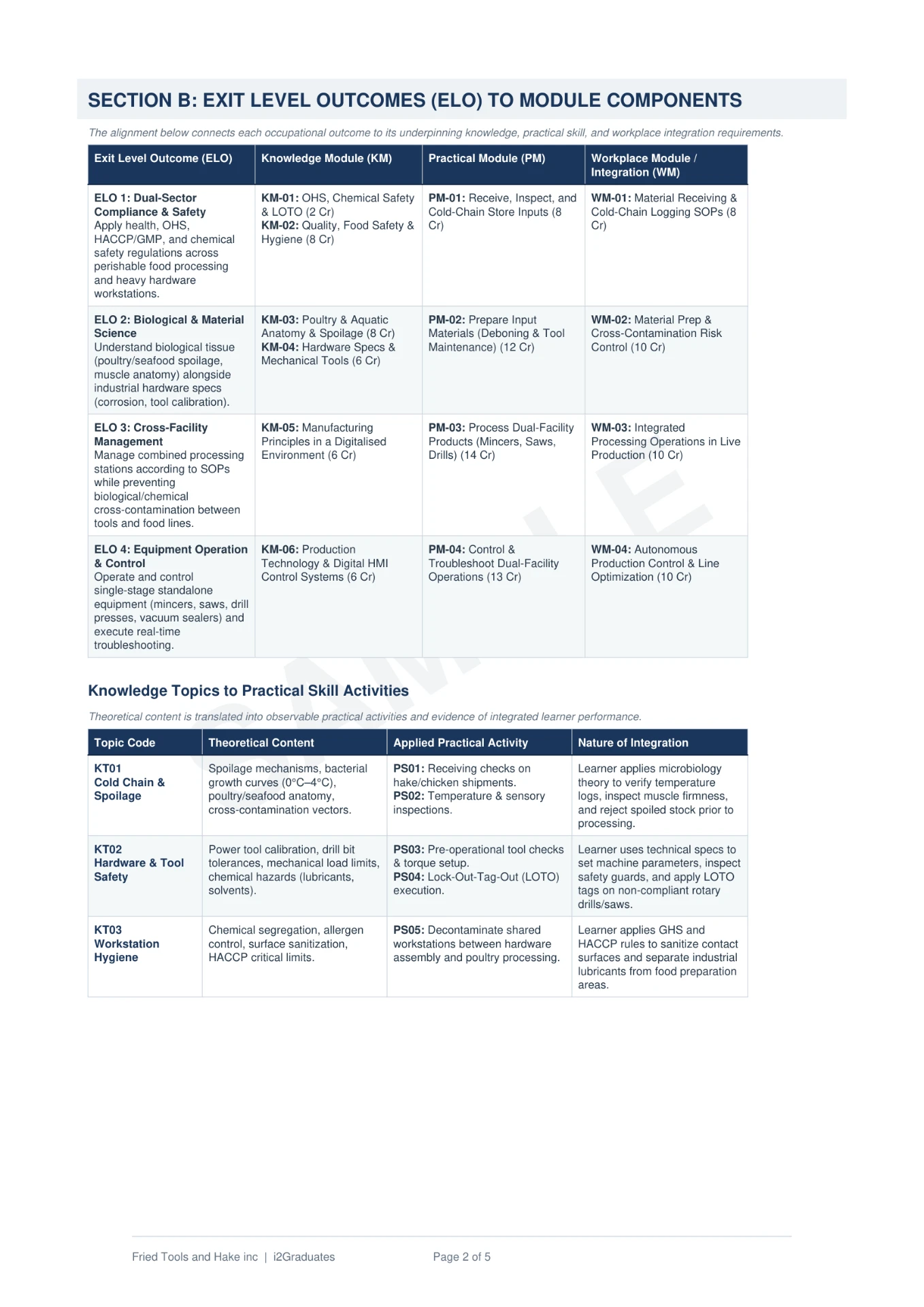
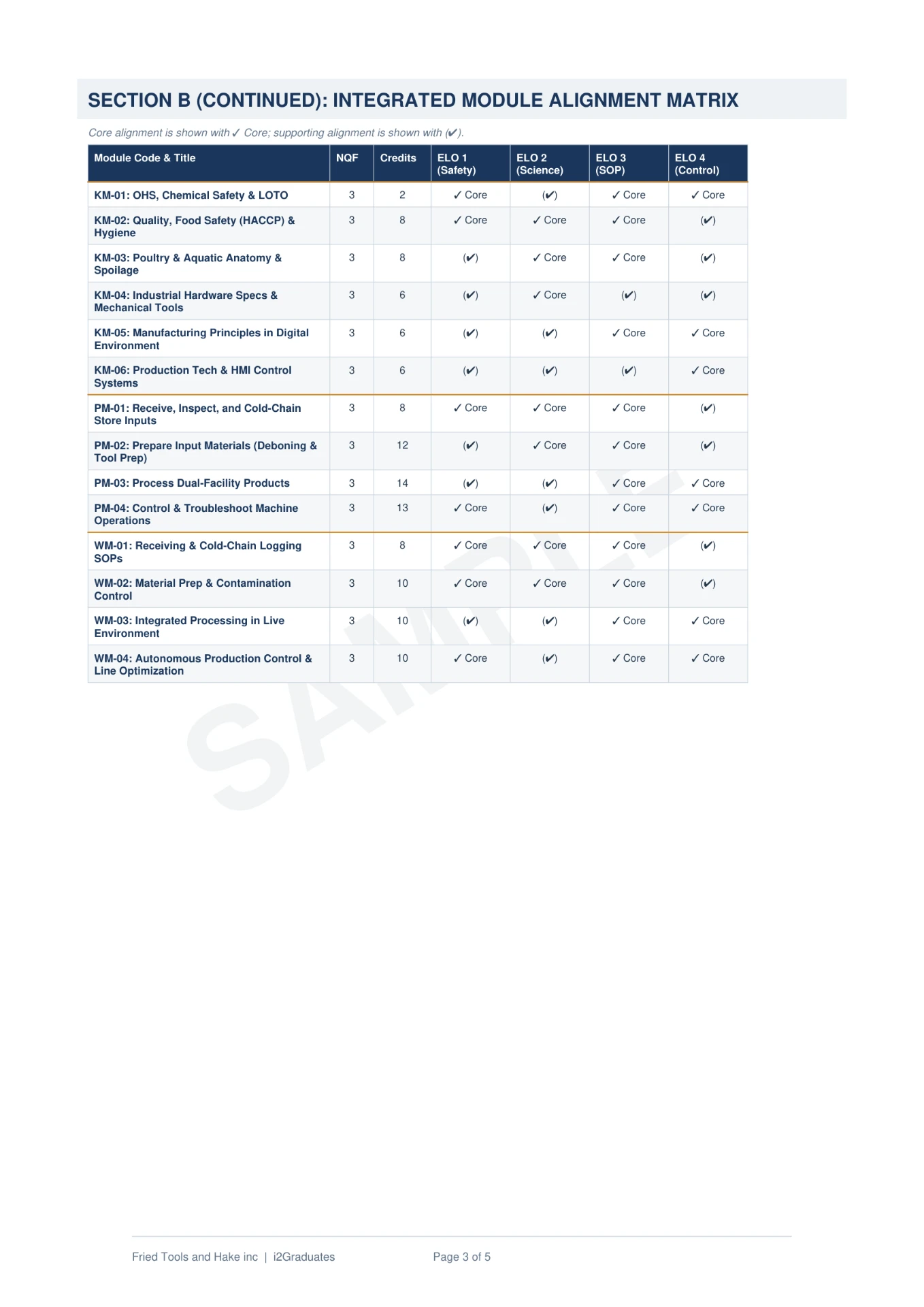
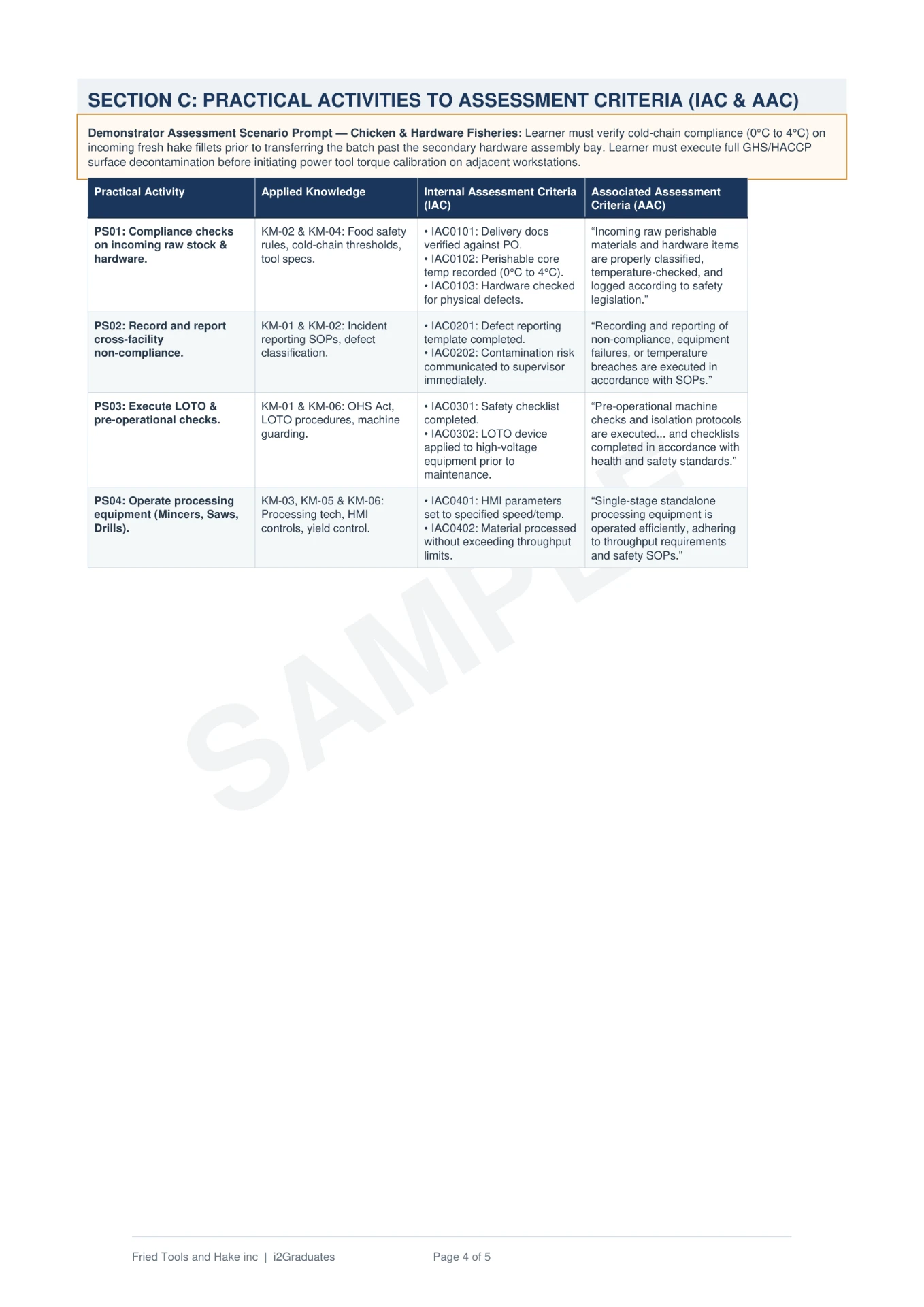
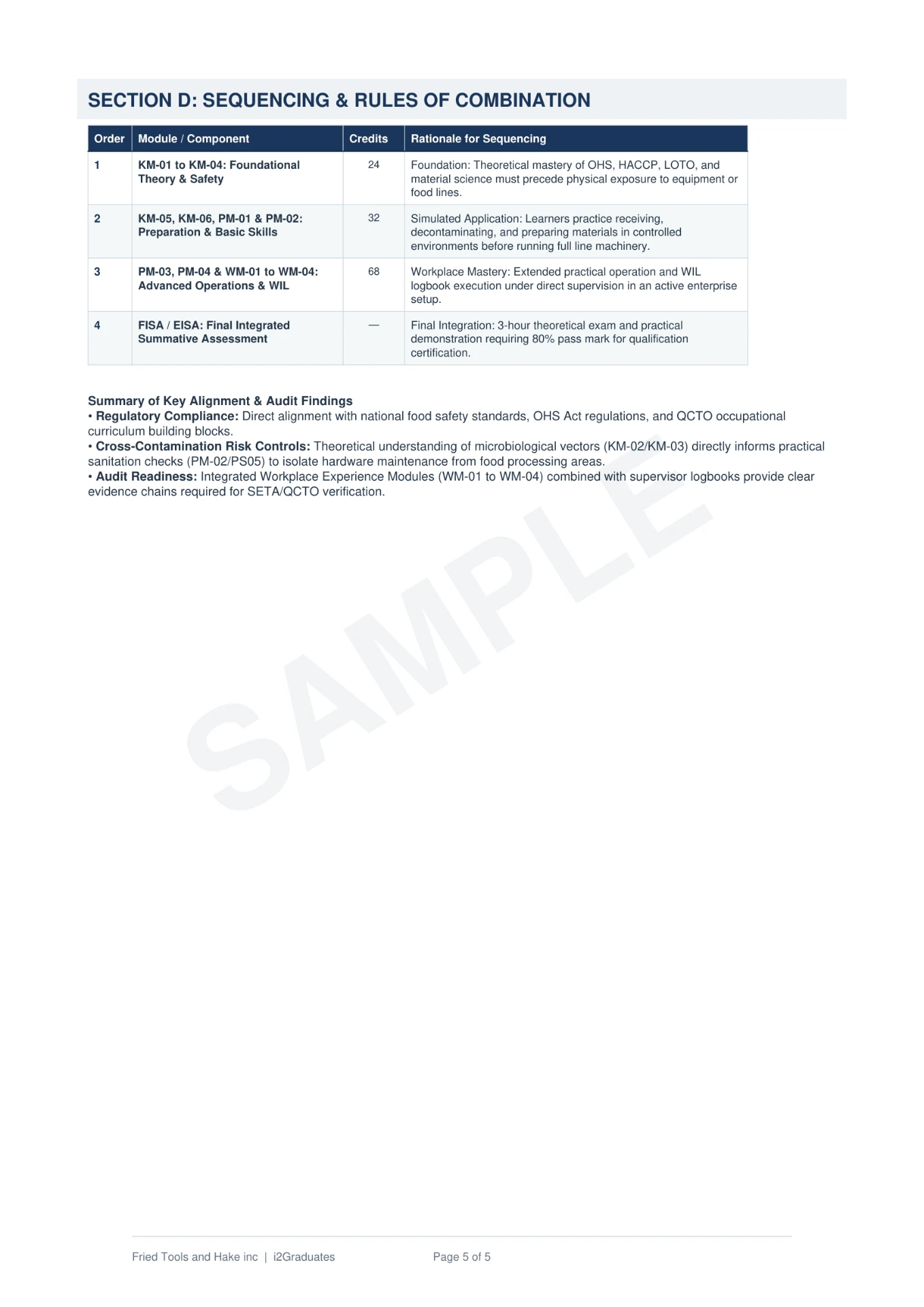
Overview & Scope
Programme Profile
- Target Designation
- Certified Energy Advisor (Fan System Optimisation) Practitioner
- Competency Focus
- Master specialised practical applications, safety criteria, and regulatory mandates required of a qualified Energy Advisor (Fan System Optimisation).
- Academic Weight
- Full national recognition at NQF Level 1 yielding 169 credits upon successful PoE verification.
- Work Opportunities
- Deployment across As a qualified energy advisor (fan system optimisation), you can find employment opportunities in Various sectors (depending on specialisation). Your skills will be in demand across both public and private sectors, and you may also choose to work as an independent contractor or start your own business in this field. operations under EWSETA scope.
- Audit Objective
- Bridges operational skills deficits under the governing EWSETA quality matrix.
- Value Proposition
- Measurable, legally compliant skills that optimise productivity, satisfy Workplace Skills Plans (WSP), and unlock B-BBEE scorecard weight.
Introduction▾
The Energy Advisor (Fan System Optimisation) is a Specialised Occupational Diploma set at NQF Level 1, comprising 0 credits. This qualification has been carefully developed to provide you with the essential knowledge, practical skills, and workplace experience needed to excel in your chosen field. Whether you are starting your career or looking to formalise your existing expertise, this programme offers a structured pathway to competence and recognition.
Purpose▾
The purpose of this qualification is to prepare a learner to operate as a Energy Advisor (Fan System Optimisation Specialist). A leaner will acquire skills necessary to develop, manage, and advise on enhancing the efficiency, reliability, and sustainability of fan systems within industrial facilities to improve fan system performance. The Energy Advisor (Fan System Optimisation Specialist) develops, manages, and advises on enhancing the efficiency, reliability, and sustainability of fan systems within industrial facilities to improve fan system performance. A qualified learner will be able to: • Conduct assessment and analyse the performance of the fan and system. • Advise on and manage system optimisation and efficiency enhancement of the fan system performance, processes, and practices. • Manage energy performance qualification, monitoring, and reporting. • Capacitate and maintain productive stakeholder relationships and negotiate commitment for fan system optimisation. Qualifying learner attributes are: • Strategical, • Problem solving, • Creativity, • Methodical, • Technicality, • Analytic and procedural.
Entry Requirements▾
Recognition of Prior Learning (RPL): RPL for Access: Learners may use the RPL process to gain access to training opportunities for a qualification of learning, qualification, part-qualification or skills qualification if they do not meet the formal, minimum entry requirements for admission. RPL assessment provides an alternative access route into a qualification of learning, qualification, part-qualification, or skills qualification. Such an RPL assessment may be developed, moderated and conducted by the accredited Skills Development Provider which offer that specific qualification/part qualification/skills qualification. Such an assessment must ensure that the learner is able to display the equivalent level of competencies required for access, based on the NQF level descriptors. RPL for Exemption: For exemption from modules through RPL, learners who have gained the stipulated competencies of the modules of a qualification of learning, qualification, part-qualification or skills qualification through any means of formal, informal or non-formal learning and/or work experience, may be awarded credits towards relevant modules, and gaps identified for training, which is then concluded. RPL for awarding credits: Learners who have gained the stipulated competencies of the modules of a qualification of learning, qualification, part-qualification or skills qualification through any means of formal, informal or non-formal learning and/or work experience, may be awarded credits towards relevant modules, and gaps identified for training, which is then concluded. RPL for access to the External Integrated Summative Assessment (EISA) A valid Statement of Results is required for admission to the EISA in which confirmation of achievement is provided that all internal assessment criteria for all modules in the related curriculum document have been achieved. Upon successful completion of the EISA, RPL learners will be issued with the QCTO certificate for the qualification, part-qualification or skills qualification. Quality Partners are responsible for ensuring the RPL mechanism and process for qualifications and part-qualification is approved by the QCTO. Entry Requirements: • An NQF Level 7 qualification or equivalent in Engineering, Physics, Chemistry, Environmental or any other related fields.
SAQA Rationale▾
The need for the qualification is because South African energy sector faces unique challenges that necessitate specialised skills in Fan system optimisation. These challenges include inefficient energy use, high energy costs, and a heavy reliance on fossil fuels, which contribute to environmental degradation and economic inefficiency. The Energy Advisor (Fan System Optimisation Specialist) qualification addresses these issues by equipping professionals with the skills needed to enhance the efficiency, reliability, and sustainability of Fan systems, which are integral to various industrial processes. This qualification is critical for supporting South Africa's transition towards more sustainable energy practices. Given the country's industrial landscape, where Fan systems play a pivotal role in sectors such as manufacturing, power generation, and mining, optimising these systems can lead to significant energy savings, reduced carbon emissions, and improved operational efficiency. Specialists in Fan system optimisation will be at the forefront of implementing technologies and practices that reduce energy consumption and costs, contributing to the environmental and economic goals of the nation. Moreover, this qualification supports South Africa's commitments under international agreements on climate change by promoting the adoption of cleaner, more efficient energy technologies. It aligns with global and national strategies aimed at enhancing industrial energy efficiency, thereby supporting sustainable development and green job creation in the energy sector. Currently there are no other similar occupational qualifications for this specific specialisation area registered on the NQF. There are a number of energy related qualifications on the NQF, but they are in the HEQSF at either a lower or higher NQF Level and they are provider specific qualifications such as: 73761 Bachelor of Commerce Honours: Energy Studies, NQF Level 08, University of Johannesburg. This qualification is more general in energy studies and not in energy advising with specific focus on Fan systems. The current higher education qualification is also specifically focussed on sharing of principles and theory. The qualification is more focused on the application of the fundamentals, actual practice and how it should be done in an energy efficient manner. This qualification benefits the energy and industrial sectors by providing a pool of specialists skilled in optimising Fan systems, leading to the more efficient use of energy, reduced operational costs, and enhanced competitiveness of South African industries. By improving the efficiency of Fan systems, this qualification contributes to environmental sustainability by significantly reducing greenhouse gas emissions, minimising the environmental impact of industrial activities, and improving the air and noise quality of indoor environments. It also promotes energy conservation awareness among industries and society. Optimising Fan systems can lead to substantial energy cost savings for industries, which, in turn, can lower product costs, improve competitiveness, and stimulate economic growth. This qualification fosters innovation in Fan system optimisation, driving technological advancements and creating new opportunities in the green economy. The typical learners who are professionals and practitioners for this qualification are with a background in engineering, environmental sciences, or related fields, seeking to specialise in energy optimisation. They are likely to have experience in the energy sector and are seeking to enhance their expertise to take on more specialised roles. These areas include but are not limited to Energy Management Experts, Energy Engineers and Energy Auditors. Stakeholders from different associations and organisations operating within the energy advising and management environment participated in the development of the qualification. Typical occupations in which the qualifying learner will operate (if relevant) Energy Management Experts, Energy Engineers, Energy Auditors, Fan System Optimisation Expert, Fan System Advisor, Fan Manager, Fan Engineer, and Fan System Auditor.
Learning Assumed to be in Place & RPL▾
Recognition of Prior Learning (RPL): RPL for Access: Learners may use the RPL process to gain access to training opportunities for a qualification of learning, qualification, part-qualification or skills qualification if they do not meet the formal, minimum entry requirements for admission. RPL assessment provides an alternative access route into a qualification of learning, qualification, part-qualification, or skills qualification. Such an RPL assessment may be developed, moderated and conducted by the accredited Skills Development Provider which offer that specific qualification/part qualification/skills qualification. Such an assessment must ensure that the learner is able to display the equivalent level of competencies required for access, based on the NQF level descriptors. RPL for Exemption: For exemption from modules through RPL, learners who have gained the stipulated competencies of the modules of a qualification of learning, qualification, part-qualification or skills qualification through any means of formal, informal or non-formal learning and/or work experience, may be awarded credits towards relevant modules, and gaps identified for training, which is then concluded. RPL for awarding credits: Learners who have gained the stipulated competencies of the modules of a qualification of learning, qualification, part-qualification or skills qualification through any means of formal, informal or non-formal learning and/or work experience, may be awarded credits towards relevant modules, and gaps identified for training, which is then concluded. RPL for access to the External Integrated Summative Assessment (EISA) A valid Statement of Results is required for admission to the EISA in which confirmation of achievement is provided that all internal assessment criteria for all modules in the related curriculum document have been achieved. Upon successful completion of the EISA, RPL learners will be issued with the QCTO certificate for the qualification, part-qualification or skills qualification. Quality Partners are responsible for ensuring the RPL mechanism and process for qualifications and part-qualification is approved by the QCTO. Entry Requirements: • An NQF Level 7 qualification or equivalent in Engineering, Physics, Chemistry, Environmental or any other related fields.
Exit Level Outcomes▾
- Analyse the needs for the fan system performance assessment through appropriate processes or techniques to respond to problems.
- Apply knowledge and skills to analyse fan system performance, optimisation measures, and efficiency enhancement processes, and practices to develop creative responses to problems and issues.
- Analyse energy performance qualification, monitoring, and reporting critically reviewed gathered information and synthesised data, evaluating and managing processes to develop creative responses to problems and issues.
- Demonstrate the ability to apply knowledge and skills to synthesise case study data on fan system performance to present and communicate occupational ideas and texts effectively, offering creative insights, rigorous interpretations and solutions to problems and issues.
Learning Material Included
- Learner Guide (Theory and Knowledge Modules)
- Facilitator Guide
- Workplace Logbook
- Formative and Summative Assessment
- Assessor Guide & Marking Memorandum
- SETA / QCTO Alignment Matrix
- Administrative & Onboarding Pack
- Implementation Plan
Moderator-Ready Curriculum Breakdown
16 modules · 161 creditsTheory, regulatory and safety knowledge. Each row carries the registered module code, NQF level and credit weight used for formative assessment rubric mapping.
- 214105-003-00-KM-015 cr
International and Local Commitment to Climate Change Mitigation and Reduction of Greenhouse Gas (GhG) Emissions
NQF Level 7
- 214105-003-00-KM-0210 cr
Fan System Fundamentals
NQF Level 7
- 214105-003-00-KM-0310 cr
Fan System Scoping and Modelling
NQF Level 7
- 214105-003-00-KM-0415 cr
Fan System Optimisation Assessments
NQF Level 8
- 214105-003-00-KM-0510 cr
Scientific and Engineering Principles of Secondary Energy Applications in Fan Systems
NQF Level 7
- 214105-003-00-KM-0710 cr
Implementation Qualification Management
NQF Level 7
Qualification 124325 · Curriculum Architecture
Specialised Occupational Diploma: Energy Advisor (Fan System Optimisation) · NQF Level 1 (169 Credits)
Three Curriculum Pillars
Knowledge Modules
Classroom & E-Learning
- Facilitated lectures & self-study
- Written question banks
- Formative comprehension checks
Practical Skill Modules
Simulated Line Tasks
- Simulated line tasks
- Observation rubrics
- Structured task sheets
Work Experience Modules
On-the-Job Production
- On-the-job rotation
- Mentor logbooks
- Workplace sign-offs
Evidence & Audit Pipeline
Learner Portfolio of Evidence (PoE)Owner · Candidate▾
Admin & Registration
ID, learner contract, induction pack, POPIA consent.
Knowledge Evidence
Written assessments & question banks — KM-01 to KM-07.
Practical Evidence
Task sheets, observation rubrics, assessor photos.
Workplace Evidence
Logbooks, mentor sign-offs, supervisor letters.
Assessor Master FileOwner · Registered Assessor▾
Assessment Reports
Judgements, learner feedback, remediation agreements, appeals log.
Internal Moderation & Quality FileOwner · Moderator / SDP▾
Moderation Evidence
10% sampling matrix, HACCP/LOTO compliance sheets, SDP sign-off.
Final Accreditation Gateway
Issued by the accredited Skills Development Provider once internal moderation is signed off.
Provider submits declaration + PoE to the Assessment Quality Partner (AQP).
QCTO awards the SAQA-registered certificate on successful EISA outcome.
Audit & Compliance
Evidence & Audit Pipeline
From portfolio assembly to external sign-off — the exact route your evidence travels.
- Step 1
PoE Assembly
Learner evidence, formative records and logbook entries filed against the alignment matrix.
- Step 2
Internal Assessment
Registered assessor judges each KM/PM/WM outcome using the supplied instruments.
- Step 3
Internal Moderation
Sampling and verification of assessor decisions, with remediation loop before submission.
- Step 4
External Moderation
SETA/QCTO desktop audit and certification upload against registered credits.
Broken Standard vs i2Graduates Standard
The measurable delta between improvised material and an audit-ready suite.
Broken Standard
i2Graduates Standard
Curriculum Mapping
Photocopied guides with mismatched outcomes
6 KM + 6 PM + 4 WM modules mapped to NQF Level 1
Assessment Bank
Missing formative and summative assessments
Pre-validated assessment bank per module
Alignment Evidence
No alignment matrix — audit fails
EWSETA alignment matrix included
Facilitation
Facilitators improvise Energy Advisor (Fan System Optimisation) delivery
Facilitator scripts + learner activities per credit
Portfolio of Evidence
PoE gaps flagged in moderation
PoE templates that survive external moderation
Pricing & Delivery Tiers
Base licence from R35 000
Digital Master Suite
Editable master files, licensed to your SDP
- Learner Guide, Facilitator Guide & Assessment Suite
- Workplace logbook + alignment matrix (editable)
- Instant digital delivery under institutional licence
- Free minor corrections for 12 months
Turnkey Print & Bound Package
Printed, bound and couriered per learner
- Everything in the Digital Master Suite
- Full-colour print, wire-bound learner packs
- Per-learner PoE folders and dividers
- Nationwide courier with tracked delivery
Full Enterprise Accreditation Bundle
Assets plus accreditation support end-to-end
- Everything in the Print & Bound Package
- Bespoke QMS build mapped to your scope
- Moderation dry-run + written remediation report
- Brand & metadata integration across the suite
Complementary Services
Optional add-ons that harden your accreditation scope before an external audit.
Bespoke QMS Build
We author your Quality Management System — policies, procedures, records, matrices — mapped to your accreditation scope. From R18,500.
Request QuoteModeration Consultation
External moderation dry-run on your PoE + delivery pack. Written report with fixes before your real audit. From R4,900.
Book Moderation SessionThe i2Graduates Quality Guarantee
Every page of this bundle is checked for sequence and structural accuracy — no missing pages, no shortcuts. You get pre-validated assessment instruments ready to survive rigorous compliance moderation, wrapped in a curriculum your facilitators will enjoy teaching.