
Occupational Qualification · D3
Data and Telecommunications Cabler
- NQF Level
- NQF Level 3
- Credits
- 575
- Duration
- —
- SAQA ID
- 119562
Official QCTO Registry Profile
Source: SAQA / QCTO registry- SAQA ID
- 119562
- Min Credits
- 575
- Registered
- 2022-08-04
- Re-registration
- 2025-12-31
- Field
- Field 06 - Manufacturing, Engineering and Technology
- Sub-field
- Manufacturing and Assembly
Sample Asset Preview
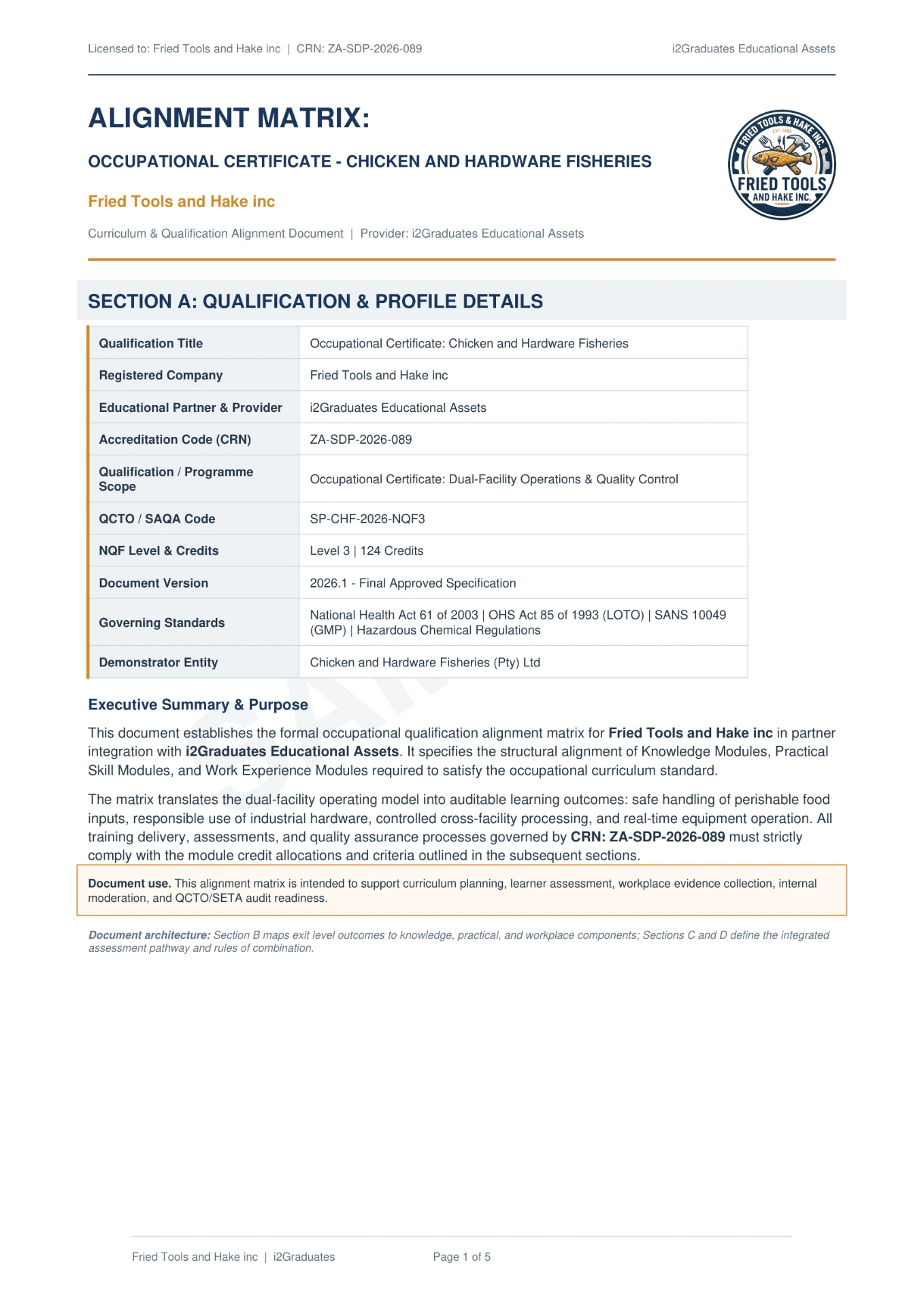
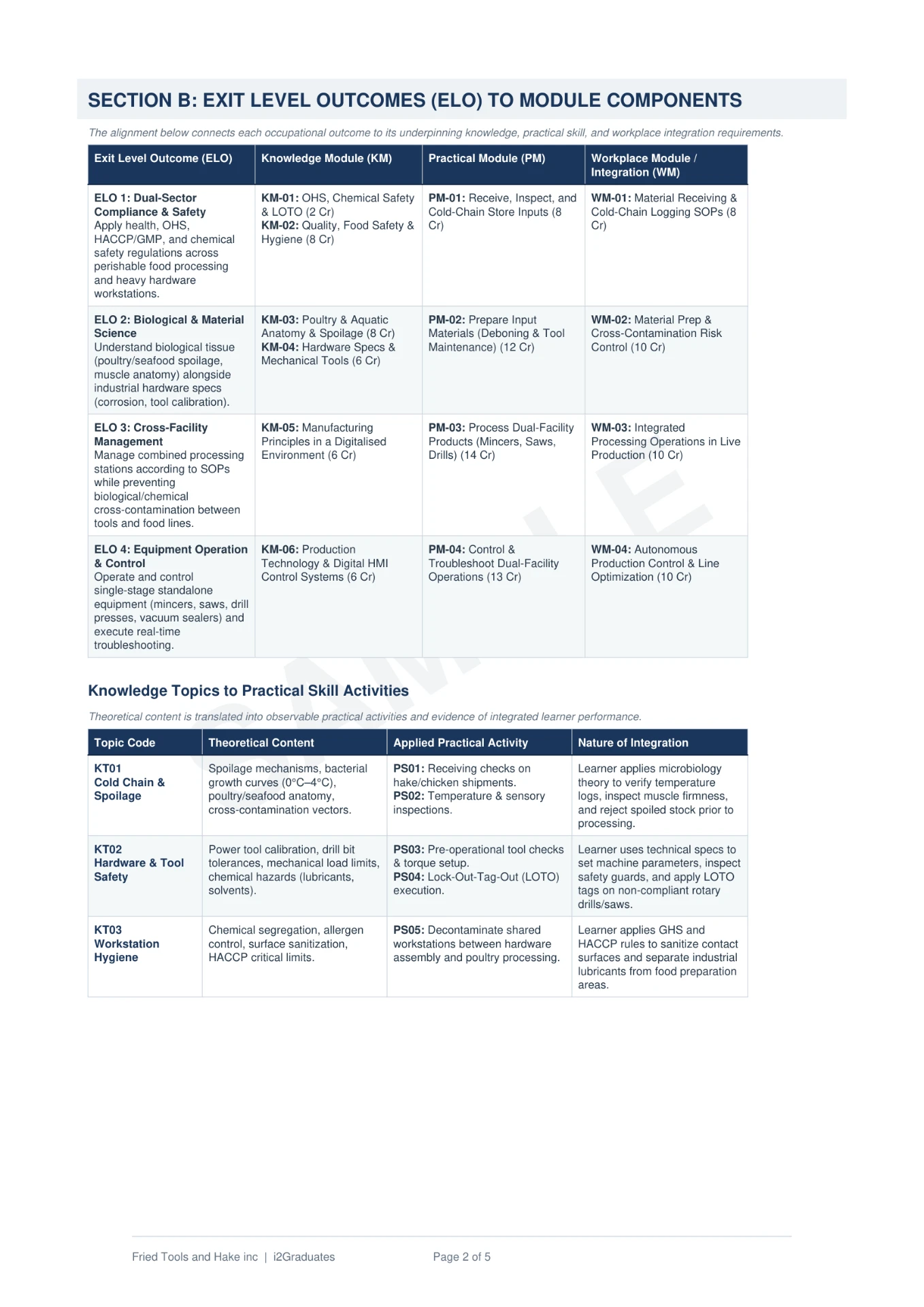
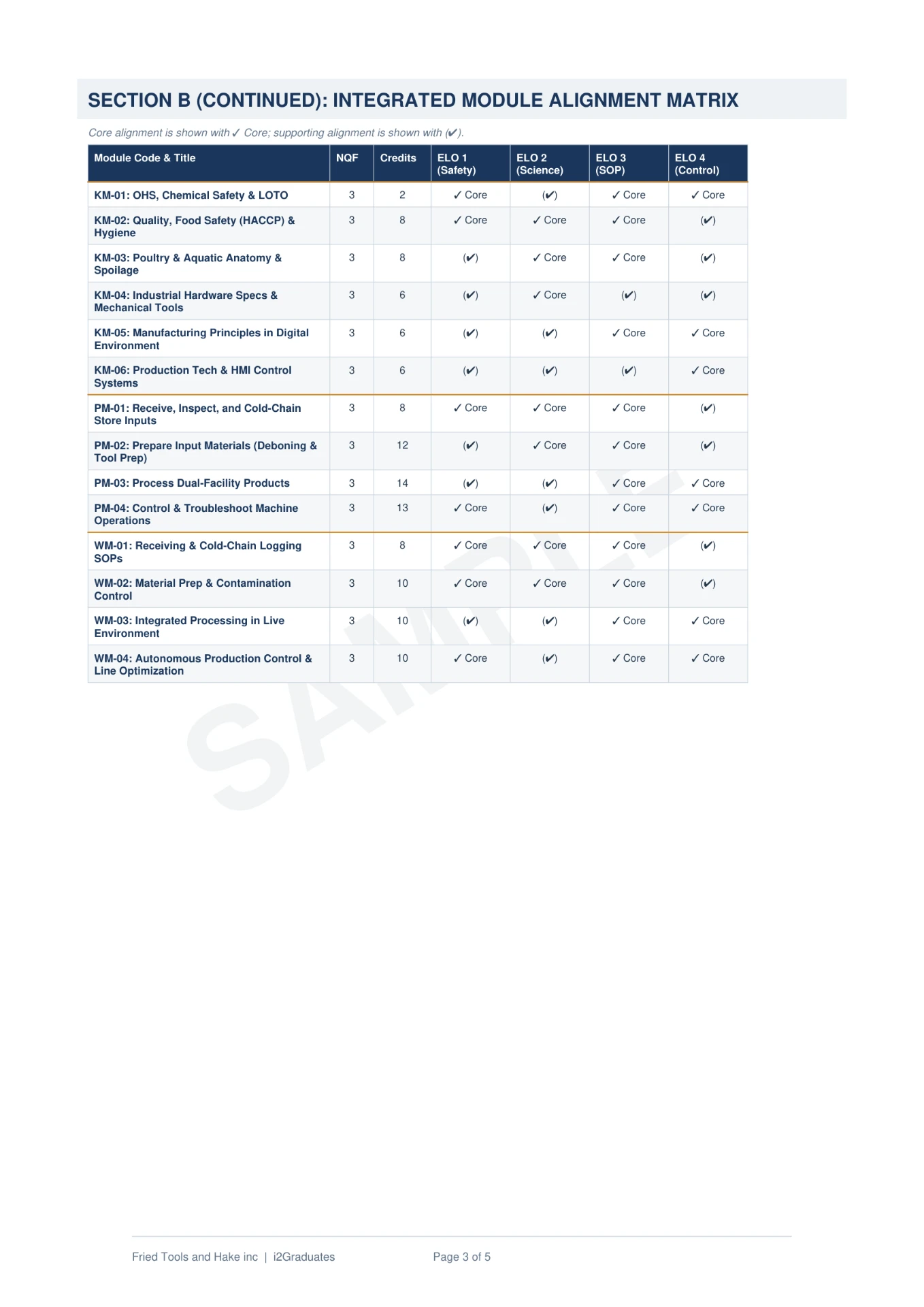
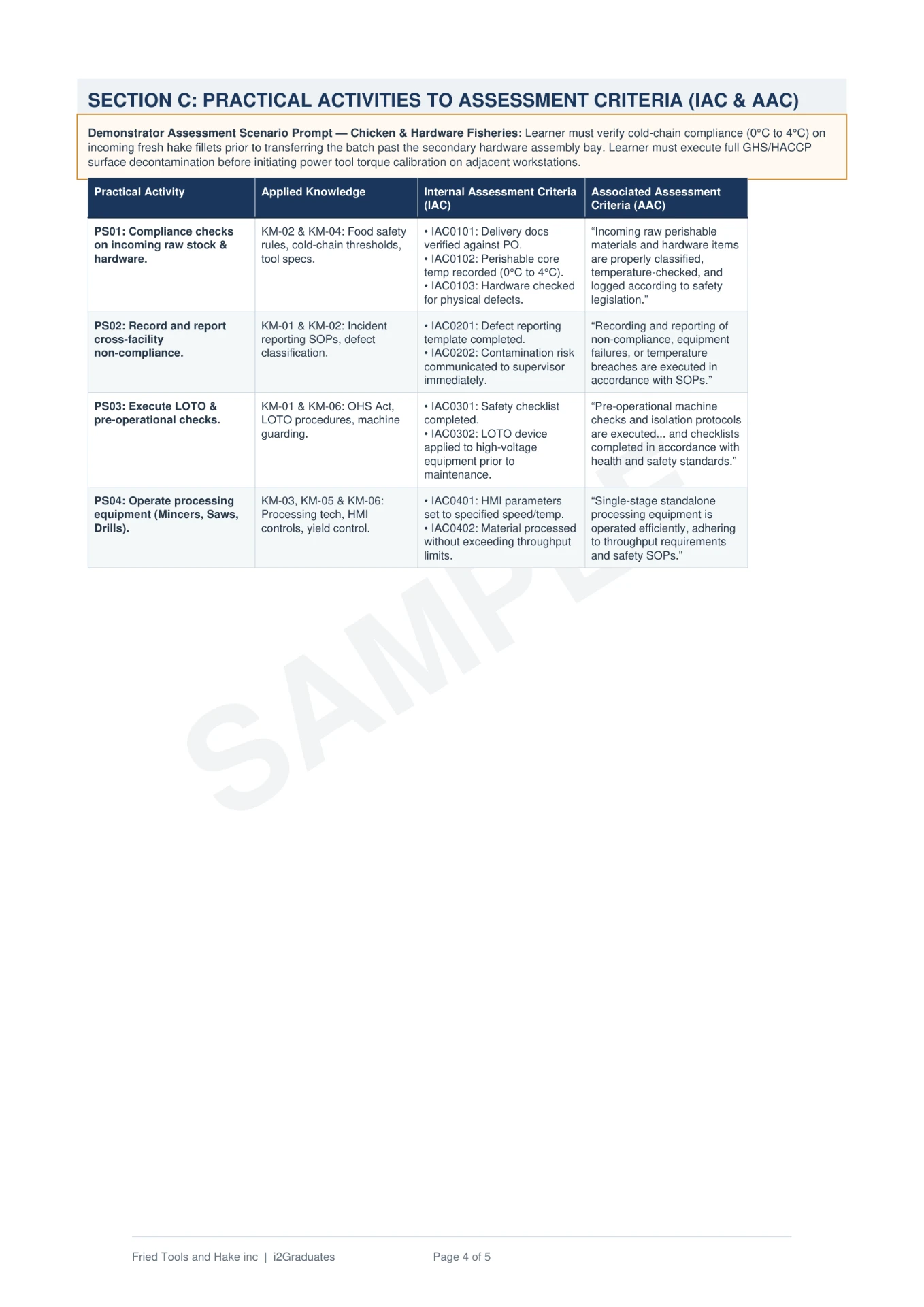
Overview & Scope
Programme Profile
- Target Designation
- Certified Data and Telecommunications Cabler Practitioner
- Competency Focus
- Master specialised practical applications, safety criteria, and regulatory mandates required of a qualified Data and Telecommunications Cabler.
- Academic Weight
- Full national recognition at NQF Level 3 yielding 575 credits upon successful PoE verification.
- Work Opportunities
- Deployment across As a qualified data and telecommunications cabler, you can find employment opportunities in Manufacturing, Engineering, Trades (Artisan). Your skills will be in demand across both public and private sectors, and you may also choose to work as an independent contractor or start your own business in this field. operations under NAMB scope.
- Audit Objective
- Bridges operational skills deficits under the governing NAMB quality matrix.
- Value Proposition
- Measurable, legally compliant skills that optimise productivity, satisfy Workplace Skills Plans (WSP), and unlock B-BBEE scorecard weight.
Introduction▾
The Data and Telecommunications Cabler (NQF Level 3, 575 credits) is a comprehensive Occupational Certificate that blends foundational theory with intensive practical application. Throughout your learning journey, you will develop the competencies required to operate effectively, safely, and ethically within your industry. Employers value this qualification because it signals that you are job-ready from day one.
Purpose▾
The purpose of this qualification is to prepare a learner to comply with the profile and skills requirements of a Data and Telecommunications Cabler. A Data and Telecommunications Cabler installs, tests, terminates, commissions, troubleshoots, maintains and repairs internal telecommunications and data cabling on equipment and peripherals for computer networks, telephony, cable television as well as television monitored security systems and fire alarms. A qualified learner will be able to: • Install and commission telecommunications cables to equipment and devices. • Terminate cables, cords and accessories to connect to telecommunication network and devices. • Diagnose, locate and troubleshoot telecommunication cabling faults on telecommunications equipment and cables. • Complete telecommunication cables installation documentation.
Entry Requirements▾
Who should enrol? Entry-level workers, school leavers, or career changers who want to gain foundational skills. The Data and Telecommunications Cabler welcomes learners from diverse backgrounds, including those with limited formal education but relevant practical experience. The flexible learning approach ensures that everyone can progress at their own pace while achieving the same high standard of competence.
SAQA Rationale▾
As per Government Gazette 35625, published on 31 August 2012, the Minister of Higher Education and Training issued a listing of occupations as trades for which artisan qualifications are required, the Data and Telecommunications Cabler was identified as a trade occupation in terms of Section 26B of the Skills Development Act 1998 (Act No. 97 of 1998). This qualification has been developed with the view to meet the expressed need by the data and telecommunications industry for skilled labour as most telecommunications providers are now moving towards optic solutions to deliver faster broadband speeds to premises as a preferred method of service to providers seeking pure fibre or copper network solutions. Data and telecommunications cablers are predominantly involved in the installation, troubleshooting and maintenance of data and telecommunications cables, which may be located internally within domestic, commercial and industrial areas or sometimes in underground pipes, trenches or overhead systems. They usually work with either copper or fibre optic cables and specialise in a particular procedure to install, troubleshoot and maintain such cables. Qualified individuals may be required to do new installations and upgrades or to maintain existing networks in domestic, commercial and industrial installations. Learners will be equipped with knowledge and skills to install and maintain customer cable infrastructure relating to communication applications. This may include digital and analog applications, telephony, data and video applications, digital broadcasting, computer networks, local area networks (LAN), wide area networks (WAN) and multimedia. The installation also involves selecting a cable route, setting up cable dispensers and placing and securing cables. The qualification is intended for individuals who wish to enter the industry as well as those already working in the industry and grant them an opportunity to acquire a nationally recognised qualification through recognition of prior learning. Qualified individuals will gain employment opportunities in government, state-owned enterprises and private companies. A skilled workforce will invariably benefit the economy and society at large and ensure job security for the individual. The qualification was developed with the active participation of the major stakeholders and employers in the industry such as Transnet, Passenger Rail Agency of South Africa (Prasa), Telkom and Broadband Infraco. The qualification will provide learners with opportunities to progress horizontally and vertically to related occupations such as Telecommunications Cable Jointer at NQF Level 3 and Telecommunications Line Mechanic at NQF Level 4 respectively. It will also facilitate the standardisation of non-aligned training courses currently provided by authorities/companies to create skilled and competent Data and Telecommunication Cablers in the country.
Exit Level Outcomes▾
1.Use acquired knowledge to install, join, terminate, and commission internal telecommunications cables. 2.Diagnose, locate, and repair faults on data and telecommunication cables. 3.Complete administration on installation and jointing documentation.
Learning Material Included
- Learner Guide (Theory and Knowledge Modules)
- Facilitator Guide
- Workplace Logbook
- Formative and Summative Assessment
- Assessor Guide & Marking Memorandum
- SETA / QCTO Alignment Matrix
- Administrative & Onboarding Pack
- Implementation Plan
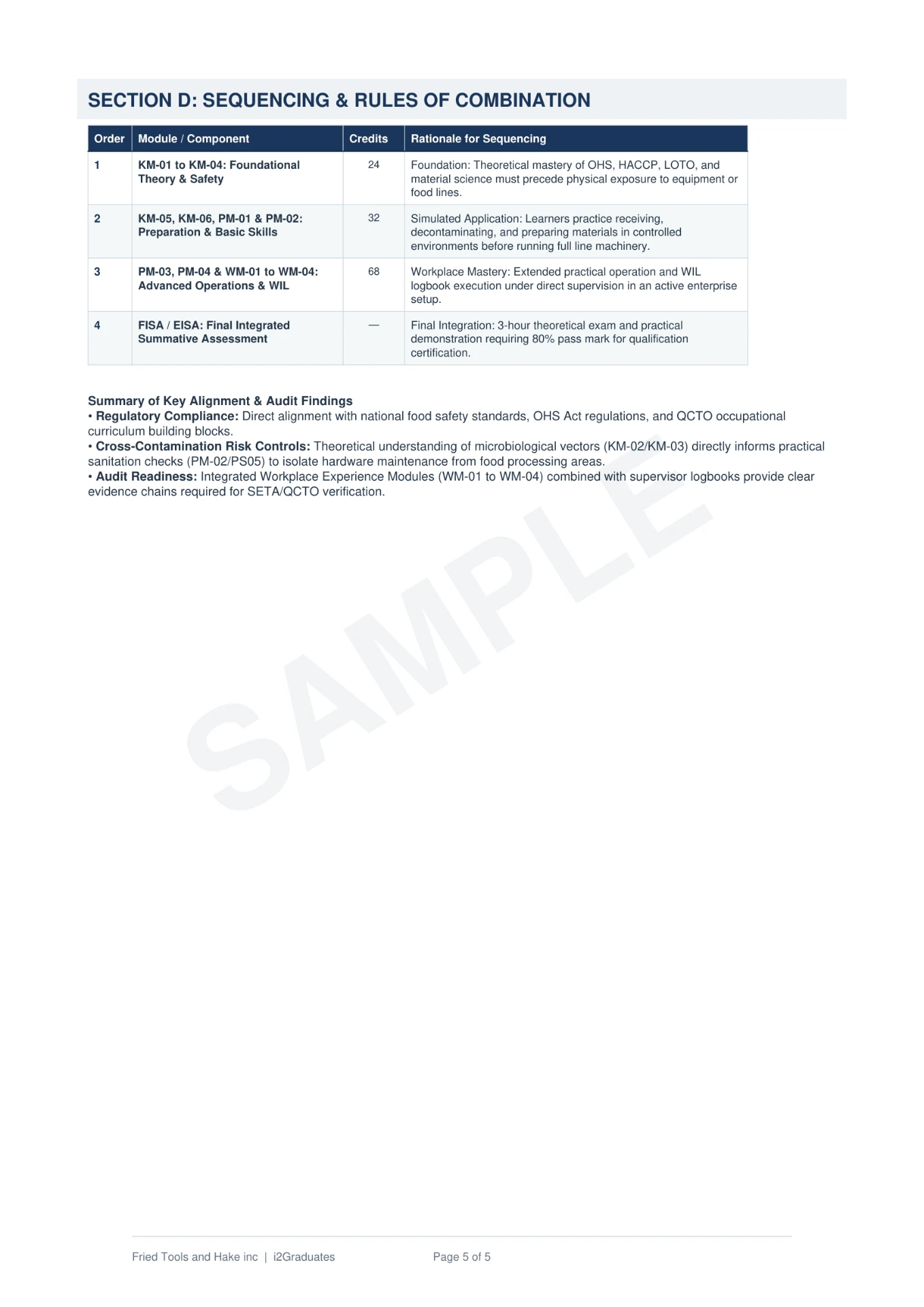
Moderator-Ready Curriculum Breakdown
19 modules · 575 creditsTheory, regulatory and safety knowledge. Each row carries the registered module code, NQF level and credit weight used for formative assessment rubric mapping.
- 672201-000-00-00-KM-0110 cr
Fundamentals of Health and Safety Requirements in relation to Telecommunications Cable Installation
NQF Level 3
- 672201-000-00-00-KM-025 cr
Introduction to Activity-Based Risk Assessment
NQF Level 4
- 672201-000-00-00-KM-035 cr
Tools and Equipment related to Telecommunications Cabling
NQF Level 2
- 672201-000-00-00-KM-0410 cr
Cabling Techniques
NQF Level 3
- 672201-000-00-00-KM-055 cr
Fundamentals of Planning and Preparation in Cable Jointing
NQF Level 3
- 672201-000-00-00-KM-0640 cr
Indoor Data and Telecommunications Cabling
NQF Level 3
- 672201-000-00-00-KM-0740 cr
Fault Diagnosis on Telecommunication Cables
NQF Level 3
Qualification 119562 · Curriculum Architecture
Occupational Certificate: Data and Telecommunications Cabler · NQF Level 3 (575 Credits)
Three Curriculum Pillars
Knowledge Modules
Classroom & E-Learning
- Facilitated lectures & self-study
- Written question banks
- Formative comprehension checks
Practical Skill Modules
Simulated Line Tasks
- Simulated line tasks
- Observation rubrics
- Structured task sheets
Work Experience Modules
On-the-Job Production
- On-the-job rotation
- Mentor logbooks
- Workplace sign-offs
Evidence & Audit Pipeline
Learner Portfolio of Evidence (PoE)Owner · Candidate▾
Admin & Registration
ID, learner contract, induction pack, POPIA consent.
Knowledge Evidence
Written assessments & question banks — KM-01 to KM-07.
Practical Evidence
Task sheets, observation rubrics, assessor photos.
Workplace Evidence
Logbooks, mentor sign-offs, supervisor letters.
Assessor Master FileOwner · Registered Assessor▾
Assessment Reports
Judgements, learner feedback, remediation agreements, appeals log.
Internal Moderation & Quality FileOwner · Moderator / SDP▾
Moderation Evidence
10% sampling matrix, HACCP/LOTO compliance sheets, SDP sign-off.
Final Accreditation Gateway
Issued by the accredited Skills Development Provider once internal moderation is signed off.
Provider submits declaration + PoE to the Assessment Quality Partner (AQP).
QCTO awards the SAQA-registered certificate on successful EISA outcome.
Audit & Compliance
Evidence & Audit Pipeline
From portfolio assembly to external sign-off — the exact route your evidence travels.
- Step 1
PoE Assembly
Learner evidence, formative records and logbook entries filed against the alignment matrix.
- Step 2
Internal Assessment
Registered assessor judges each KM/PM/WM outcome using the supplied instruments.
- Step 3
Internal Moderation
Sampling and verification of assessor decisions, with remediation loop before submission.
- Step 4
External Moderation
SETA/QCTO desktop audit and certification upload against registered credits.
Broken Standard vs i2Graduates Standard
The measurable delta between improvised material and an audit-ready suite.
Broken Standard
i2Graduates Standard
Curriculum Mapping
Photocopied guides with mismatched outcomes
7 KM + 6 PM + 6 WM modules mapped to NQF Level 3
Assessment Bank
Missing formative and summative assessments
Pre-validated assessment bank per module
Alignment Evidence
No alignment matrix — audit fails
NAMB alignment matrix included
Facilitation
Facilitators improvise Data and Telecommunications Cabler delivery
Facilitator scripts + learner activities per credit
Portfolio of Evidence
PoE gaps flagged in moderation
PoE templates that survive external moderation
Pricing & Delivery Tiers
Base licence from R65 000
Digital Master Suite
Editable master files, licensed to your SDP
- Learner Guide, Facilitator Guide & Assessment Suite
- Workplace logbook + alignment matrix (editable)
- Instant digital delivery under institutional licence
- Free minor corrections for 12 months
Turnkey Print & Bound Package
Printed, bound and couriered per learner
- Everything in the Digital Master Suite
- Full-colour print, wire-bound learner packs
- Per-learner PoE folders and dividers
- Nationwide courier with tracked delivery
Full Enterprise Accreditation Bundle
Assets plus accreditation support end-to-end
- Everything in the Print & Bound Package
- Bespoke QMS build mapped to your scope
- Moderation dry-run + written remediation report
- Brand & metadata integration across the suite
Complementary Services
Optional add-ons that harden your accreditation scope before an external audit.
Bespoke QMS Build
We author your Quality Management System — policies, procedures, records, matrices — mapped to your accreditation scope. From R18,500.
Request QuoteModeration Consultation
External moderation dry-run on your PoE + delivery pack. Written report with fixes before your real audit. From R4,900.
Book Moderation SessionThe i2Graduates Quality Guarantee
Every page of this bundle is checked for sequence and structural accuracy — no missing pages, no shortcuts. You get pre-validated assessment instruments ready to survive rigorous compliance moderation, wrapped in a curriculum your facilitators will enjoy teaching.