
Occupational Qualification · C23
Discretionary Grant · UpcomingChristian Religious Professional
- NQF Level
- NQF Level 5
- Credits
- 237
- Duration
- —
- SAQA ID
- 101571
Official QCTO Registry Profile
Source: SAQA / QCTO registry- SAQA ID
- 101571
- Min Credits
- 237
- Registered
- 2018-07-01
- Re-registration
- 2025-12-30
- Field
- Field 07 - Human and Social Studies
- Sub-field
- Religious and Ethical Foundations of Society
Sample Asset Preview

Overview & Scope
Programme Profile
- Target Designation
- Certified Christian Religious Professional Practitioner
- Competency Focus
- Master specialised practical applications, safety criteria, and regulatory mandates required of a qualified Christian Religious Professional.
- Academic Weight
- Full national recognition at NQF Level 5 yielding 237 credits upon successful PoE verification.
- Work Opportunities
- Deployment across As a qualified christian religious professional, you can find employment opportunities in Healthcare, Wellness, Social Development. Your skills will be in demand across both public and private sectors, and you may also choose to work as an independent contractor or start your own business in this field. operations under HW SETA scope.
- Audit Objective
- Bridges operational skills deficits under the governing HW SETA quality matrix.
- Value Proposition
- Measurable, legally compliant skills that optimise productivity, satisfy Workplace Skills Plans (WSP), and unlock B-BBEE scorecard weight.
Introduction▾
Designed as a Occupational Certificate at NQF Level 5 worth 237 credits, the Christian Religious Professional equips you with both theoretical understanding and hands-on capabilities. You will learn to perform complex tasks, solve real-world problems, and adapt to the demands of a dynamic work environment. This qualification is your stepping stone to becoming a confident, capable professional.
Purpose▾
The purpose of this qualification is to prepare a learner to operate as a Christian Religious Professional. A Christian Religious Professional directs and conducts the ministry functions in a faith community in order to facilitate spiritual formation; nurture fellowship and mutual care within the faith community; helps members to develop a Christian lifestyle; provides strategic leadership that leads to obedience to vocation as well as well-being and sustainability of the faith community; and develops a missional practice that shares the good news of Jesus Christ and serves the holistic well-being of the entire community. A qualified learner will be able to: • Lead the faith community in spiritual formation that nurtures their relationship with God. • Develop and nurture fellowship and mutual care within the faith community. • Facilitate the holistic well-being of people within the faith community by developing pro-active and reactive (coping) life skills and a Christian value system. • Provide visional leadership that leads to obedience to vocation, as well as well-being and sustainability of the faith community. • Develop a missional practice that shares the good news of Jesus Christ and serves the holistic well-being of the entire community.
Entry Requirements▾
Recognition of Prior Learning (RPL): RPL for access to the external integrated summative assessment: Accredited providers and approved workplaces must apply the internal assessment criteria specified in the related curriculum document to establish and confirm prior learning. Accredited providers and workplaces must confirm prior learning by issuing a statement of result or certifying a work experience record. RPL for access to the qualification: Accredited providers and approved workplaces may recognise prior learning against the relevant access requirements. Entry Requirements: • Level 4 with English Communication.
SAQA Rationale▾
Religious ministers serving churches and Christian groups in Southern Africa come from two distinct backgrounds. The first is deemed more formal in nature (also referred to as the so-called historic churches) while the second is seen as less formal and originated from more recent development processes. This second group includes what is referred to as Pentecostal and Charismatic churches and the large group of African Initiated Churches (AICs). Recent estimates indicate that there are around 186,000 pastors (ministers of religion) in this less formal group, compared to the number of around 9,000 for the historic churches. As far as professional formation is concerned, the historic churches have a strong teaching and training tradition. Training of pastors (ministers of religion) in this relatively small group of churches was mainly on tertiary level at public universities (faculties of theology) or denominational seminaries. By contrast, access to formal training is virtually impossible to the vast majority of pastors in the less formal group. This lack of access is due to several reasons including geographical and financial reasons, and to most also due to a lack of appropriate prior learning. The qualifications under discussion are designed to overcome these challenges. There are currently no formally recognised qualifications for religious practitioners within the Christian tradition, apart from the Higher Education qualifications registered through the different tertiary educational institutions. With the introduction of the new occupational certificate, society will benefit from the assurance that large numbers of spiritual leaders who did not have a proper training opportunity in the past, will now have training available to develop a relevant set of competencies. Two aspects are important in this regard. Firstly, there is a growing concern in South Africa about moral degeneration and the loss of positive values in our communities, with the associated loss of hope, increase in crime levels, degeneration of our social fibre, etc. As South Africans have been shown to be a religiously inclined population, and as the people adhering to the Christian faith form the vast majority in the country (about 80% of the population according to the latest census information), Christian Ministers of Religion can play a significant role in turning these negative tendencies around. Well-formed and trained religious leaders in the community are needed for this to transpire. The new qualifications that aim at providing quality training with the appropriate content and focus, and that will be accessible to large numbers of presently untrained ministers of religion will make a huge contribution to the turning around of negative tendencies. Secondly, there is a growing concern in our country about religious leaders, including leaders in the Christian tradition, whose conduct is unprofessional and detrimental to the community. This can, inter alia, be ascribed to a lack of proper training and inadequate training standards and professional oversight. Although this problem does occur in all spheres of the religious community, it is certainly also a serious issue in the informal church environment. Quality training, linked to the development of professional standards and a system of professional oversight will go a long way to protect communities against irresponsible persons who misuse their position as spiritual leaders in the community. Churches with existing qualifications also support the development of this occupational qualification. The new qualification is not intended to replace existing Theology qualifications on tertiary level, but would rather fill a gap in the need for a qualification for the large number of pastors and other persons who want to function as ministers of religion, but do not have access to Higher Learning. The qualification would serve in this need as well by providing access to Higher Qualifications. The training should be of a nature that will address the competencies required to effectively direct and conduct ministry functions whilst also making provision for the various unique theological nuances of the various Christian traditions. The Occupational Certificate will be accessible to existing spiritual leaders who did not have the benefit of proper training in the past, and who do not have access to tertiary training at universities or private training institutions. It will also be accessible to newcomers to the profession who want to be trained as pastors, but who do not have access to tertiary training or who prefer to go the occupational training route.
Learning Assumed to be in Place & RPL▾
Recognition of Prior Learning (RPL): RPL for access to the external integrated summative assessment: Accredited providers and approved workplaces must apply the internal assessment criteria specified in the related curriculum document to establish and confirm prior learning. Accredited providers and workplaces must confirm prior learning by issuing a statement of result or certifying a work experience record. RPL for access to the qualification: Accredited providers and approved workplaces may recognise prior learning against the relevant access requirements. Entry Requirements: • Level 4 with English Communication.
Exit Level Outcomes▾
- Prepare and deliver a sermon incorporating the principles of exegesis, hermeneutics and homiletics.
- Administer sacraments within the context of a specific faith tradition.
- Plan and conduct a worship service.
- Facilitate spiritual growth for individuals and groups.
- Develop and nurture healthy relationships in a diverse faith community.
- Lead the faith community to show loving care in times of need or crisis.
- Lead the faith community to live according to a Christian value system and Christian virtues.
- Develop pro-active and reactive (coping) life skills in the faith community through preaching, teaching, counselling and mentoring.
- Lead a faith community through visionary spiritual leadership (strategic management as a spiritual discipline).
- Facilitate effective ministries in a faith community (operational management as a spiritual discipline).
- Facilitate stewardship processes in the faith community (stewardship as a spiritual discipline).
- Mobilise the faith community to share the good news of Jesus Christ with the world.
- Plan and execute outreach programs to deal with socio-economic and other relevant needs in the wider community.
- Initiate and/or participate in interventions to deal with needs and emergency situations in the community and community development initiatives.
- Conduct and promote spiritual advocacy relating to social justice issues (prophetic voice in society).
Learning Material Included
- Learner Guide (Theory and Knowledge Modules)
- Facilitator Guide
- Workplace Logbook
- Formative and Summative Assessment
- Assessor Guide & Marking Memorandum
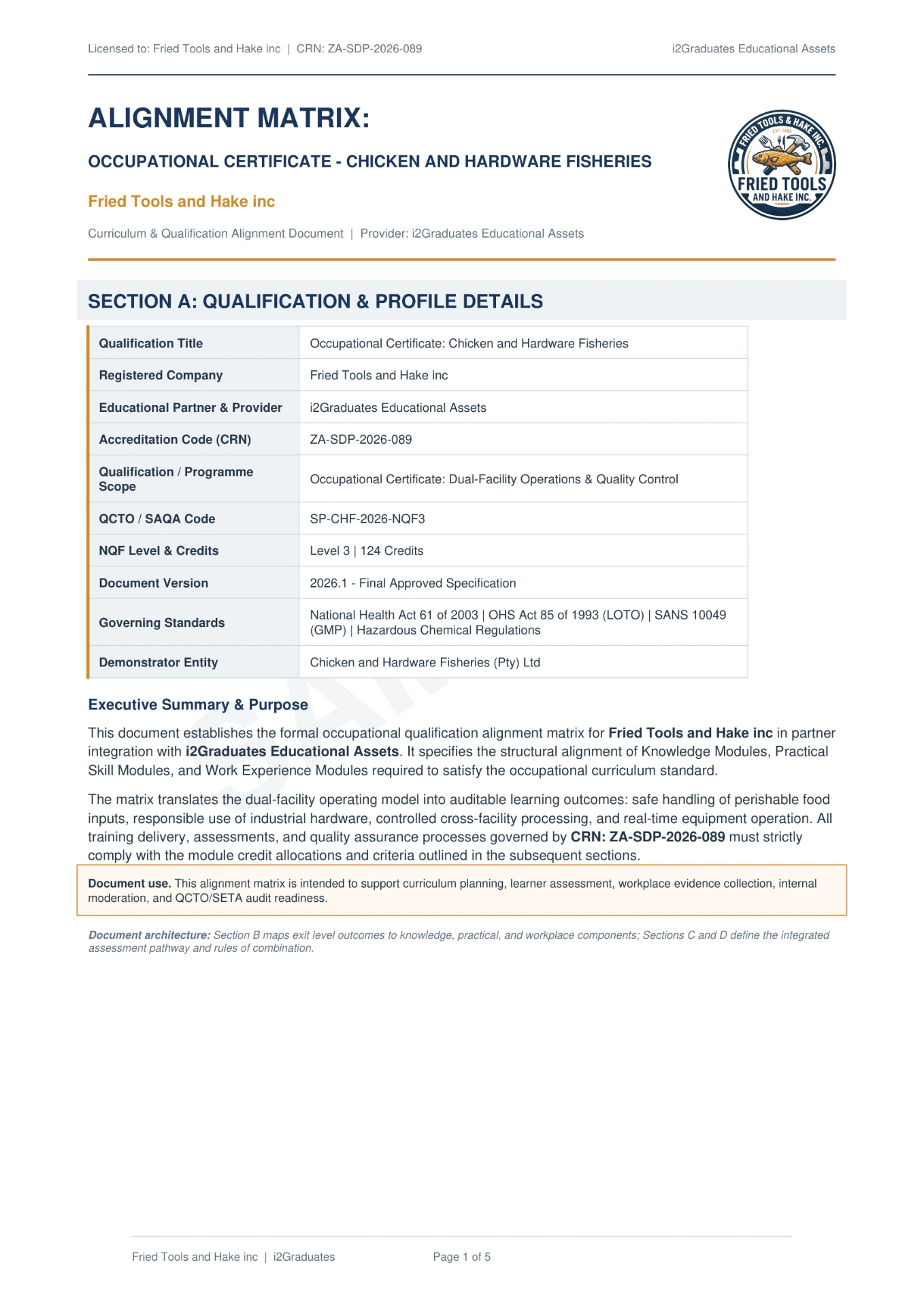
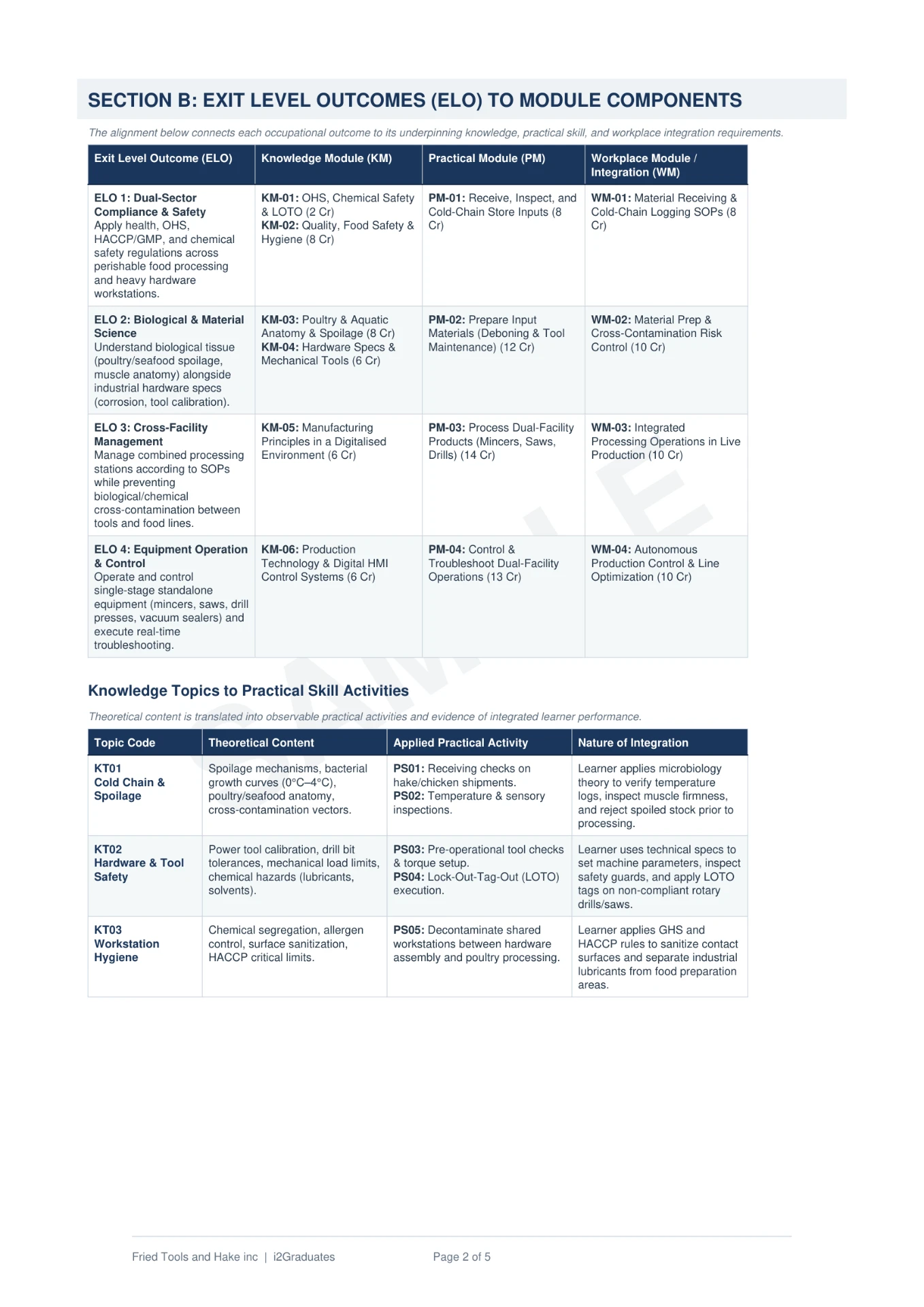
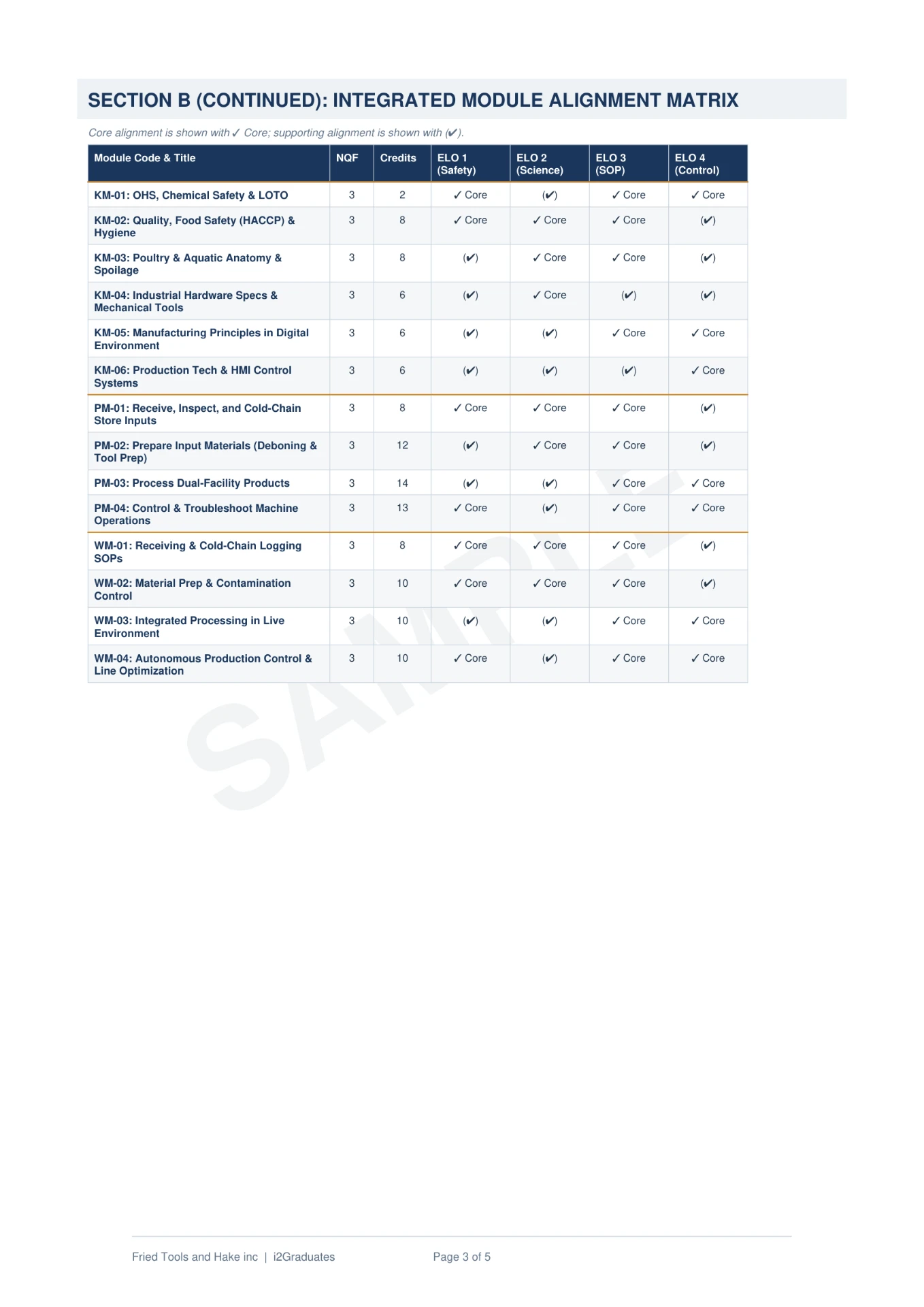
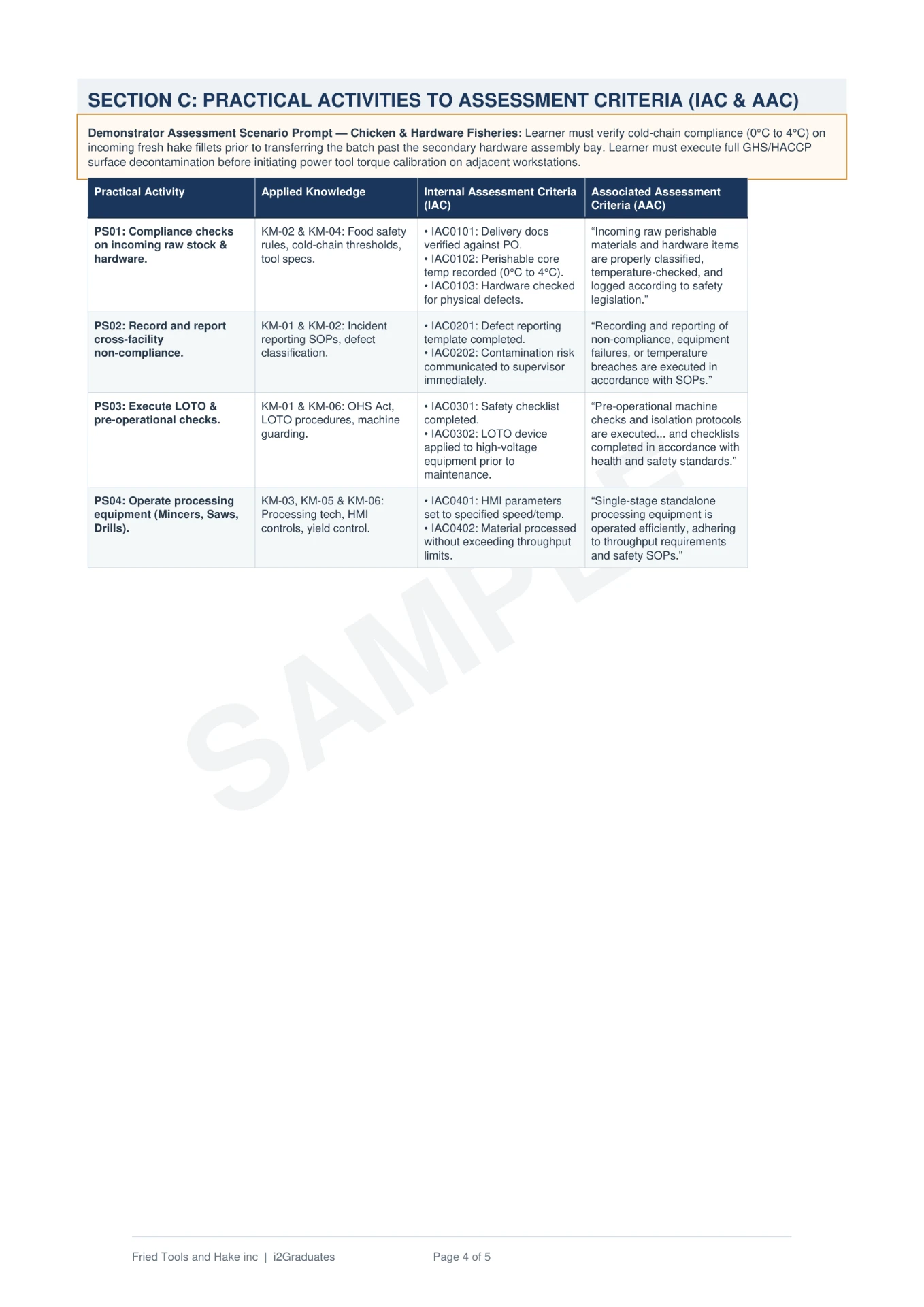
- SETA / QCTO Alignment Matrix
- Administrative & Onboarding Pack
- Implementation Plan
Moderator-Ready Curriculum Breakdown
29 modules · 187 creditsTheory, regulatory and safety knowledge. Each row carries the registered module code, NQF level and credit weight used for formative assessment rubric mapping.
- 263601005-KM-016 cr
Essentials and characteristics of religious practitioners
NQF Level 4
- 263601005-KM-0230 cr
The Bible and Bible interpretation
NQF Level 5
- 263601005-KM-038 cr
Basic Christian concepts
NQF Level 5
- 263601005-KM-048 cr
Christian ethics
NQF Level 5
- 263601005-KM-056 cr
History of the church and an overview of a variety of Christian traditions
NQF Level 4
- 263601005-KM-068 cr
Principles of building the faith community
NQF Level 5
- 263601005-KM-078 cr
Principles of preaching
NQF Level 4
- 263601005-KM-086 cr
Principles of conducting services
NQF Level 4
- 263601005-KM-0910 cr
Spiritual formation, life skills training and value system development
NQF Level 5
- 263601005-KM-1012 cr
Principles of pastoral counselling in a Christian context 12 Credits
NQF Level 6
- 263601005-KM-117 cr
The missional calling of the Church
NQF Level 5
- 263601005-KM-128 cr
Principles of church leadership and ministry management
NQF Level 5
- 263601005-KM-136 cr
Church administration, accountability and financial management
NQF Level 4
Qualification 101571 · Curriculum Architecture
Occupational Certificate: Christian Religious Professional · NQF Level 5 (237 Credits)
Three Curriculum Pillars
Knowledge Modules
Classroom & E-Learning
- Facilitated lectures & self-study
- Written question banks
- Formative comprehension checks
Practical Skill Modules
Simulated Line Tasks
- Simulated line tasks
- Observation rubrics
- Structured task sheets
Work Experience Modules
On-the-Job Production
- On-the-job rotation
- Mentor logbooks
- Workplace sign-offs
Evidence & Audit Pipeline
Learner Portfolio of Evidence (PoE)Owner · Candidate▾
Admin & Registration
ID, learner contract, induction pack, POPIA consent.
Knowledge Evidence
Written assessments & question banks — KM-01 to KM-07.
Practical Evidence
Task sheets, observation rubrics, assessor photos.
Workplace Evidence
Logbooks, mentor sign-offs, supervisor letters.
Assessor Master FileOwner · Registered Assessor▾
Assessment Reports
Judgements, learner feedback, remediation agreements, appeals log.
Internal Moderation & Quality FileOwner · Moderator / SDP▾
Moderation Evidence
10% sampling matrix, HACCP/LOTO compliance sheets, SDP sign-off.
Final Accreditation Gateway
Issued by the accredited Skills Development Provider once internal moderation is signed off.
Provider submits declaration + PoE to the Assessment Quality Partner (AQP).
QCTO awards the SAQA-registered certificate on successful EISA outcome.
Audit & Compliance
Evidence & Audit Pipeline
From portfolio assembly to external sign-off — the exact route your evidence travels.
- Step 1
PoE Assembly
Learner evidence, formative records and logbook entries filed against the alignment matrix.
- Step 2
Internal Assessment
Registered assessor judges each KM/PM/WM outcome using the supplied instruments.
- Step 3
Internal Moderation
Sampling and verification of assessor decisions, with remediation loop before submission.
- Step 4
External Moderation
SETA/QCTO desktop audit and certification upload against registered credits.
Broken Standard vs i2Graduates Standard
The measurable delta between improvised material and an audit-ready suite.
Broken Standard
i2Graduates Standard
Curriculum Mapping
Photocopied guides with mismatched outcomes
13 KM + 16 PM + 0 WM modules mapped to NQF Level 5
Assessment Bank
Missing formative and summative assessments
Pre-validated assessment bank per module
Alignment Evidence
No alignment matrix — audit fails
HW SETA alignment matrix included
Facilitation
Facilitators improvise Christian Religious Professional delivery
Facilitator scripts + learner activities per credit
Portfolio of Evidence
PoE gaps flagged in moderation
PoE templates that survive external moderation
Pricing & Delivery Tiers
Base licence from R66 850
Digital Master Suite
Editable master files, licensed to your SDP
- Learner Guide, Facilitator Guide & Assessment Suite
- Workplace logbook + alignment matrix (editable)
- Instant digital delivery under institutional licence
- Free minor corrections for 12 months
Turnkey Print & Bound Package
Printed, bound and couriered per learner
- Everything in the Digital Master Suite
- Full-colour print, wire-bound learner packs
- Per-learner PoE folders and dividers
- Nationwide courier with tracked delivery
Full Enterprise Accreditation Bundle
Assets plus accreditation support end-to-end
- Everything in the Print & Bound Package
- Bespoke QMS build mapped to your scope
- Moderation dry-run + written remediation report
- Brand & metadata integration across the suite
Complementary Services
Optional add-ons that harden your accreditation scope before an external audit.
Bespoke QMS Build
We author your Quality Management System — policies, procedures, records, matrices — mapped to your accreditation scope. From R18,500.
Request QuoteModeration Consultation
External moderation dry-run on your PoE + delivery pack. Written report with fixes before your real audit. From R4,900.
Book Moderation SessionThe i2Graduates Quality Guarantee
Every page of this bundle is checked for sequence and structural accuracy — no missing pages, no shortcuts. You get pre-validated assessment instruments ready to survive rigorous compliance moderation, wrapped in a curriculum your facilitators will enjoy teaching.