
Occupational Qualification · B28
Discretionary Grant · UpcomingBoilermaker
- NQF Level
- NQF Level 4
- Credits
- 540
- Duration
- —
- SAQA ID
- 123381
Official QCTO Registry Profile
Source: SAQA / QCTO registry- SAQA ID
- 123381
- Min Credits
- 540
- Registered
- 2025-02-04
- Re-registration
- 2030-02-04
- Field
- Field 06 - Manufacturing, Engineering and Technology
- Sub-field
- Manufacturing and Assembly
Sample Asset Preview
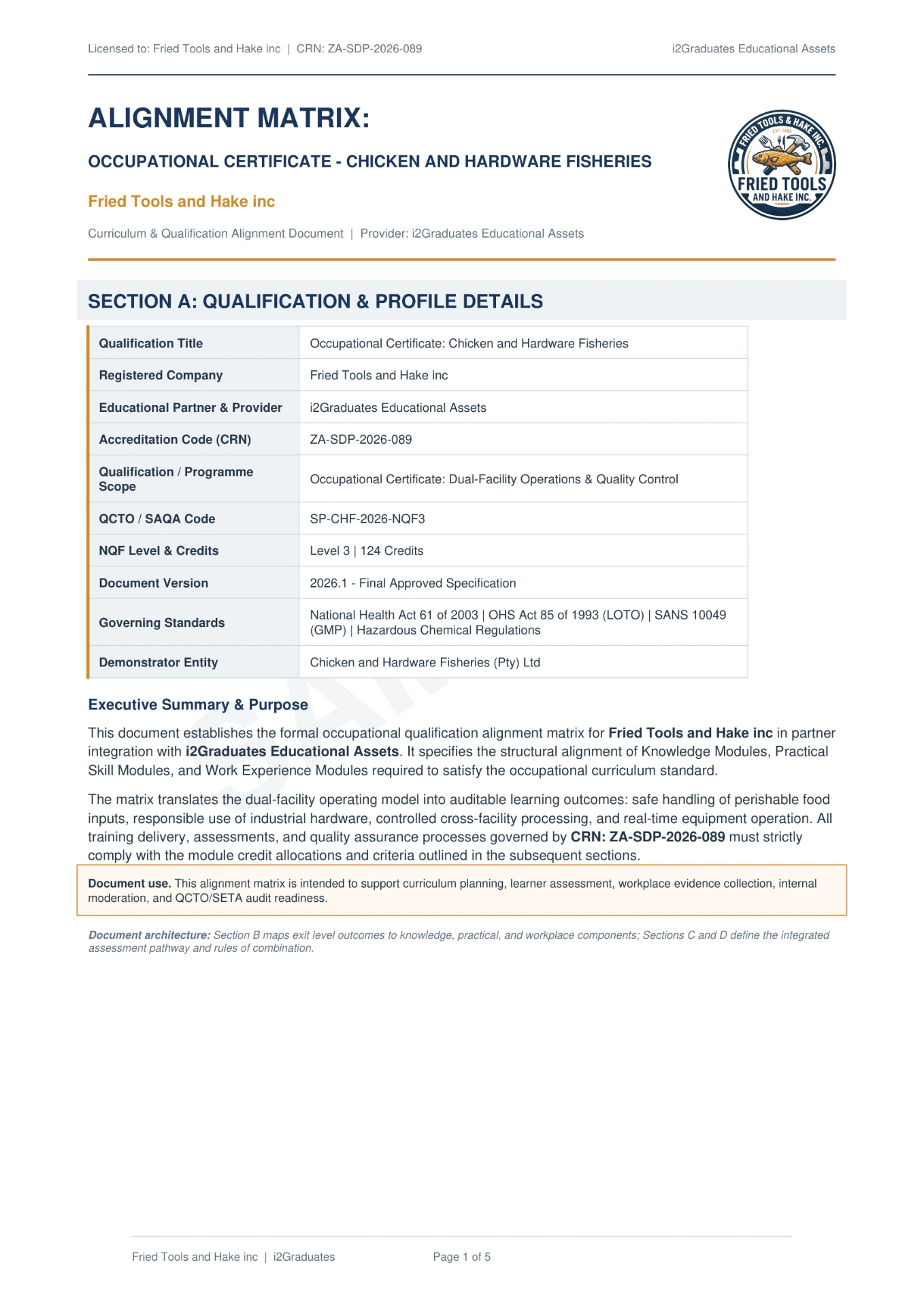
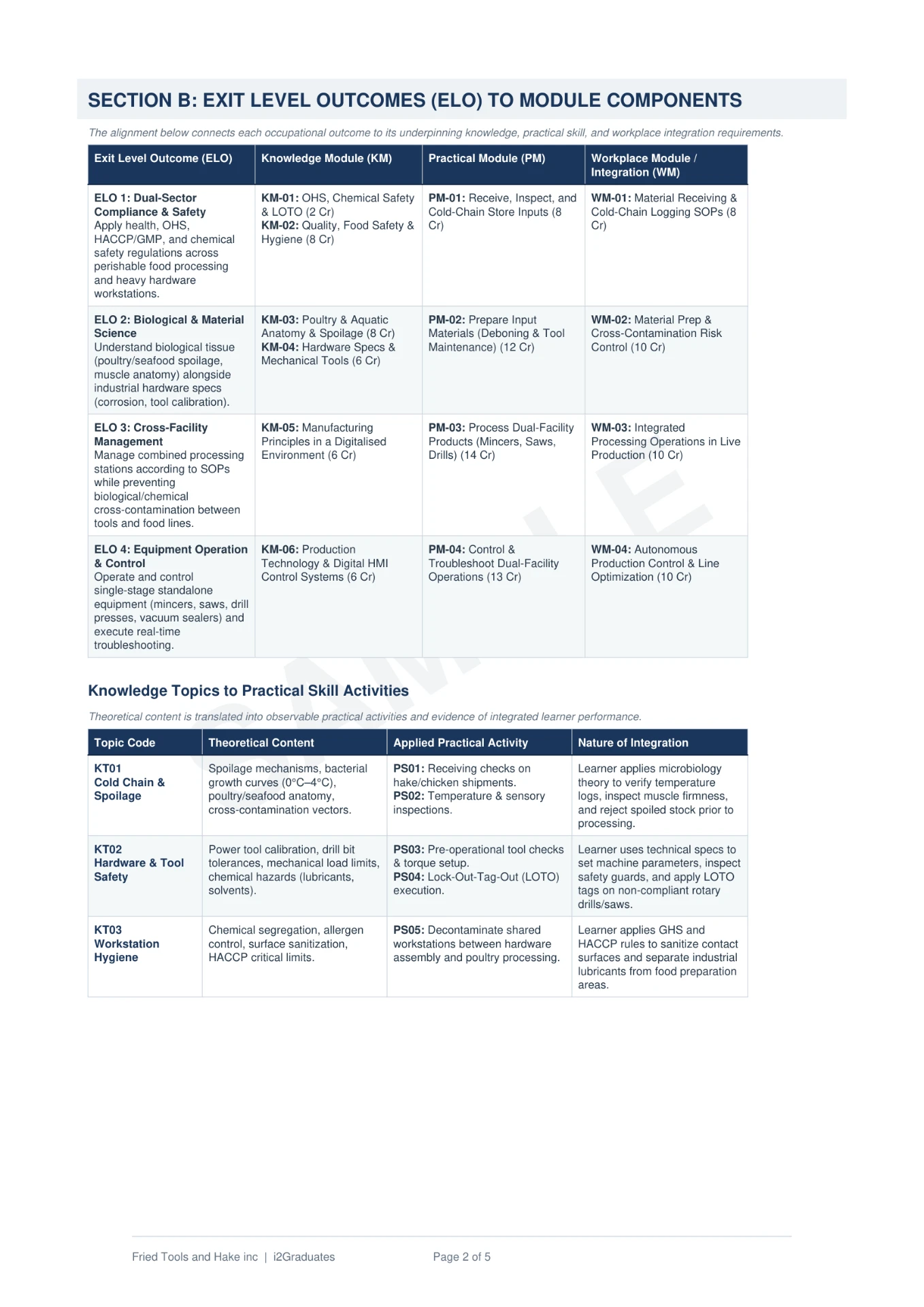
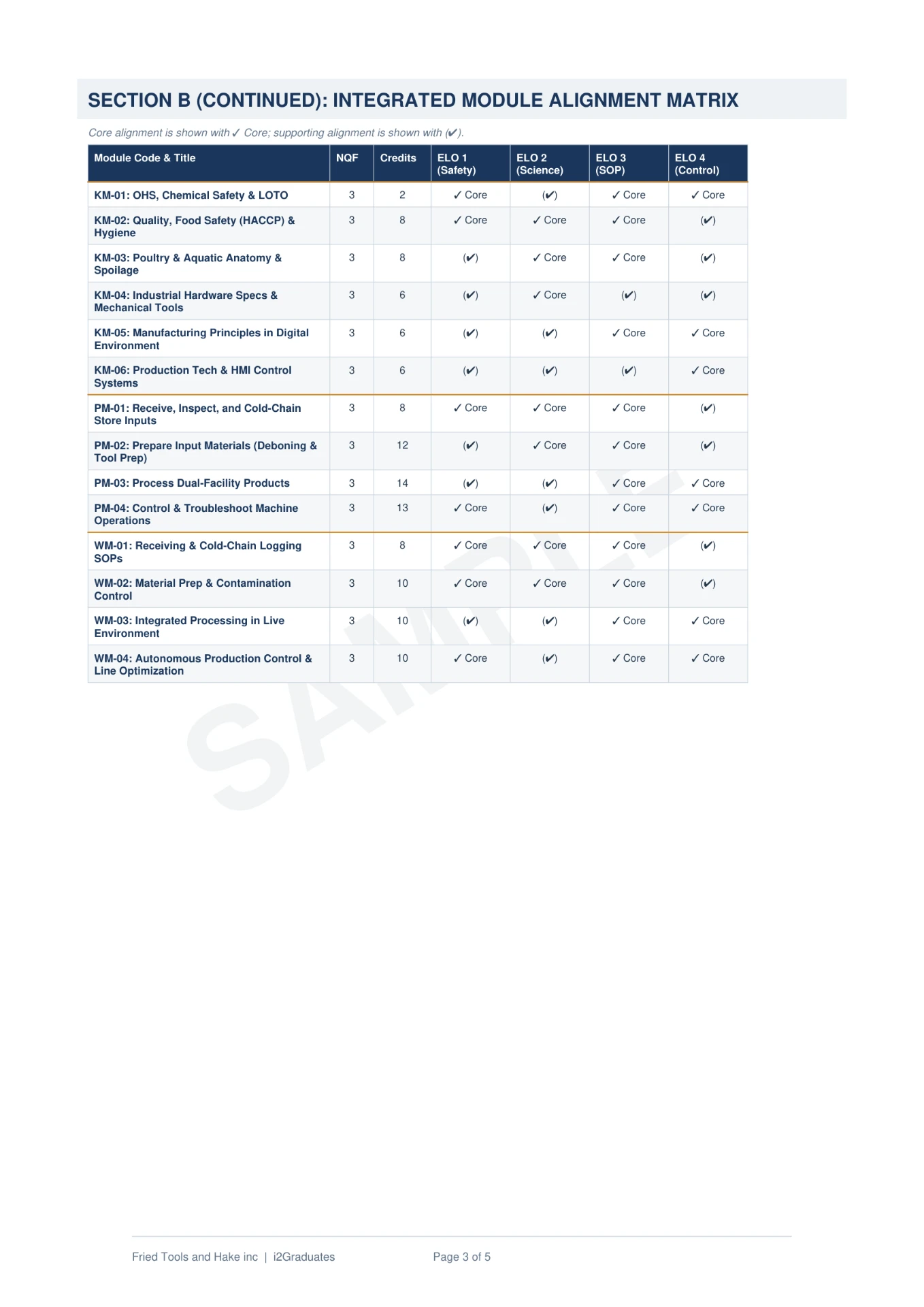
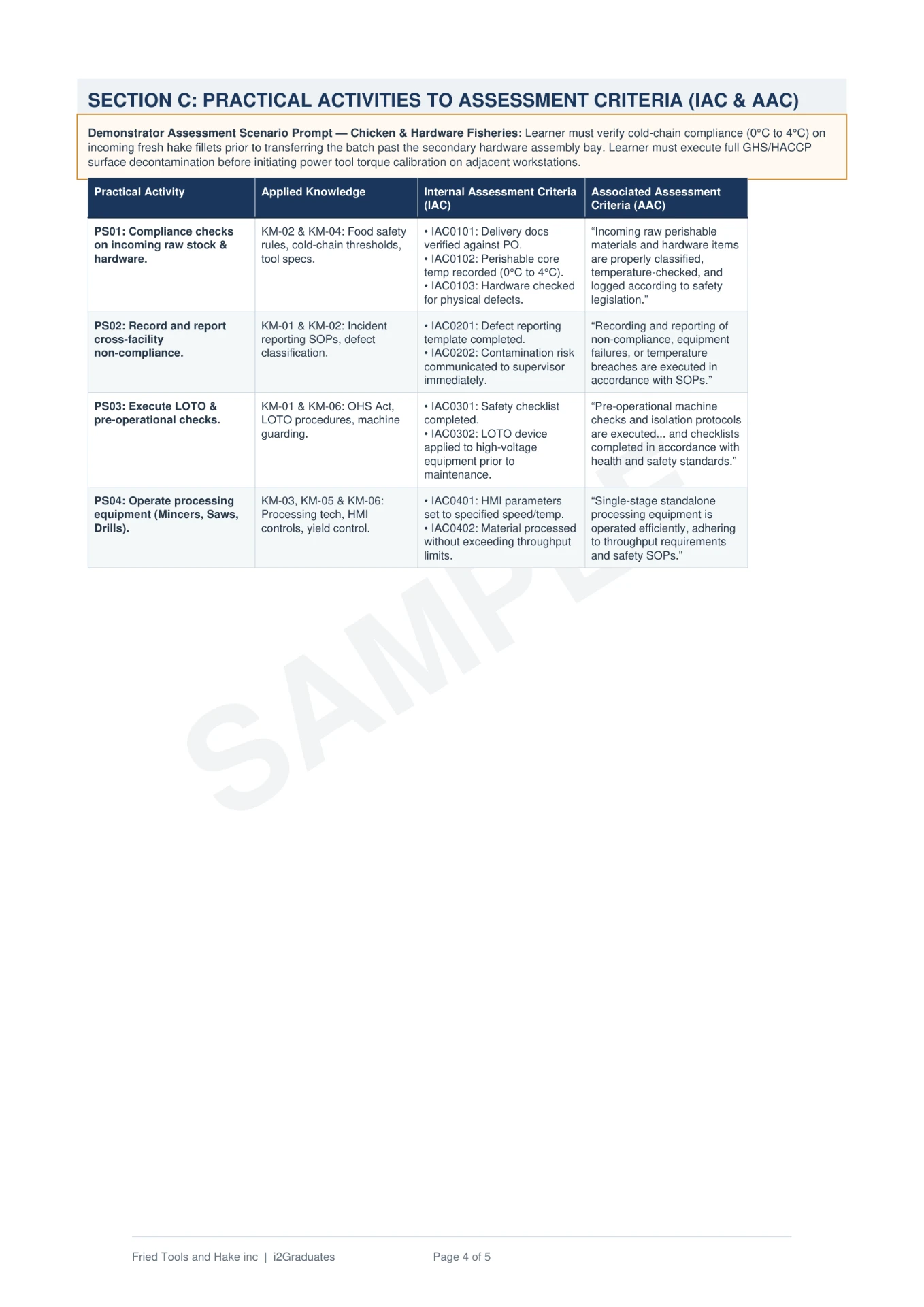
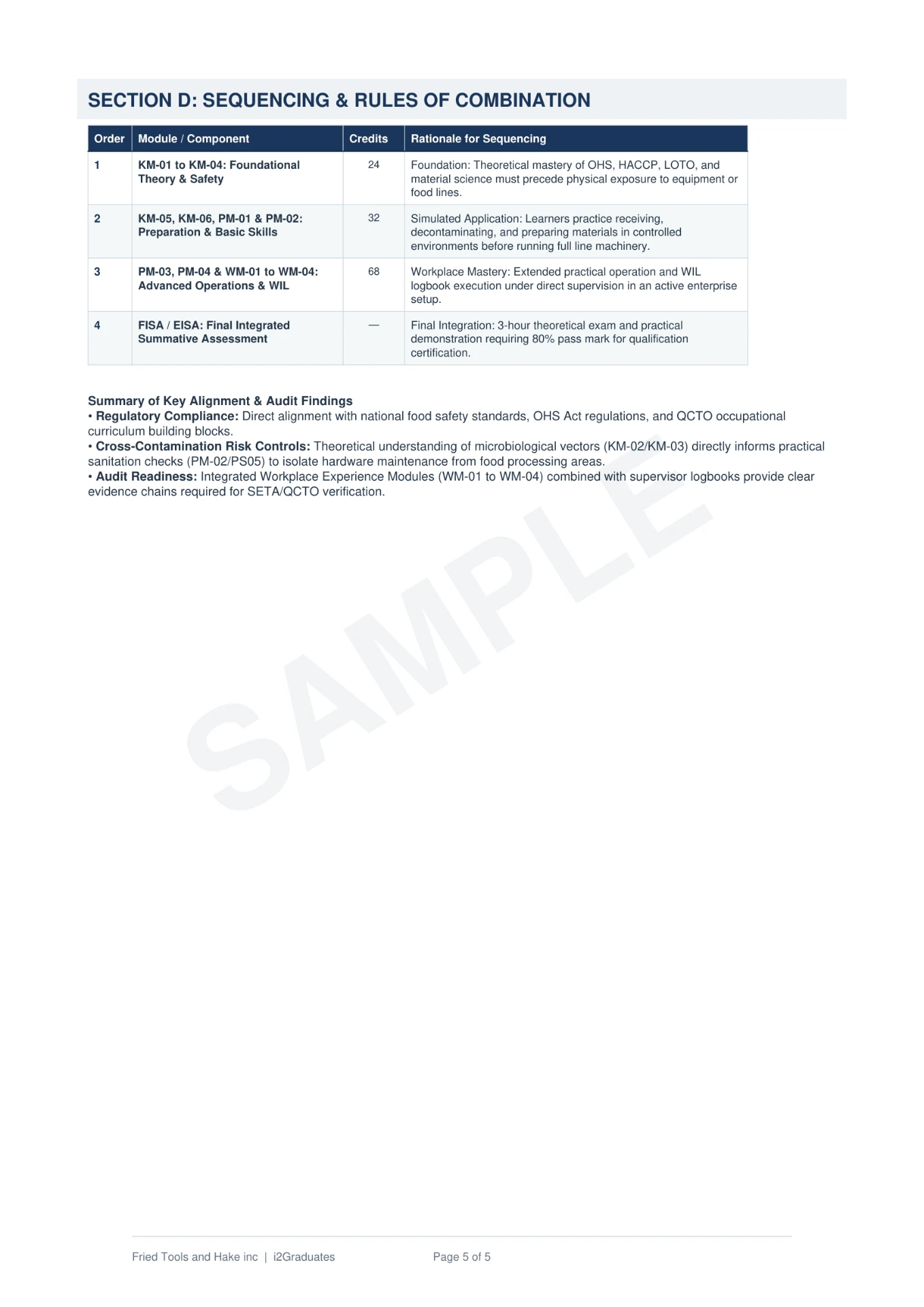
Overview & Scope
Programme Profile
- Target Designation
- Certified Boilermaker Practitioner
- Competency Focus
- Master specialised practical applications, safety criteria, and regulatory mandates required of a qualified Boilermaker.
- Academic Weight
- Full national recognition at NQF Level 4 yielding 540 credits upon successful PoE verification.
- Work Opportunities
- Deployment across As a qualified boilermaker, you can find employment opportunities in Chemical, Plastics, Glass, Mining. Your skills will be in demand across both public and private sectors, and you may also choose to work as an independent contractor or start your own business in this field. operations under CHIETA scope.
- Audit Objective
- Bridges operational skills deficits under the governing CHIETA quality matrix.
- Value Proposition
- Measurable, legally compliant skills that optimise productivity, satisfy Workplace Skills Plans (WSP), and unlock B-BBEE scorecard weight.
Introduction▾
The Boilermaker (NQF Level 4, 540 credits) is a comprehensive National Occupational Certificate that blends foundational theory with intensive practical application. Throughout your learning journey, you will develop the competencies required to operate effectively, safely, and ethically within your industry. Employers value this qualification because it signals that you are job-ready from day one.
Purpose▾
The purpose of this qualification is to prepare a learner to operate as a Boilermaker. Boilermakers' marks-off and fabricates structural steel and other steel profiles to make or repair metal products and structures which may include pressure vessels and pipes. (Note: Metal Products and Structures include but are not limited to: Manufacture or repair metal structures, vessels, pipe systems, pressure vessels, heavy duty equipment, sheet metals, road tankers, oilrig stations, mechanical chassis, bins, water tanks, yachts, work boats, high speed vessels, square to rounds, cones, boilers, ducting, water tubes, shell boiler, railway trucks, chutes etc.). A qualified learner will be able to: • Interpret drawings, develop patterns and templates and use tools and equipment. • Cut and weld materials and components for fabrication. • Fabricate components and/or structures. • Erect and assemble plate and pipe. A qualified learner will demonstrate the following key attributes: principles and procedurally oriented, problem solving, accuracy, analytic, professionalism.
Entry Requirements▾
Recognition of Prior Learning (RPL): RPL for Access to Training Learners may use the RPL process to gain access to training opportunities for a programme of learning, qualification, part-qualification or skills programme if they do not meet the formal, minimum entry requirements for admission. RPL assessment provides an alternative access route into a programme of learning, qualification, part-qualification, or skills programme. Such an RPL assessment may be developed, moderated and conducted by the accredited Skills Development Provider which offers that specific qualification/part qualification/skills programme. Such an assessment must ensure that the learner is able to display the equivalent level of competencies required for access, based on the NQF level descriptors. RPL for Exemption of Modules For exemption from modules through RPL, learners who have gained the stipulated competencies of the modules of a programme of learning, qualification, part-qualification or skills programme through any means of formal, informal or non-formal learning and/or work experience, may be awarded credits towards relevant modules, and gaps identified for training, which is then concluded. RPL for Access to the External Integrated Summative Assessment (EISA) or Final Integrated Supervised Assessment (FISA): Learners who have gained the stipulated competencies of the modules of a programme of learning, qualification, part-qualification or skills programme through any means of formal, informal or non-formal learning and/or work experience, may be awarded credits towards relevant modules, and gaps identified for training, which is then concluded. A valid Statement of Results is required for admission to the EISA in which confirmation of achievement is provided that all internal assessment criteria for all modules in the related curriculum document have been achieved. Upon successful completion of the EISA, RPL learners will be issued with the QCTO certificate for the qualification, part-qualification or skills programme. Quality Partners are responsible for ensuring the RPL mechanism and process for qualifications and part-qualification is approved by the QCTO. Entry Requirements: An NQF Level 1 qualification with mathematics.
SAQA Rationale▾
The qualification is a vital response to the increasing demand for highly skilled professionals in the manufacturing and engineering sectors. As industrial operations become more complex, Boilermakers are tasked with a range of critical responsibilities. Modern boilermakers are expected to possess an understanding of plating and structural steel workers' drawings and the ability to develop intricate patterns and templates. Additionally, they must be proficient in using a wide array of specialised tools and equipment which are essential for accurate fabrication and construction. Boilermakers play a central role in the cutting and welding of materials and components, often requiring advanced techniques to ensure structural integrity and safety. This is a core responsibility that this qualification addresses comprehensively. The fabrication of complex components and structures demands a high level of skills and precision. Boilermakers are at the forefront of this task, responsible for crafting everything from pressure vessels to structural components with the utmost attention to quality and safety. The assembly and erection of plate and pipe structures, such as those found in manufacturing and construction, require specific expertise. Boilermakers must have the proficiency to accurately erect and assemble these structures according to specifications. As the demands on Boilermakers have evolved, there is a pressing need for a qualification that equips learners with comprehensive knowledge and practical skills to excel in these core responsibilities. This NQF Level 4 qualification is designed to prepare Boilermakers with the required skills essential for the tasks as well as equip them with a deeper understanding of engineering principles, advanced fabrication techniques, and structural design. Currently there are no similar qualifications for this occupation registered on the NQF. The manufacturing and engineering sectors will gain a highly skilled workforce capable of performing tasks with precision. This will result in improved efficiency, advanced innovation, and a raised quality of workmanship, ensuring the structural integrity of industrial components and safety in complex fabrication processes. The increased quality and safety standards in manufacturing directly benefit society by reducing workplace accidents and ensuring the integrity of industrial structures and equipment, from power generation to construction. A thriving manufacturing sector driven amongst others by skilled Boilermakers who can competently perform these four key tasks contributes to economic growth, job creation, and international competitiveness. Moreover, the qualification offers promising career prospects, invigorating economic activity. Typical learners for the NQF Level 4 Boilermaker qualification encompass individuals seeking to advance their careers within the manufacturing and engineering sectors, specifically those aspiring to excel in interpreting drawings, developing patterns, cutting and welding materials, fabricating components and structures, and erecting and assembling plate and pipe structures. This qualification is ideal for those already employed in related roles, as well as recent graduates with a strong interest in becoming highly skilled Boilermakers capable of executing these core tasks with precision.
Learning Assumed to be in Place & RPL▾
Recognition of Prior Learning (RPL): RPL for Access to Training Learners may use the RPL process to gain access to training opportunities for a programme of learning, qualification, part-qualification or skills programme if they do not meet the formal, minimum entry requirements for admission. RPL assessment provides an alternative access route into a programme of learning, qualification, part-qualification, or skills programme. Such an RPL assessment may be developed, moderated and conducted by the accredited Skills Development Provider which offers that specific qualification/part qualification/skills programme. Such an assessment must ensure that the learner is able to display the equivalent level of competencies required for access, based on the NQF level descriptors. RPL for Exemption of Modules For exemption from modules through RPL, learners who have gained the stipulated competencies of the modules of a programme of learning, qualification, part-qualification or skills programme through any means of formal, informal or non-formal learning and/or work experience, may be awarded credits towards relevant modules, and gaps identified for training, which is then concluded. RPL for Access to the External Integrated Summative Assessment (EISA) or Final Integrated Supervised Assessment (FISA): Learners who have gained the stipulated competencies of the modules of a programme of learning, qualification, part-qualification or skills programme through any means of formal, informal or non-formal learning and/or work experience, may be awarded credits towards relevant modules, and gaps identified for training, which is then concluded. A valid Statement of Results is required for admission to the EISA in which confirmation of achievement is provided that all internal assessment criteria for all modules in the related curriculum document have been achieved. Upon successful completion of the EISA, RPL learners will be issued with the QCTO certificate for the qualification, part-qualification or skills programme. Quality Partners are responsible for ensuring the RPL mechanism and process for qualifications and part-qualification is approved by the QCTO. Entry Requirements: An NQF Level 1 qualification with mathematics.
Exit Level Outcomes▾
- Read and interpret plating and structural steel workers' drawings and technical documents and develop templates using appropriate tools and equipment to mark off materials.
- Fabricate components and conduct visual and mechanical inspections, applying knowledge of legal and industry standards compliance.
- Fabricate simple components and craft workpieces with precision when manipulating and fabricating profiles and metal sections using the understanding of both heating and cold bending processes.
- Assemble plates and pipe components into structures, and operate, position and align equipment using various methods by applying knowledge of design specifications and industry standards.
Learning Material Included
- Learner Guide (Theory and Knowledge Modules)
- Facilitator Guide
- Workplace Logbook
- Formative and Summative Assessment
- Assessor Guide & Marking Memorandum
- SETA / QCTO Alignment Matrix
- Administrative & Onboarding Pack
- Implementation Plan
Moderator-Ready Curriculum Breakdown
28 modules · 540 creditsTheory, regulatory and safety knowledge. Each row carries the registered module code, NQF level and credit weight used for formative assessment rubric mapping.
- 651302-000-01-KM-019 cr
Introduction to Boilermaker Trade
NQF Level 3
- 651302-000-01-KM-026 cr
Environmental Protection, Health, and Safety
NQF Level 3
- 651302-000-01-KM-0310 cr
Boilermaker Tools, Equipment, Machines and Materials
NQF Level 3
- 651302-000-01-KM-0428 cr
Fabrication and Pipework
NQF Level 4
- 651302-000-01-KM-0528 cr
Assembling and Joining
NQF Level 4
- 651302-000-01-KM-0628 cr
Cutting and Welding
NQF Level 4
- 651302-000-01-KM-0712 cr
Boilermaker's Drawings
NQF Level 4
- 651302-000-01-KM-082 cr
Basics Principles of Environmental Awareness and Ethic
NQF Level 2
- 651302-000-01-KM-093 cr
Emotional Intelligence and Active Learning
NQF Level 2
- 651302-000-01-KM-103 cr
Basics of Computers and Computing Systems
NQF Level 2
- 651302-000-01-KM-116 cr
Workplace Fundamentals and Workplace Safety
NQF Level 4
- 651302-000-01-KM-126 cr
Workplace Relationships and Performance
NQF Level 4
- 651302-000-01-KM-136 cr
Decision Making
NQF Level 4
- 651302-000-01-KM-1415 cr
Basic Slinging and Lifting, and Load Securing Operations
NQF Level 2
Qualification 123381 · Curriculum Architecture
National Occupational Certificate: Boilermaker · NQF Level 4 (540 Credits)
Three Curriculum Pillars
Knowledge Modules
Classroom & E-Learning
- Facilitated lectures & self-study
- Written question banks
- Formative comprehension checks
Practical Skill Modules
Simulated Line Tasks
- Simulated line tasks
- Observation rubrics
- Structured task sheets
Work Experience Modules
On-the-Job Production
- On-the-job rotation
- Mentor logbooks
- Workplace sign-offs
Evidence & Audit Pipeline
Learner Portfolio of Evidence (PoE)Owner · Candidate▾
Admin & Registration
ID, learner contract, induction pack, POPIA consent.
Knowledge Evidence
Written assessments & question banks — KM-01 to KM-07.
Practical Evidence
Task sheets, observation rubrics, assessor photos.
Workplace Evidence
Logbooks, mentor sign-offs, supervisor letters.
Assessor Master FileOwner · Registered Assessor▾
Assessment Reports
Judgements, learner feedback, remediation agreements, appeals log.
Internal Moderation & Quality FileOwner · Moderator / SDP▾
Moderation Evidence
10% sampling matrix, HACCP/LOTO compliance sheets, SDP sign-off.
Final Accreditation Gateway
Issued by the accredited Skills Development Provider once internal moderation is signed off.
Provider submits declaration + PoE to the Assessment Quality Partner (AQP).
QCTO awards the SAQA-registered certificate on successful EISA outcome.
Audit & Compliance
Evidence & Audit Pipeline
From portfolio assembly to external sign-off — the exact route your evidence travels.
- Step 1
PoE Assembly
Learner evidence, formative records and logbook entries filed against the alignment matrix.
- Step 2
Internal Assessment
Registered assessor judges each KM/PM/WM outcome using the supplied instruments.
- Step 3
Internal Moderation
Sampling and verification of assessor decisions, with remediation loop before submission.
- Step 4
External Moderation
SETA/QCTO desktop audit and certification upload against registered credits.
Broken Standard vs i2Graduates Standard
The measurable delta between improvised material and an audit-ready suite.
Broken Standard
i2Graduates Standard
Curriculum Mapping
Photocopied guides with mismatched outcomes
14 KM + 9 PM + 5 WM modules mapped to NQF Level 4
Assessment Bank
Missing formative and summative assessments
Pre-validated assessment bank per module
Alignment Evidence
No alignment matrix — audit fails
CHIETA alignment matrix included
Facilitation
Facilitators improvise Boilermaker delivery
Facilitator scripts + learner activities per credit
Portfolio of Evidence
PoE gaps flagged in moderation
PoE templates that survive external moderation
Pricing & Delivery Tiers
Base licence from R70 000
Digital Master Suite
Editable master files, licensed to your SDP
- Learner Guide, Facilitator Guide & Assessment Suite
- Workplace logbook + alignment matrix (editable)
- Instant digital delivery under institutional licence
- Free minor corrections for 12 months
Turnkey Print & Bound Package
Printed, bound and couriered per learner
- Everything in the Digital Master Suite
- Full-colour print, wire-bound learner packs
- Per-learner PoE folders and dividers
- Nationwide courier with tracked delivery
Full Enterprise Accreditation Bundle
Assets plus accreditation support end-to-end
- Everything in the Print & Bound Package
- Bespoke QMS build mapped to your scope
- Moderation dry-run + written remediation report
- Brand & metadata integration across the suite
Complementary Services
Optional add-ons that harden your accreditation scope before an external audit.
Bespoke QMS Build
We author your Quality Management System — policies, procedures, records, matrices — mapped to your accreditation scope. From R18,500.
Request QuoteModeration Consultation
External moderation dry-run on your PoE + delivery pack. Written report with fixes before your real audit. From R4,900.
Book Moderation SessionThe i2Graduates Quality Guarantee
Every page of this bundle is checked for sequence and structural accuracy — no missing pages, no shortcuts. You get pre-validated assessment instruments ready to survive rigorous compliance moderation, wrapped in a curriculum your facilitators will enjoy teaching.