
Occupational Qualification · A44
Discretionary Grant · UpcomingArtificial Intelligence Software Developer
- NQF Level
- NQF Level 5
- Credits
- 209
- Duration
- —
- SAQA ID
- 118792
Official QCTO Registry Profile
Source: SAQA / QCTO registry- SAQA ID
- 118792
- Min Credits
- 209
- Registered
- 2022-02-03
- Re-registration
- 2025-12-31
- Field
- Field 10 - Physical, Mathematical, Computer and Life Sciences
- Sub-field
- Information Technology and Computer Sciences
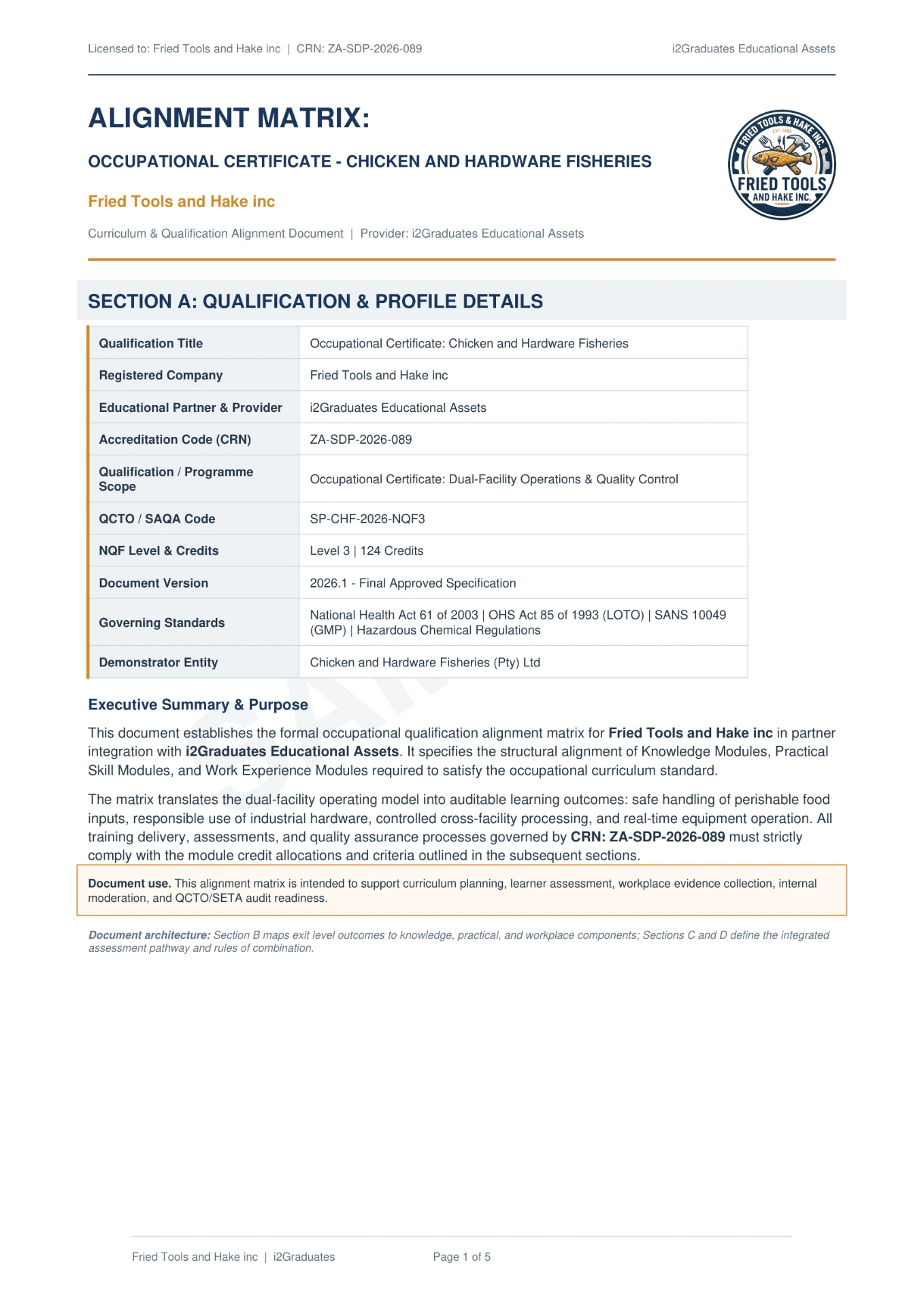
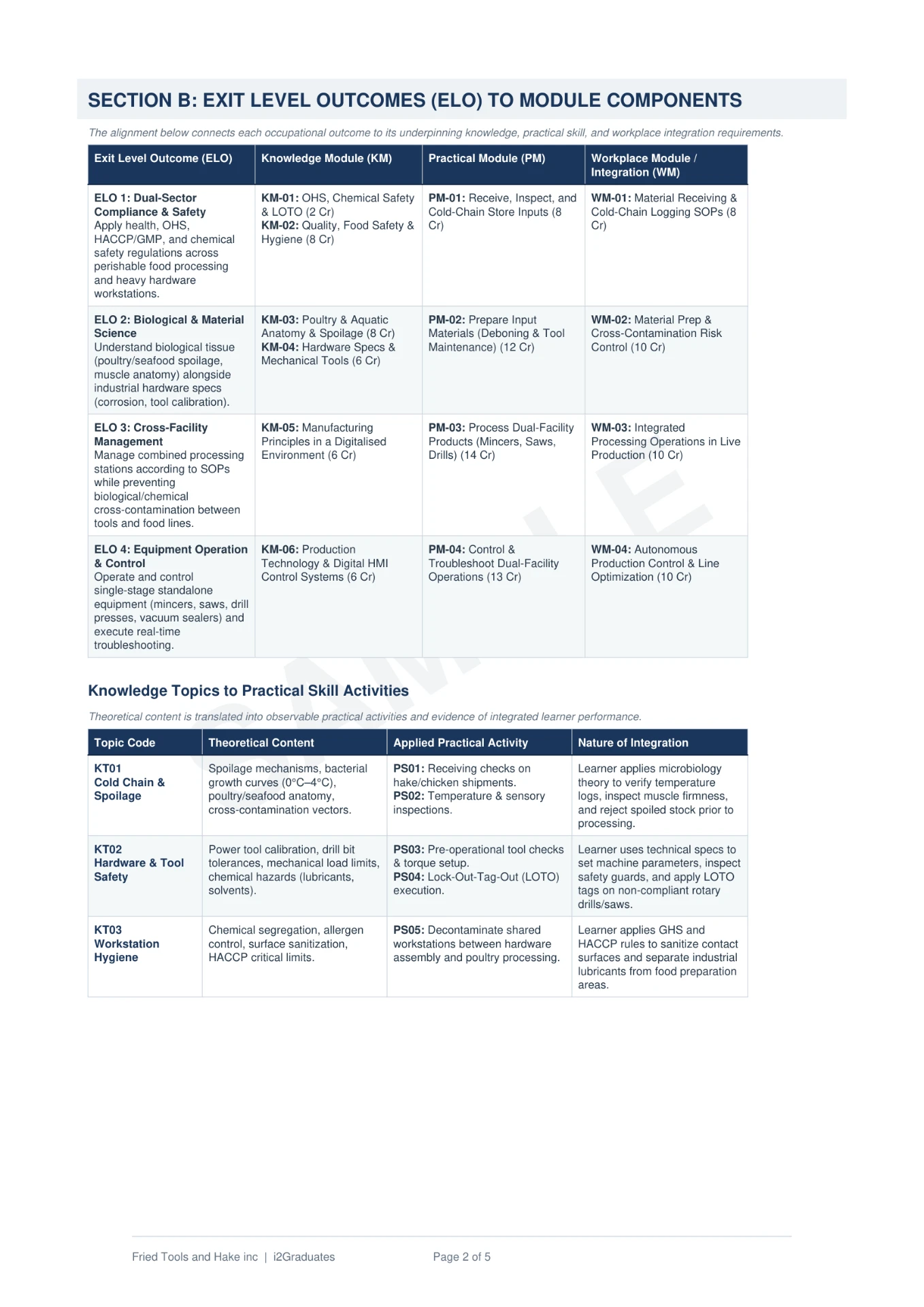
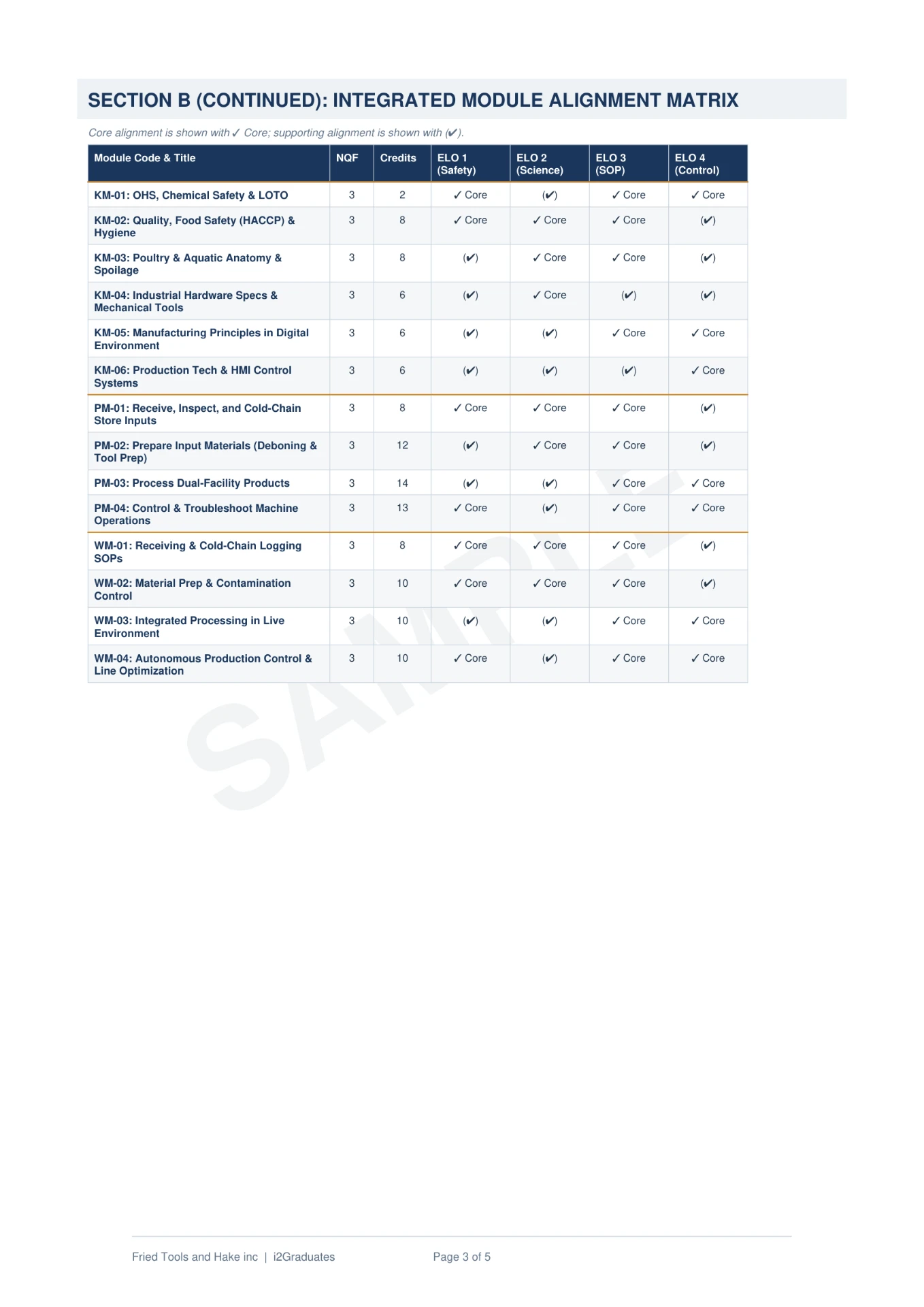
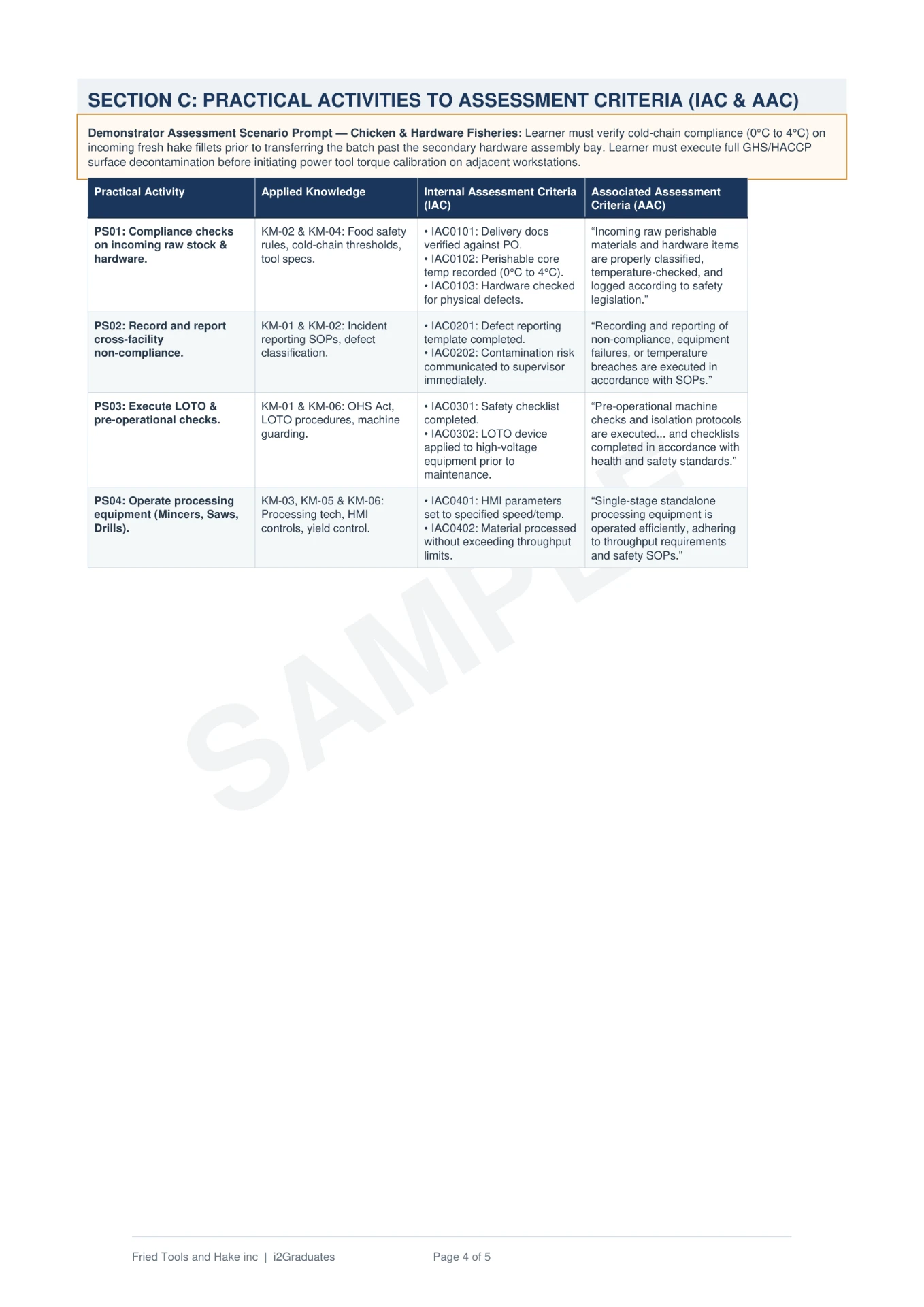
Sample Asset Preview
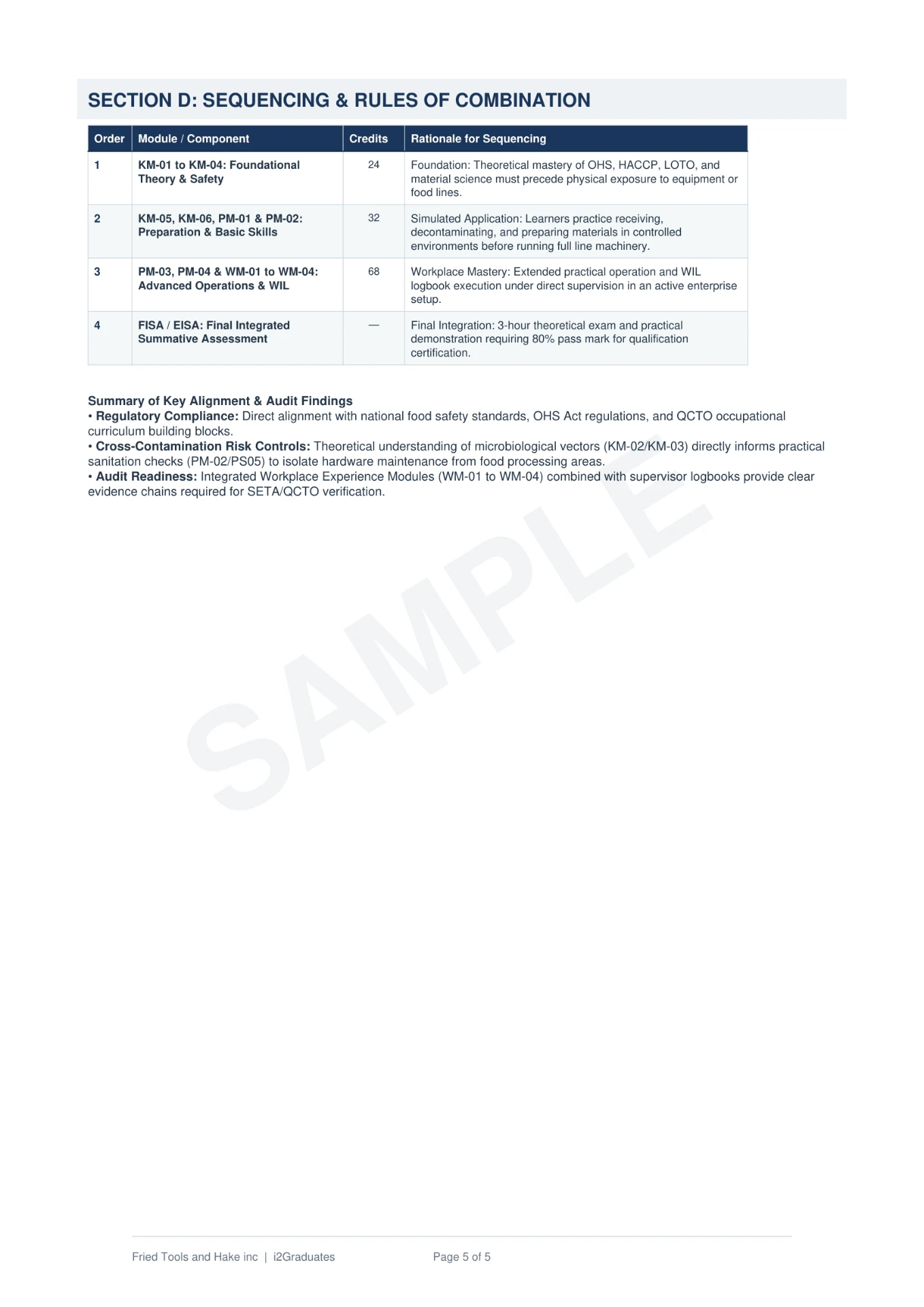
Overview & Scope
Programme Profile
- Target Designation
- Certified Artificial Intelligence Software Developer Practitioner
- Competency Focus
- Master specialised practical applications, safety criteria, and regulatory mandates required of a qualified Artificial Intelligence Software Developer.
- Academic Weight
- Full national recognition at NQF Level 5 yielding 209 credits upon successful PoE verification.
- Work Opportunities
- Deployment across As a qualified artificial intelligence software developer, you can find employment opportunities in Information Technology, Media, Communications including tech startups, corporate IT departments, software houses, and digital agencies. Your skills will be in demand across both public and private sectors, and you may also choose to work as an independent contractor or start your own business in this field. operations under MICT SETA scope.
- Audit Objective
- Bridges operational skills deficits under the governing MICT SETA quality matrix.
- Value Proposition
- Measurable, legally compliant skills that optimise productivity, satisfy Workplace Skills Plans (WSP), and unlock B-BBEE scorecard weight.
Introduction▾
The Artificial Intelligence Software Developer (NQF Level 5, 209 credits) is a comprehensive Occupational Certificate that blends foundational theory with intensive practical application. Throughout your learning journey, you will develop the competencies required to operate effectively, safely, and ethically within your industry. Employers value this qualification because it signals that you are job-ready from day one.
Purpose▾
The purpose of the Occupational Certificate: Artificial Intelligence Software Developer is to prepare a learner to operate as an Artificial Intelligence Software Developer Artificial Intelligence Software Developers build Artificial Intelligence (AI) functionality into software applications through integrating and implementing AI algorithms and logic into the deliverables of an Information Technology (IT) project. Developers teach the machine to solve problems the way a human would through the use of programming. They create, test and deploy code. These developers also assist in converting machine learning Application Programming Interface (APIs) so that other applications can use them. A qualified learner will be able to: • Interpret solution design documentation and develop AI solution. • Train the AI model through a machine learning process and test the performance to ensure that model accuracy is strictly maintained within the selection framework. • Deploy the AI solution and maintain the solution to ensure model accuracy is strictly maintained.
Entry Requirements▾
Recognition of Prior Learning (RPL): RPL for Access to the External Integrated Summative Assessment. Accredited providers and approved workplaces must apply the internal assessment criteria specified in the related curriculum document to establish and confirm prior learning. Accredited providers and workplaces must confirm prior learning by issuing a statement of result. RPL for Access to the Qualification: • Learners will gain access to the qualification through RPL for Access as provided for in the QCTO RPL Policy. RPL for access is conducted by accredited education institution, skills development provider or is workplace accredited to offer that specific qualification/part qualification. • Learners who have acquired competencies of the modules of a qualification or part qualification will be credited for modules through RPL. RPL for access to the external integrated summative assessment: Accredited providers and approved workplaces must apply the internal assessment criteria specified in the related curriculum document to establish and confirm prior learning. Accredited providers and workplaces must confirm prior learning by issuing a statement of result. Entry Requirements: The minimum entry requirement for this qualification is: • NQF Level 4 qualification.
SAQA Rationale▾
This qualification has been developed in response to the report of the Presidential Commission on the 4th Industrial Revolution (4IR). This report forefronts human capital and the future of work and refers to growing skills instability. The extent of 4IR today and its impact on businesses and the economy, is unparalleled. This implies that companies need to urgently prepare as AI will shape the future of our world more powerfully than any other innovation this century. Research findings indicate that businesses are expected to hire more technology and automation professionals in the future, pointing to the need for well-qualified developers in the AI field. The most sought-after areas of expertise include artificial intelligence, digital customer experience, internet of things and the cloud. AI seems to be revolutionary in its ability to transform the way organisations operate, but without a workforce skilled in technology, any effort by businesses to embrace the adoption of AI initiatives will fail. This qualification focusses on establishing a firm understanding of AI technology, its applications and its use cases. A Masters degree in Machine Learning and Artificial Intelligence exists. This Occupational Certificate: Artificial Intelligence Software Developer is thus unique and filling a glaring gap at the entry level of this specialist field and career path. Software developers create the applications or systems that run on a computer or another device. AI software developers build AI functionality into software applications. The role is generally focused on integrating and implementing AI algorithms and logic into the deliverable. AI, machine learning, neural networks and deep learning is a unique field, using specialist tools to create intelligence that mimics human interaction. AI developers use machine learning to create intelligence. The IT sector and the economy will benefit from AI as it can dramatically improve the efficiencies of our workplaces, augmenting the work humans can do and reducing the consequences of human error. When AI takes over repetitive or dangerous tasks, it frees up the human workforce and enables people to use their creativity for verification, validity, security, control and so forth. There are many ways in which AI will benefit society: AI is facilitating major advances in healthcare, and it improves customer service and the human experience. In short, AI has revolutionised the ease and dynamics with which humans interact with their environment. The typical learners identified for this qualification are school leavers, qualified learners from TVET colleges, new entrants into the sector and existing employees who have experience in this field, but without formal recognition of skills and competencies. Professionals who want to augment their careers may also access this qualification. The qualification is structured to enable individuals without prior learning in the field of information technology to acquire the knowledge and skills to seamlessly enter the field of work. No professional registration or licencing is expected for AI Software Developers to seek employment in the sector. AI Software Developers can be employed as AI Researchers, Machine Learning Engineers, Machine Learning Researchers, AI Architects, AI Engineers, AI Technicians, AI Developers, Business Intelligence (BI) Developers and working with engineering teams in the field of intelligent robotics.
Learning Assumed to be in Place & RPL▾
Recognition of Prior Learning (RPL): RPL for Access to the External Integrated Summative Assessment. Accredited providers and approved workplaces must apply the internal assessment criteria specified in the related curriculum document to establish and confirm prior learning. Accredited providers and workplaces must confirm prior learning by issuing a statement of result. RPL for Access to the Qualification: • Learners will gain access to the qualification through RPL for Access as provided for in the QCTO RPL Policy. RPL for access is conducted by accredited education institution, skills development provider or is workplace accredited to offer that specific qualification/part qualification. • Learners who have acquired competencies of the modules of a qualification or part qualification will be credited for modules through RPL. RPL for access to the external integrated summative assessment: Accredited providers and approved workplaces must apply the internal assessment criteria specified in the related curriculum document to establish and confirm prior learning. Accredited providers and workplaces must confirm prior learning by issuing a statement of result. Entry Requirements: The minimum entry requirement for this qualification is: • NQF Level 4 qualification.
Exit Level Outcomes▾
- Gather and interpret data from various sources to define an AI solution to a real-life world problem.
- Critically analyse data and create a solution design document (SDD) that defines an artificial intelligence (AI) solution that solves a real-life world problem.
- Choose a type or category of AI learning and the relevant algorithm to analyse data, gain insight and make subsequent prediction, or create a determination with it.
- Train the AI model through a machine learning process and ensure that model accuracy is strictly maintained within the selection framework.
- Select a machine learning system and build an artificial intelligence (AI) solution to a real-life world problem.
- Implement and run the AI solution on a selected platform and check the prediction results in real-life use, then select and run the AI solution on a platform.
Learning Material Included
- Learner Guide (Theory and Knowledge Modules)
- Facilitator Guide
- Workplace Logbook
- Formative and Summative Assessment
- Assessor Guide & Marking Memorandum
- SETA / QCTO Alignment Matrix
- Administrative & Onboarding Pack
- Implementation Plan
Moderator-Ready Curriculum Breakdown
21 modules · 155 creditsTheory, regulatory and safety knowledge. Each row carries the registered module code, NQF level and credit weight used for formative assessment rubric mapping.
- 251201-002-00-KM-012 cr
Overview of Artificial Intelligence
NQF Level 4
- 251201-002-00-KM-0210 cr
Introduction to Mathematics and Statistics
NQF Level 4
- 251201-002-00-KM-033 cr
Analytical Thinking and Problem Solving
NQF Level 4
- 251201-002-00-KM-048 cr
Data, Databases and Data Visualisation
NQF Level 4
- 251201-002-00-KM-058 cr
Computing Theory
NQF Level 4
- 251201-002-00-KM-065 cr
Introduction to Artificial Intelligence, Machine Learning, Deep Learning
NQF Level 4
- 251201-002-00-KM-101 cr
Introduction to Governance, Legislation and Ethics
NQF Level 4
- 251201-002-00-KM-111 cr
Fundamentals of Design Thinking and Innovation
NQF Level 4
- 251201-002-00-KM-124 cr
4IR and Future Skills
NQF Level 4
- 251201-002-00-KM-0712 cr
Artificial Intelligence
NQF Level 5
- 251201-002-00-KM-0816 cr
Machine Learning
NQF Level 5
- 251201-002-00-KM-0916 cr
Deep Learning
NQF Level 5
Qualification 118792 · Curriculum Architecture
Occupational Certificate: Artificial Intelligence Software Developer · NQF Level 5 (209 Credits)
Three Curriculum Pillars
Knowledge Modules
Classroom & E-Learning
- Facilitated lectures & self-study
- Written question banks
- Formative comprehension checks
Practical Skill Modules
Simulated Line Tasks
- Simulated line tasks
- Observation rubrics
- Structured task sheets
Work Experience Modules
On-the-Job Production
- On-the-job rotation
- Mentor logbooks
- Workplace sign-offs
Evidence & Audit Pipeline
Learner Portfolio of Evidence (PoE)Owner · Candidate▾
Admin & Registration
ID, learner contract, induction pack, POPIA consent.
Knowledge Evidence
Written assessments & question banks — KM-01 to KM-07.
Practical Evidence
Task sheets, observation rubrics, assessor photos.
Workplace Evidence
Logbooks, mentor sign-offs, supervisor letters.
Assessor Master FileOwner · Registered Assessor▾
Assessment Reports
Judgements, learner feedback, remediation agreements, appeals log.
Internal Moderation & Quality FileOwner · Moderator / SDP▾
Moderation Evidence
10% sampling matrix, HACCP/LOTO compliance sheets, SDP sign-off.
Final Accreditation Gateway
Issued by the accredited Skills Development Provider once internal moderation is signed off.
Provider submits declaration + PoE to the Assessment Quality Partner (AQP).
QCTO awards the SAQA-registered certificate on successful EISA outcome.
Audit & Compliance
Evidence & Audit Pipeline
From portfolio assembly to external sign-off — the exact route your evidence travels.
- Step 1
PoE Assembly
Learner evidence, formative records and logbook entries filed against the alignment matrix.
- Step 2
Internal Assessment
Registered assessor judges each KM/PM/WM outcome using the supplied instruments.
- Step 3
Internal Moderation
Sampling and verification of assessor decisions, with remediation loop before submission.
- Step 4
External Moderation
SETA/QCTO desktop audit and certification upload against registered credits.
Broken Standard vs i2Graduates Standard
The measurable delta between improvised material and an audit-ready suite.
Broken Standard
i2Graduates Standard
Curriculum Mapping
Photocopied guides with mismatched outcomes
12 KM + 8 PM + 1 WM modules mapped to NQF Level 5
Assessment Bank
Missing formative and summative assessments
Pre-validated assessment bank per module
Alignment Evidence
No alignment matrix — audit fails
MICT SETA alignment matrix included
Facilitation
Facilitators improvise Artificial Intelligence Software Developer delivery
Facilitator scripts + learner activities per credit
Portfolio of Evidence
PoE gaps flagged in moderation
PoE templates that survive external moderation
Pricing & Delivery Tiers
Base licence from R65 450
Digital Master Suite
Editable master files, licensed to your SDP
- Learner Guide, Facilitator Guide & Assessment Suite
- Workplace logbook + alignment matrix (editable)
- Instant digital delivery under institutional licence
- Free minor corrections for 12 months
Turnkey Print & Bound Package
Printed, bound and couriered per learner
- Everything in the Digital Master Suite
- Full-colour print, wire-bound learner packs
- Per-learner PoE folders and dividers
- Nationwide courier with tracked delivery
Full Enterprise Accreditation Bundle
Assets plus accreditation support end-to-end
- Everything in the Print & Bound Package
- Bespoke QMS build mapped to your scope
- Moderation dry-run + written remediation report
- Brand & metadata integration across the suite
Complementary Services
Optional add-ons that harden your accreditation scope before an external audit.
Bespoke QMS Build
We author your Quality Management System — policies, procedures, records, matrices — mapped to your accreditation scope. From R18,500.
Request QuoteModeration Consultation
External moderation dry-run on your PoE + delivery pack. Written report with fixes before your real audit. From R4,900.
Book Moderation SessionThe i2Graduates Quality Guarantee
Every page of this bundle is checked for sequence and structural accuracy — no missing pages, no shortcuts. You get pre-validated assessment instruments ready to survive rigorous compliance moderation, wrapped in a curriculum your facilitators will enjoy teaching.